Two Math Wizards
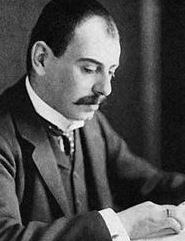
Edmund Landau
Edmund Georg Hermann Landau (1877-1938) was born in Berlin. As a young boy, he was recognized as a math prodigy, and earned his Ph.D from the University of Berlin by 22. He immediately received a teaching position at the university, where he taught for the next ten years. Meanwhile, Landau married the daughter of Nobel Prize winner (and past Jew of the Week) Paul Ehrlich. In 1812, Landau presented four complex math problems at the International Congress of Mathematicians. The problems remain unsolved to this day. After over a decade teaching at the University of Göttingen, Landau joined the new Hebrew University. He was a co-founder of its math department, and played a key role in the construction of its Mathematics Institute. He taught himself Hebrew so that he could present a novel math lecture at the University’s grand opening in 1925. Two years later, Landau and his family made aliyah. He taught at the Hebrew University for several years before returning to Göttingen. After being removed from his position by the Nazis, Landau settled back in Berlin and occasionally traveled outside Germany to teach. He died four years later. Landau is renowned for his work on distribution of prime numbers, and on what is now called Landau Prime Ideal Theorem. It was once said that “no one was ever more passionately devoted to mathematics than Landau.”
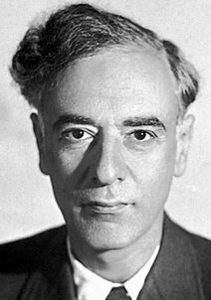
Lev Landau
Edmund Landau is not to be confused with another Jewish math prodigy, Lev Davidovich Landau (1908-1968). Born in Azerbaijan (then part of Russia), Lev Landau started university at 13, published his first paper at 18, and got his PhD in math by 26. He received a scholarship from the Soviet government as well as the Rockefeller Foundation to travel and study abroad. He was soon fluent in German, French, Danish, and English. Much of his time was spent working in the lab of Nobel Prize winner (and past Jew of the Week) Niels Bohr. After returning to the Soviet Union, Landau was put at the head of the physics department at Kharkiv Institute of Physics and Technology. He taught at the University of Kharkiv, and at the same time worked with his student Evgeny Lifshitz on a ten-volume textbook. The Course of Theoretical Physics is still one of the most popular graduate physics textbooks used today. In 1938, Landau was arrested for comparing Stalin to the Nazis. After the intervention of other physicists, he was freed. Ironically, he won the Stalin Prize in 1949 and again in 1953, for his work on building the first Soviet nuclear bomb. Landau is famous for, among many other things, his theory of superconductivity, theory of Fermi liquid, for plasma physics, quantum electrodynamics, and most of all for his theory of superfluidity, which won him a Nobel Prize in 1962. Unfortunately, he couldn’t personally collect the prize because he was in a severe car accident and spent two months in a coma. He ultimately died from his injuries in 1968. Several years before this, his students established the Landau Institute for Theoretical Physics near Moscow. It is still one of the most prestigious physics labs in Russia. Landau was featured in the latest Google Doodle. There is a crater on the moon named after him.
The Torah: A Comprehensive Overview
Words of the Week
Both religion and science require a belief in God. For believers, God is in the beginning, and for physicists He is at the end of all considerations… To the former He is the foundation, to the latter, the crown of the edifice of every generalized world view.
– Max Planck
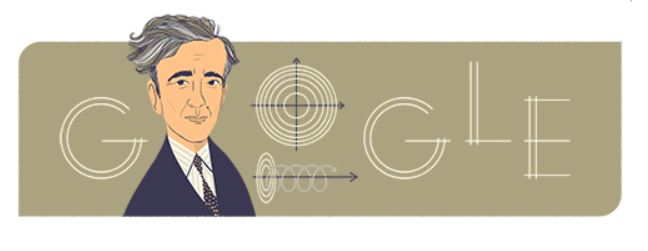
Google Doodle for January 22, 2019, the birthday of Lev Landau.
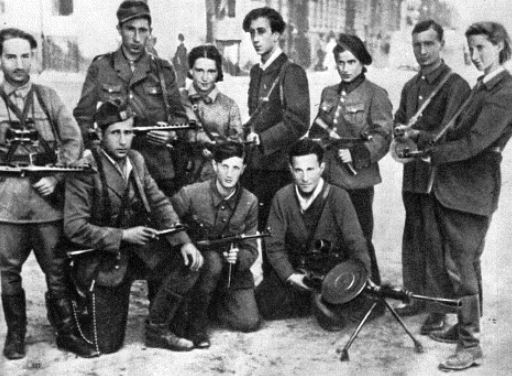
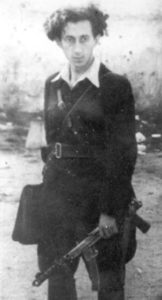 Abel “Abba” Kovner (1918-1987) was born in what is today Belarus and grew up in Vilnius (then part of Poland). As a young man, he was a member of HaShomer HaTzair, the Zionist youth movement. When the Nazis invaded Vilnius in 1941, Kovner escaped to a convent, but soon returned to the Vilna Ghetto to organize a Jewish resistance. At the start of 1942, Kovner secretly published a manifesto inside the Ghetto to inspire the Jews to fight back, writing that it was better to die than “go like lambs to the slaughter”. Along with several other young men, Kovner formed the United Partisan Organization, possibly the first armed underground Jewish group in Nazi Europe. Before they could launch their first large-scale attack, the Vilna Ghetto was liquidated in 1943, forcing the group to flee to the surrounding forests. From there, they launched a guerrilla warfare campaign against the Nazis. The small group began calling themselves “the Avengers” (HaNokmim) and were successful enough to draw the attention of the Red Army. They would go on to coordinate with the Soviets to crush the Nazis in Eastern Europe. Once the fate of the Nazis was sealed towards the end of 1944, Kovner was among the founders of a new group, called Bricha (“Escape”), which worked to get Jewish refugees out of Europe and to the Holy Land. Over the next couple of years, they would successfully move 250,000 Holocaust survivors to Israel. Having seen first-hand the horrific devastation inflicted by the Nazis, Kovner yearned for revenge. He started yet another group, called Nakam (“Vengeance”), seeking to punish Germany for the Holocaust. “Plan B” was to poison the water supply in Allied prisoner-of-war camps where Nazi SS soldiers were kept. The far more controversial and shocking “Plan A” was to poison the water supplies of several major German cities in order to kill 6 million Germans, one for each Jew lost in the Holocaust. Thankfully, Plan A was soon abandoned, though Kovner was still arrested by the British and held in a Cairo prison for several months. He did aim to accomplish Plan B, and Nakam members infiltrated a POW camp bakery in April 1946, coating the loaves of bread with arsenic. Over two thousands German soldiers fell ill, though no deaths were reported. In December 1947, Kovner joined the Haganah and fought in Israel’s Independence War as a captain of the Givati Brigade. Following this, he lived out the remainder of his life in a kibbutz, working tirelessly to strengthen the nascent state. He also helped to design several Holocaust museums, and testified at the Eichmann trial. More famously, Kovner wrote a series of poetry books (in Hebrew and Yiddish) describing the struggles he faced during the Holocaust and in Israel’s early years. This made him one of the country’s most celebrated poets and writers. For this, he won the Israeli Prize for Literature in 1970. A heavy smoker, Kovner succumbed to tracheal cancer before his 70th birthday.