Category Archives: Writers & Thinkers

Jews in the Wonderful World of Literature, Thought, and Scholarship

Jew of the Week: Isaac Judaeus

The Caliph’s Doctor and the Father of Kabbalah
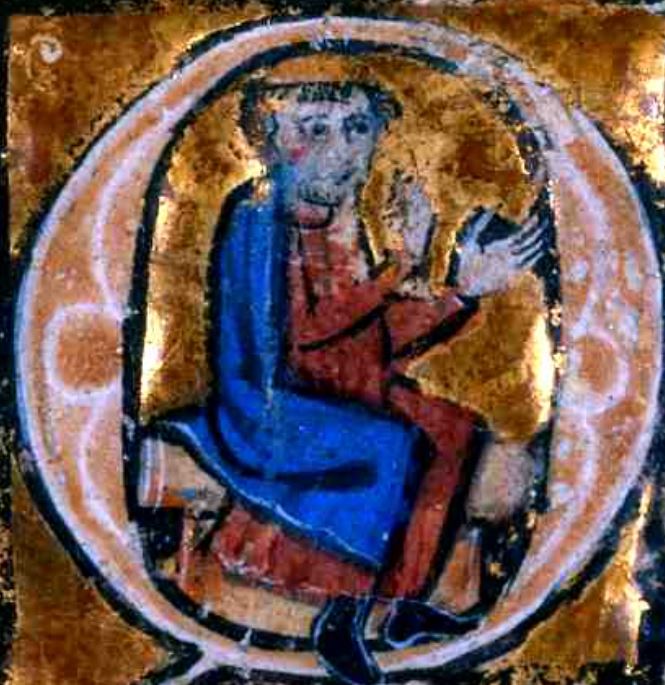
A 13th-century illustration of Isaac Israeli from a Latin translation of his “Book of Fevers”

Itzhak ben Shlomo (c. 832-932) was born to a religious Jewish family in Egypt. He became renowned as the greatest physician in the country, and in 904 was hired by Prince Ziyadat Allah III. Several years later, he became court physician to Caliph Al-Mahdi Billah of the Fatimid Dynasty, based in Kairouan, Tunisia. Recognizing his immense wisdom, the Caliph made Itzhak (known in Arabic as “Abu Yaqub Ishaq ibn Suleiman al-Israili”, and in Europe as “Isaac Judaeus”) his leading advisor and tutor. Itzhak wrote numerous medical, astronomical, and mathematical treatises which transformed the scientific knowledge of the day. For instance, he is the first person in history to mention performing a tracheostomy. His works were widely distributed for centuries afterwards, and made up much of the medical curriculum of the Middle Ages. Itzhak was also a great philosopher, kabbalist, and mystic. He fused together Greek Neoplatonism with traditional Jewish mysticism, paving the way for the forthcoming explosion of Kabbalistic texts and Jewish mystical circles. His main disciple, Dunash ibn Tamim, wrote a profound commentary on Sefer Yetzirah, the most ancient of Kabbalistic texts. In addition to inspiring many rabbis, he was studied and quoted by great non-Jewish scholars like Thomas Aquinas and Roger Bacon. Among his many other writings is a deeply philosophical commentary on Genesis. In his day, Isaac Judaeus was the world’s leading sage, doctor, and scientist, and Arabic texts of the time refer to him as “master of the seven sciences” and “more valuable than gems”.

Why Did Muslims Rule the Holy Land for 1300 Years?

Words of the Week

We do not have to accept theories as certainties, no matter how widely accepted, for they are like blossoms that fade. Very soon science will be developed further and all of today’s new theories will be derided and scorned and the well-respected wisdom of our day will seem small-minded.
– Rav KookFirst Ashkenazi Chief Rabbi of Israel

Jew of the Week: Meir Bar-Ilan

A Religious Zionist Pioneer

Meir Berlin (1880-1949) was born in Volozhin, near modern-day Minsk, Belarus. He was the youngest son of the “Netziv”, Rabbi Naftali Tzvi Yehuda Berlin, one of the greatest rabbis of the generation and head of the illustrious Volozhin Yeshiva. Young Meir studied at his father’s yeshiva, as well as other prestigious academies like Brisk and Telshe. He received his rabbinic ordination at the age of 22, then headed to the University of Berlin for secular studies. It is there that he became a staunch Zionist, and in 1905 joined the Mizrachi movement of religious Zionists (founded by Rabbi Yitzchak Yaakov Reines). Berlin represented Mizrachi at the Seventh Zionist Congress where he voted against the Uganda Proposal (creating a Jewish state in Uganda instead of the Holy Land). In 1911, he founded a religious Zionist newspaper, HaIvri, which would go on to feature great writers and thinkers like S.Y. Agnon and Eliezer Ben-Yehuda. Berlin moved to New York a few years later to establish and develop the American branch of the Mizrachi movement. In a short period of time, it grew to over 100 chapters. He served as president of Yeshiva University between 1920 and 1922. The following year, he finally fulfilled his dream of making aliyah and settled in Jerusalem. As did many others, Berlin would later Hebraize his last name to “Bar-Ilan”. Meanwhile, he founded a new newspaper, HaTzofeh, and started work on the Talmudical Encyclopedia (which would eventually be a massive 42-volume series). Bar-Ilan served on the boards of Mizrachi Bank and the Jewish National Fund. When the British limited Jewish immigration to the Holy Land, Bar-Ilan became their vocal opponent and began a campaign of peaceful protest and civil disobedience. In 1943, he went on a trip around the world to build support for establishing a Jewish state and met with numerous political leaders. He also criticized the American government for staying silent and doing little about the atrocities happening in Europe, and campaigned for more assistance to Jewish refugees. When the State of Israel was finally born, Rabbi Bar-Ilan presided over a committee to discuss how Jewish law can continue to be observed properly in the new country. He also championed the establishment of a university that would combine rigorous religious education with advanced secular studies and professional training. Though he did not live to see it, such a university did open its doors in Tel-Aviv in 1955, and was named after him: Bar-Ilan University. Today, Bar-Ilan University is Israel’s second-largest educational facility, with over 20,000 students. Moshav Beit Meir and the Meir Hills in Israel are named after Rabbi Bar-Ilan, too, along with numerous other streets, neighbourhoods, and schools.

Happy Jerusalem Day!

Bar-Ilan: Forgotten Pioneer of Jewish Activism

The Zohar Prophecy of the Six-Day War

Words of the Week

If horses were being slaughtered as are the Jews of Poland, there would by now be a loud demand for organized action against such cruelty to animals. Somehow, when it concerns Jews, everybody remains silent, including the intellectuals and humanitarians of free and enlightened America.
– Rabbi Meir Bar-Ilan

Jew of the Week: Barbara Walters

In Memory of an Iconic Journalist

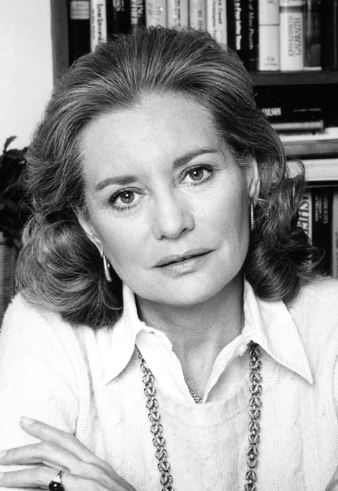
Barbara Jill Walters (1929-2022) was born in Boston to Jewish parents who were the children of immigrants from Russia and Poland (the original family last name was Waremwasser). Her father worked in show business and moved the family around many times, having also made and lost his fortune several times. After earning her BA in English, Walters worked for a small NBC-affiliate in New York. Her first production was a 15-minute kids show. In 1955, she moved to CBS to work as a writer for The Morning Show. Six years later, she switched to NBC’s The Today Show. Eventually, she went from writer to “Today Girl”, meaning a female journalist who relayed only local news and weather, since in those days it was thought a woman could not deliver “serious news”. Walters did eventually break through to be taken as a serious reporter. By 1971, she had her own show called Not for Women Only. Three years later, she became the first-ever female co-host of a national news program. Hugely popular, Walters was soon able to sign a whopping $5-million deal with ABC, making her the first American female news anchor and the highest paid news anchor of all time (male or female). In 1979, she joined 20/20, and turned it into one of America’s most-watched shows. Walters was famous for her interviews of presidents and global leaders. In 1977 she interviewed both Anwar Sadat and Menachem Begin. She would go on to interview the likes of Yeltsin and Putin, Castro and Gaddafi, Thatcher and Indira Gandhi. Her interview of Monica Lewinsky in 1999 is still the most-watched news program of all time, with 74 million viewers having tuned in. Walters was co-creator, co-producer, and co-host of The View, which won an Emmy for Best Talk Show in 2003. She also won an Emmy for Best Talk Show Host. Walters retired from 20/20 in 2004, and from The View in 2014, and her final official interview was with Donald Trump the following year. She wrote the bestselling book How to Talk with Practically Anybody About Practically Anything, as well as a popular memoir. Walters received many honours, including a star on the Hollywood Walk of Fame, induction into the TV Hall of Fame, a Disney Legends award, and a Lifetime Achievement Award from the National Academy of Television Arts and Sciences. Sadly, she passed away last week.

Falling in Love with Judaism in Cameroon

In a Monastery, a Menorah Brings a Jew Back Home

Words of the Week

Only he who has been a force for human goodness, and abides in hearts and souls made better by his presence during his pilgrimage on earth, can be said to have lived, only such a one is heir to immortality.
Rabbi Dr. J.H. Hertz