Biggest Superstar of the 19th Century
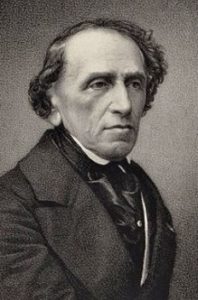 Jacob Liebmann Beer (1791-1864) was born near Berlin, then in the Kingdom of Prussia, to a wealthy, observant Jewish family. His father was the president of Berlin’s Jewish community and ran a large synagogue in his home. His mother received the prestigious Order of Louise from the Prussian queen, and because she was an observant Jew, got a small statue instead of the traditional cross. The Beer children received the best secular education, as well as private tutors in Jewish studies. All three sons became famous: Wilhelm Beer as an astronomer, Michael Beer as writer, and Jacob Beer as a composer. When his beloved grandfather Meyer passed away, Jacob added the name to his own, changing it to Meyerbeer. He also vowed never to abandon the faith of his fathers, while many of his friends “converted” to Christianity to be accepted in society and to take on jobs otherwise barred to them. Meyerbeer was taught music from a young age by some of the best instructors of the time. He performed his first public concert at just age nine. Meyerbeer’s early work involved writing religious music for his father’s synagogue, and his first big production was a ballet-opera called The Fisherman and the Milkman, followed by the musical God and Nature, and the opera Jephtha’s Vow. He wrote beautiful pieces for the piano, clarinet, and full orchestras, and vacillated between composing and playing music himself (which he preferred). Having faced many difficulties in his youth, Meyerbeer founded the Musical Union to support up-and-coming composers. In 1813, he was appointed Court Composer for the Grand Duke of Hesse. Several years later, he felt he had lots more to learn and moved to Italy. There he wrote some of his most renowned operas. By 1824, he had become world-famous, and his 1831 grand opera, Robert le diable, made him the equivalent of a modern-day superstar. The following year, he received the Legion of Honour, the highest award in France. In 1841, he was described as the “German Messiah” who would save the Paris Opera from its death, and shortly after also became director of music for the Prussian royal court. Not surprisingly, his success and wealth drew the ire of his colleagues, and Meyerbeer faced terrible criticism and anti-Semitism (especially from Richard Wagner, once his pupil). Meyerbeer remained graceful nonetheless, and never responded to the attacks on him. He continued to compose popular works until his last day, and has been credited with being “the most frequently performed opera composer” of the 19th century. He inspired the works of later greats like Dvořák, Liszt, and Tchaikovsky. He was also a generous philanthropist, a devoted husband and father to five children, and never broke his vow to die an observant Jew. Meyerbeer remains one of the greatest musicians of all time.
Words of the Week
One who looks for a friend without faults, will have none.
– Hasidic proverb
 Sheldon Leonard Berman (1925-2017) was born in Chicago. After serving in the navy during the Second World War, he went to study drama and theatre. Berman soon moved to New York in search of his big break, and in the mean time made a living as a taxi driver, dance instructor, speech therapist, and drug store worker. Failing to find success, Berman returned to Chicago and joined the Compass Players actors group. This group would transform into The Second City, an improv troupe that became one of the most influential in the world, eventually spawning Saturday Night Live, and many other hit shows and comedy clubs. In 1957, Berman started doing stand-up comedy and was soon signed to a record deal. His first three albums all went gold, and Berman won the first-ever Grammy for a comedy recording. With this, Berman launched an industry, making comedy albums popular and paving the way for countless future comedians. Berman starred on Broadway, and appeared on multiple TV shows, including The Ed Sullivan Show, The Twilight Zone, and MacGyver; as well as Friends, The King of Queens, Curb Your Enthusiasm, and Grey’s Anatomy later in his career. Berman also appeared in 11 films, wrote three books, two plays, and numerous poems and TV scripts. For twenty years, he taught humour writing at the University of Southern California. Berman was famous for his clean, innocent jokes; for making the annoyances of everyday life hilarious. Great comedians like Steve Martin, Woody Allen, and Jerry Seinfeld followed in his footsteps, and credited him with both being an inspiration, and “changing modern stand-up”. Sadly, Berman passed away last month from complications related to Alzheimer’s. Berman left behind a daughter, and a wife to whom he was happily married for an incredible seventy years. This was the achievement he was most proud of, and said: “The love we have and the way it has grown, that’s what I’d like to be remembered for.”
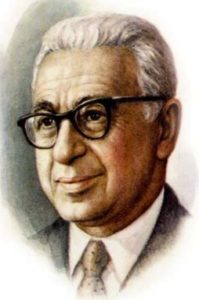 Matvei Isaakovich Blanter (1903-1990) was born in the Russian Empire in a small Ukrainian town. He studied music and became a master pianist and violinist. In the 1920s, Blanter became popular for his dance and jazz songs. After the rise of Stalin, he was “recruited” to write propaganda pieces and composed some of the Soviet Union’s greatest hits. In 1938, he wrote the music for the internationally-acclaimed song “Katyusha”, by far the most well-known Russian tune in the world. (Click