Israel’s Great Pioneers
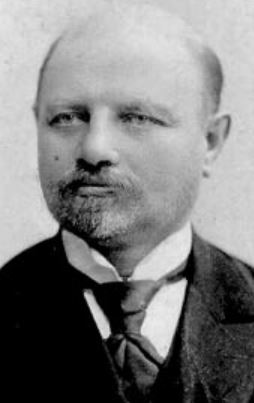 Israel Belkind (1861-1929) was born near Minsk, Belarus. After a Hebrew elementary school education, he enrolled at a Russian gymnasium and planned to study in university. However, the terrible 1881 pogroms turned him into a passionate Zionist, and the rest of his life was dedicated to saving the plight of diaspora Jews. He founded an organization called BILU (an acronym of Beit Yaakov Lechu v’Nelcha, from an End of Days prophecy in Isaiah 2:5, where the Biblical prophet encourages Jews to get up and take possession of their land). In the summer of 1882, Belkind led the first group of Biluim to the Holy Land. After several years of working on Jewish agricultural settlements, he decided to focus on education instead. He taught at a school in Jaffa, and then in Jerusalem. In 1904, Belkind started his own school for children orphaned by the devastating Kishinev Pogrom. Meanwhile, Belkind wrote several important Zionist texts, and was also a noted anthropologist. Intriguingly, he did a great deal of research among the local Arab population and came to the conclusion that they must be the descendants of Jews who had been forcibly converted to Islam! He noted how the locals did not even refer to themselves as “Arabs”, but only “Muslims” (they called the Bedouins “Arabs”), and many of them knew about their Hebrew ancestors. They had various customs that resembled Jewish ones, used an Arabic dialect peppered with old Jewish terms, and venerated the same Biblical figures as the Jews. His dream was thus to open Hebrew schools for the Palestinians, and slowly return them to the Jewish fold. (Later, thanks to the opportunities created by the Zionist movement, a massive influx of non-indigenous Arab immigrants came from neighbouring areas, particularly Egypt, Syria, and Lebanon.)

Yehoshua and Olga Hankin in 1910
Belkind’s older sister was Olga Hankin (1852-1943). She studied in St. Petersburg to become a midwife. Olga joined her brother in the Holy Land during the First Aliyah of 1886, making her the first professional midwife in the region. She soon became the most famous midwife in the land, and was sought out by Jews, Christians, and Muslims alike. She made a name for herself as being the only woman to ride alone on horseback—even at night—and became something of a feminist icon. Olga married Yehoshua Hankin (1864-1945), originally from Russia. Hankin was well-respected by local Arabs, and was able to negotiate a purchase of a massive plot of land on behalf of the Zionist movement in 1890. This land became what is today the city of Rehovot, a name proposed by Israel Belkind based on a verse in Genesis. In 1891, using donations from diaspora Jews, the Hankins purchased what is today Hadera (the neighbourhood of Givat Olga in Hadera is named after Olga Hankin). In 1908, Yehoshua Hankin joined the Palestine Land Development Company and became its number-one real estate agent in the Holy Land. His most famous deal was the Sursock Purchase, acquiring Haifa Bay and the Jezreel Valley from the Sursocks (an Orthodox Christian family who had purchased the land from the Ottomans decades earlier). Hankin’s work secured hundreds of thousands of dunams of land for the Jewish cause, and he is credited with being the top negotiator of land purchases in Israel’s history.
Understanding the Arab-Israeli Conflict in 5 Easy Points
The Incredible Story of the “Mensch of Malden Mills”
Words of the Week
We are worth what we are willing to share with others.
– Sir Moses Montefiore

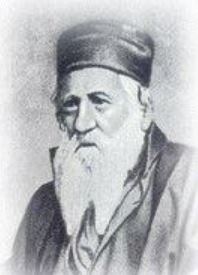
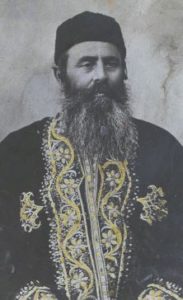 Shlomo ben Yakov Moussaieff (1852-1922) was born in the emirate of Bukhara (present-day Uzbekistan). Both a renowned rabbi and a wealthy businessman, he made aliyah to the Holy Land in 1888 – bringing with him forty cases of gold – and was one of the founders of Jerusalem’s famous Bukharian Quarter. Moussaieff built four synagogues, and homes for 25 poor families. Meanwhile, he published a prayer book and disseminated it widely, making it his mission to inspire more Jews to pray regularly. He also continued his business ventures, particularly in real estate, tea, silk, and gemstones. Moussaieff was an avid collector of rare manuscripts, and amassed an impressive library with 225 ancient texts, including prized manuscripts of Maimonides and the mystical teachings of the Arizal. Until his last days, Moussaieff was committed to the development of Israel, and stated in his will that only those of his seven children that remain in Israel would receive any inheritance.
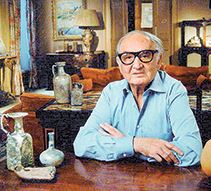 His grandson, also Shlomo Moussaieff (1923-2015), though better known as Sam, would become even more famous. One of twelve children raised in Jerusalem, Sam Moussaieff ran away from home as a teen to avoid his strict father. Living in a synagogue, he worked for a carpenter and sold ancient coins he would find in Jerusalem’s caves and tombs. Once arrested by Arab policemen, he ended up in a Muslim school for nearly a year, becoming proficient in Arabic and the Koran. At 17, Moussaieff enlisted in the British Army to fight the Nazis. After World War II, he fought for Israel’s independence and was captured by the Jordanians, who imprisoned him for a year. Moussaieff returned to Jerusalem and joined the family jewellery business. He soon opened his own antiquities shop in Jaffa, at times getting in trouble for smuggling goods. In 1963, Moussaieff was offered to have his record cleared of legal issues, as well as the rights to an exclusive shop in London’s Hilton Hotel, in exchange for handwritten letters from Maimonides which he owned. Moussaieff accepted and moved to London. His shop soon specialized in jewellery, and he became the dealer of choice for wealthy barons from Arab oil states thanks to his pristine Arabic. Moussaieff became world-renowned for his extremely rare and special gems. He owned the most precious stone in the world: a red diamond valued at $20 million. In 2011, he was ranked among the richest Londoners, with an estimated worth of some $350 million. Moussaieff amassed a personal collection of over 60,000 ancient artifacts, including millennia-old seals from Jerusalem’s First Temple, and reportedly even items associated with the forefather Abraham! His stated goal was to collect indisputable evidence proving the accuracy of the Torah. Moussaieff was given an honourary degree by Bar Ilan University (to whom he donated many artifacts, including his grandfather’s ancient manuscripts) which established the Dr. Shlomo Moussaieff Center for Kabbala Research. Interestingly, Moussaieff once purchased an ancient Torah scroll for $1 million from the Allenby family – who had the Torah because the elder Shlomo Moussaieff gave it as a gift to General Allenby during World War I!