
Two Inspiring Sages
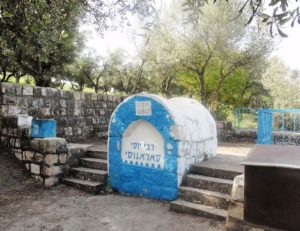
Tomb of Rabbi Yosef Saragossi in Ein Zeitim, Israel
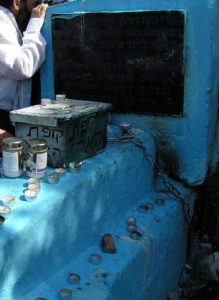
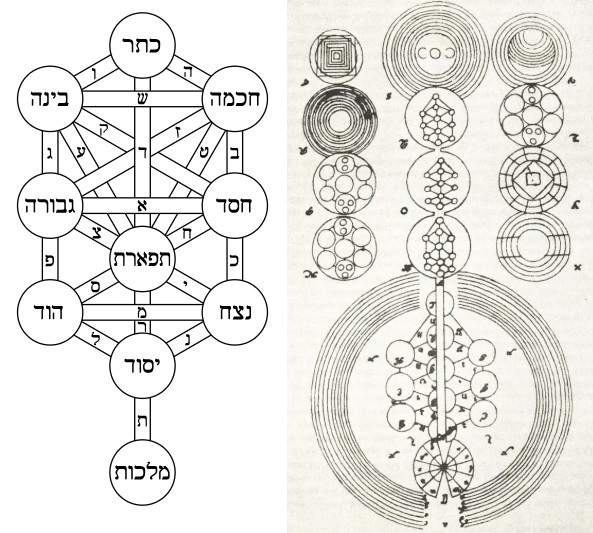
Yosef Saragossi (1460-1507) was born to a religious Sephardic family, either in Saragossa, Spain, or in Syracuse, Sicily. He became a respected rabbi at a young age. Around the time of the Spanish Expulsion of 1492, Rav Saragossi settled in Tzfat. He discovered a tiny community of just 300 poorly-educated Jews, with not a single full-time rabbi among them. Rav Saragossi revived the three synagogues in the city and founded new schools, reinvigorating Jewish life. His yeshiva soon attracted students from far and wide. Within a century, Tzfat was a major centre of Jewish learning, and the capital of Jewish mysticism. There, Rabbi Yosef Karo would produce the Shulchan Arukh, still the central code of Jewish law, and there the Arizal (Rabbi Isaac Luria) revealed his Kabbalistic system, forever revolutionizing Judaism. Rav Saragossi was beloved not only by Tzfat’s Jews, but by its Muslim residents, too. In fact, the Muslim governor at the time paid two-thirds of Rav Yosef’s salary just to keep him from leaving. Rav Saragossi’s tomb remains an important pilgrimage site, and is known as a place of miracles. Because of one such miracle involving 500 white hens, he has been called Tzadik haLavan, “the White Saint”.
One of Rav Saragossi’s foremost students was David ben Shlomo ibn Abi Zimra (c. 1479-1589). He, too, was born in Spain, and was exiled around the time of his bar mitzvah. His family settled in Tzfat, and the young David studied in Rav Saragossi’s yeshiva. Becoming a renowned rabbi of his own (later known by his initials, Radbaz, as is common among Jewish sages), he moved to Egypt and became a member of its beit din, the Jewish court. He would soon be appointed Hakham Bashi, Egypt’s chief rabbi. Meanwhile, the Radbaz made some good investments, and became exceedingly wealthy. He built a new yeshiva in Cairo, and it was there that a young Isaac Luria, the Arizal, would get his start. After serving as Chief Rabbi for nearly forty years, writing a number of important books, and penning over 3000 responsa, the Radbaz retired at age 90. He left most of his wealth for the poor, then returned to the Holy Land. Although he wished to settle in Jerusalem, the Ottomans made it difficult for Jews to live there, so the Radbaz returned to Tzfat. He was immediately placed on the highest beit din, alongside Rav Yosef Karo. The Radbaz merited to live many more years, inspiring a new generation of rabbis, including the great Rabbi Chaim Vital. He was over 100 years old when he passed away.
Words of the Week
It is never too late to be what you might have been.
– George Eliot
 Ezer Weizman (1924-2005), the nephew of Israel’s first president, Chaim Weizmann, was born in Tel Aviv and raised in Haifa. In his youth, he joined the Haifa Aviation Club and was flying planes by age 16. At 18, in the midst of World War II, he enlisted in the British Royal Air Force and served in Africa and India. After the war, Weizman lived in London and studied aeronautics. It was there that he joined the Zionist paramilitary group, Irgun. Weizman returned to Israel to fight in the Independence War. He was one of Israel’s very first fighter pilots, co-founded its air force, and participated in the first air force mission. He continued working for the army after the war, and in 1958 became the commander of the Israeli Air Force. He modernized the IAF, personally trained its pilots, and transformed it into the powerful and feared juggernaut that it is today. In 1967, Weizman was the IDF’s chief of military operations, and helped persuade the Israeli government to launch a preemptive strike against its aggressors. He directed the surprise attack on Arab air forces on the first day of the Six-Day War, totally destroying their air power and thus securing Israel’s lightning victory. (It has been said that the Six-Day War was won by the Israeli air force in the first six hours!) In 1969, Weizman – now a major general and deputy chief of staff – retired from the military and joined the Gahal political party (the precursor of Likud). He served as a Minister of Transportation and later as Defense Minister. He oversaw the development of Israel’s Lavi fighter jet, and the critical 1978 campaign in Lebanon (Operation Litani). Meanwhile, Weizman also became an important peace negotiator. He spoke Arabic fluently, and grew close to Egyptian president Anwar Sadat, who went so far as to call Weizman his “younger brother”. Not surprisingly, Weizman played a key role in Israel’s 1979 peace treaty with Egypt. He later founded his own party, Yachad, and sat on the Knesset between 1984 and 1992, serving as Minister for Arab Affairs and Minister of Science and Technology. A year after leaving the Knesset, Weizman was elected Israel’s seventh president. By this point, he had built a reputation as a dove, and worked hard to promote peace. He was credited with making the office of president more relevant in Israeli society, and was praised for his warmth and concern for all of Israel’s citizens, including Arabs and Druze. After being reelected to a second term, Weizman resigned as president in 2000, and passed away five years later. He has been voted the 9th greatest Israeli of all time.