Tag Archives: Yeshiva

Jew of the Week: Isaac Aboab da Fonseca

America’s First Rabbi

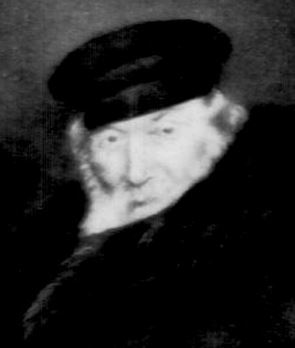
Rabbi Isaac Aboab da Fonseca, the first rabbi to set foot in America

Rabbi Isaac Aboab da Fonseca, the first rabbi to set foot in America

Isaac Aboab da Fonseca (1605-1693) was born in Portugal to a family of Conversos, or “Marranos” – Jews who had been forced to convert to Christianity during the Inquisition. Despite the conversion, their persecution persisted, and Conversos often continued to practice Judaism in secret. In 1581, the Dutch Republic separated from the Spanish Empire, triggering a large migration of Sephardic Jews to the area. By 1603, Dutch law officially made it legal for Judaism to be practiced openly. In 1612, da Fonseca’s family moved to Amsterdam, where they could finally practice Judaism once again. Da Fonseca went to study under the tutelage of the great doctor, poet, mathematician, and rabbi Isaac Uziel, who had opened a new Talmudic academy a few years earlier. Da Fonseca showed his genius early on, and was made a rabbi by the age of eighteen. Some twenty years later, he was invited to serve as the chief rabbi of the Dutch colony of Pernambuco in Brazil. This colony had a population of about 600 Sephardic Jews that fled the Spanish and Portuguese Inquisition. Da Fonseca’s arrival in 1642 likely made him the first rabbi to set foot in the Americas. During his thirteen years there, the colony established a proper synagogue, mikveh, and yeshiva – perhaps the very first in the New World – and the Jewish population grew to as many as 5000. During this time, he also wrote what is thought to be the first Hebrew text produced in America. Unfortunately, a Jesuit priest convinced the Portuguese to reconquer the colony and destroy its Jews who “have their open synagogues there, to the scandal of Christianity”. The Jews took up arms alongside the small Dutch army, and resisted the Portuguese forces for nine years. The Portuguese ultimately prevailed, but the Dutch would not surrender until the Portuguese agreed to let the Jews go. The majority sailed back to Amsterdam with da Fonseca. (One of these ships was attacked by pirates, lost its way, and ended up in the nascent colony of New Amsterdam. These first Jews in North America helped establish what would later become New York City.) Back in Amsterdam, da Fonseca soon became the city’s chief rabbi. He was on the panel that excommunicated the famous philosopher Benedict (Baruch) Spinoza. In his old age, Rabbi da Fonseca became known as a great mystic and Kabbalist. He passed away at 88 years of age. In 2007, the Jerusalem Institute published a book of his writings and teachings.

Words of the Week

If you want to change the world, change yourself.
– Jack Ma

Jew of the Week: Rashi

Illustration of Rashi from 1539

Illustration of Rashi from 1539

Shlomo Itzchaki (1040-1105) was born in Troyes, France, the only child of a rabbi. He began his Torah studies at age 5 under the tutelage of his father. At 17, he married and moved to Worms, Germany to study at the yeshiva of Rabbi Yakar. He later studied under several other rabbis, including his uncle, and the chief rabbi of Mainz. At 25, now himself a rabbi, Itzchaki returned to Troyes and was invited to serve on the town’s rabbinical court. Soon after, he took over as the head of the court, and the central authority on Jewish religious and legal matters. By 30, Rabbi Itzchaki had opened a yeshiva, which went on to become a centre of Torah study for countless Jews. Undoubtedly, the Rabbi is most famous for his profound commentaries on the Bible and Talmud. These are included in just about every publication of the Bible and Talmud since the 1500’s. In these texts, he is referred to simply as “Rashi”, an acronym of his initials. Rashi’s commentary on the Five Books of Moses alone inspired over 300 future commentaries. Even the Christian world studied his texts (here, Rashi was sometimes referred to by his Latinized name, Isaacides). In fact, many Christian commentaries on the Bible are based on Rashi’s texts. One of the more famous ones, that of the monk Nicolas de Lyre, was so heavily drawn from Rashi that de Lyre was nicknamed “Rashi’s ape”. Nonetheless, it was de Lyre’s commentary that inspired Martin Luther, the father of Protestant Christianity, and Luther used this text to produce his famous translation of the Bible. In addition to his commentaries, roughly 300 of Rashi’s other legal texts exist today. These texts are studied by linguistic scholars, too, who are looking to better understand both Hebrew and medieval French. According to tradition, Rashi also worked as a winemaker to support himself financially. He had three daughters who were scholars in their own right, with some suggesting that they completed a number of his unfinished commentaries, and possibly even donned tefillin. Rashi’s grandsons were some of the biggest rabbis of the following generation, including Rashbam and Rabbeinu Tam. Recently, an ancient map was discovered showing the location of Rashi’s grave. It happens to be under a public square in Troyes. A monument now stands over the site.

Words of the Week

The first gulp from the glass of natural sciences will turn you into an atheist, but at the bottom of the glass God is waiting for you.
– Nobel Prize-winning physicist Werner Heisenberg

Jews of the Week: Rav Uziel and the Chofetz Chaim

The Chofetz Chaim

The Chofetz Chaim

Israel Meir Kagan (1839-1933) was born in what is today Belarus to an Orthodox Polish-Jewish family. After his father’s passing when he was just ten years old, the family moved to Vilnius where Kagan continued his Jewish studies. Quickly noted as a great scholar, at the age of 17 he was married and appointed rabbi of the town of Radin. Soon after, he founded the Radin Yeshiva, which would go on to become one of the greatest yeshivas in the Ashkenazi world. Meanwhile, Rabbi Kagan wrote many popular books of wisdom, most notably Chofetz Chaim, a book about the laws of proper speech, the title of which became Rabbi Kagan’s nickname. His Mishna Berura became a standard text of Jewish law, and still used extensively today. He wrote nearly two dozen other books on a wide array of topics. At the same time, the Chofetz Chaim traveled across Europe to inspire Jews to observe the Torah, and to counter the growing secular movement. He was also an important member of Agudath Israel. Click here to see rare footage of the Chofetz Chaim at the First Congress of Agudath Israel in 1923.

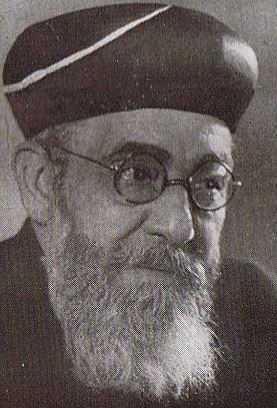
Rav Uziel

Rav Uziel

Ben-Zion Meir Chai Uziel (1880-1953) was born in Jerusalem, the son of the president of the city’s Sephardic community. Like the Chofetz Chaim, Uziel was also quickly noted as a great scholar, and by age 20 founded his own yeshiva. By 31, he was the Sephardic Chief Rabbi of Jaffa, where he worked alongside his Ashkenazi counterpart, Rabbi Kook, bridging the two communities together. During World War I, he worked tirelessly to stop the persecution of Jews, which earned him a sentence of exile in Damascus. In 1923 he returned to Israel as the Chief Rabbi of Tel-Aviv, and in 1939 became the Sephardic Chief Rabbi of Israel, a post he held until his passing in 1953. Rabbi Uziel was a founding member of the Jewish Agency, and played a key role in the founding of the State of Israel. Of course, he wrote a great deal of widely-read Torah thought and commentary as well. Rav Uziel and the Chofetz Chaim passed away on the same day, twenty years apart: the 24th of Elul.

Shana Tova! Rosh Hashanah Begins This Sunday

Words of the Week

In Jewish history there are no coincidences.
– Elie Wiesel