
Tag Archives: Sephardic Jews

Jew of the Week: Lev Leviev

King of Diamonds

Lev Leviev

Lev Leviev

Lev Avnerovich Leviev (b. 1956) was born in Tashkent, Uzbekistan (then part of the USSR) to an observant Bukharian-Jewish family, the son of a mohel. In 1971, the family moved to Israel, where Leviev dropped out of school and apprenticed at a diamond-polishing factory instead. After serving in the IDF, he started his own successful diamond business. When the USSR collapsed, Leviev took advantage of the opportunity to expand his enterprise into the former Soviet Union. With the blessing of the Lubavitcher Rebbe, his business flourished tremendously, and Leviev soon expanded his reach into other ventures, including real estate, construction, and the chemical industry. Today, his net worth is estimated at $1.2 billion, with diamond mines in Angola, Namibia, Alaska, and Russia. Now the world’s largest diamond cutter and diamond polisher, he has been nicknamed the “King of Diamonds”. Meanwhile, Leviev has joined the ranks of the top Jewish philanthropists in the world, with estimates of donating over $50 million every year. As one of the main financial supporters of Chabad, he has sponsored over 300 rabbis and 10,000 other Chabad staff around the world. A staunch supporter of Israel, Leviev’s philanthropic (and business) activities also include funding Israeli settlements, along with other Israeli institutions. He is also the president of the Federation of Jewish Communities of the CIS (former Soviet Union), and the president of the World Congress of Bukharian Jews. Leviev’s main charitable organization, the Ohr Avner Foundation (named after his father), funds countless Jewish schools, synagogues, educational institutions, kindergartens, and youth programs in over 500 communities around the world. Incredibly, Leviev also carried on the old family tradition of being mohels, and has performed over one thousand circumcisions himself! He remains fully observant; his businesses closed on Shabbat. Leviev has nine children, and currently resides in London, England.

Words of the Week

For me, Israel, Jerusalem, and Haifa are all the same. So are the Golan Heights. As far as I’m concerned, all of Eretz Israel is holy. To decide the future of Jerusalem? It belongs to the Jewish people. What is there to decide? Jerusalem is not a topic for discussion.
– Lev Leviev
Jews of the Week: Moses Levy and David Levy Yulee

The Abolition of Slavery and the First Jewish Senator 

David Levy Yulee

David Levy Yulee

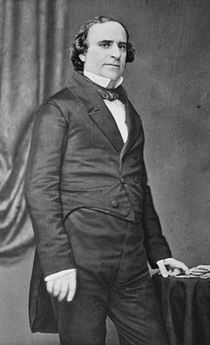
Moshe Eliyahu Levy Yulee (1782-1854) was born in Morocco to a wealthy Sephardic Jewish family. His father was a prominent figure in the Ottoman Empire, and an adviser to the Sultan. Moshe went off on his own across the Atlantic, settling in the US Virgin Islands, and dropping the family name of “Yulee”, now going by Moses Elias Levy. He made his own fortune in the lumber and merchant trades, then moved the whole family to Florida. There, he purchased 100,000 acres of land and established it as a refuge for persecuted European Jews. He also planned for a 50,000 acre “New Jerusalem” in Florida. Levy has been described as a “proto-Zionist”, as he sought to re-establish a Jewish homeland in Israel long before the official Zionist movement began. Though he originally owned slaves, Levy soon joined the anti-slavery movement, and in 1828 published the popular treatise A Plan For the Abolition of Slavery. Levy’s work was instrumental in abolishing slavery in both the United States and across the British Empire. In 1835, Levy’s fortunes soured with the outbreak of the Second Seminole War, which devastated his land in Florida, destroyed the refuge, and strained his finances. In poor health, Levy retired to St. Augustine, Florida, where he slowly rebuilt his wealth.

His son, David Levy Yulee (1810-1886) was elected to the House of Representatives in 1841. When Florida became a state in 1845, he became the first Jew in the US Senate. The following year, he married into a prominent Kentucky family, and to do so, had to convert to Christianity. Though he only did this in name at the request of his wife, the move drove a wedge between David and his father, and the two became permanently estranged. After failing to win re-election in 1850, David turned to business, first opening a sugar plantation, and then spearheading the construction of railroads across Florida. Yulee returned to the Senate in 1855, after his father’s death. When the Civil War began, he joined the Confederates, for which he was imprisoned following the war. After being released, Yulee continued his railroad ventures, and went on to be nicknamed the “Father of Florida Railroads”. The town of Yulee and Yulee County in Florida are named after him, and he was selected as one of the “Greatest Floridians” in 2000.

Words of the Week

You are not as great as you think, and the world is not as bad as it seems.
– Rabbi Wolf of Strikov

Jew of the Week: Shula Cohen

Shula Cohen, "the Pearl"

Shula Cohen, “the Pearl”

Shulamit Cohen (b. 1917) was born in Argentina and raised in Jerusalem with her twelve brothers and sisters. Her father was from a wealthy Egyptian-Jewish merchant family, and her mother was the daughter of a prominent rabbi in Jerusalem. In 1936, the family experienced severe financial strain, and Shulamit’s father arranged her to marry Joseph Kishak-Cohen, a wealthy businessman from Beirut. Shula moved to Lebanon, and had five kids by the time she was 24. One day in 1947, she overheard people discussing military activities against Israel. Shula recorded the information in a letter to the Haganah, which was fighting for a Jewish state in Israel, addressing it to her brother in Jerusalem. Five weeks later, an agent of the Haganah’s secret service contacted her. For the next 14 years, Shula worked as an Israeli spy in Lebanon. Her work consisted of two major goals. The first was to gather intelligence about Arab military activities, which she was able to do by getting herself into Lebanon’s high society, including the home of the prime minister, who considered her like one of his own daughters. The second was to help smuggle Jewish families fleeing persecution in the Arab world, particularly from Syria. Over the years, she helped countless families find safe passage to Israel. Shula communicated with the secret service using invisible ink, under the code name “Pearl”. She was first caught for smuggling in 1952. Pregnant at the time, Shula was taken to jail just three weeks after giving birth, and spent 36 days in confinement. She continued her clandestine activities for another 9 years before things got too dangerous and she moved to Rome for three months. Upon her return in 1961, she was immediately arrested for espionage. The trial went on for several months during which she was brutally tortured. She was initially sentenced to death by hanging, but the verdict was softened because she was a mother of seven. Her sentence was reduced to 20 years of hard labour. During the Six-Day War in 1967, Israel captured Lebanese citizens, and used them in a prisoner exchange for Shula and a captured Israeli pilot. Shula has lived in Israel ever since, and still volunteers at schools and IDF bases, despite her advanced age. Two of her sons have high-ranking roles in the Israeli government. A book about her story has been published, called Shula: Code Name The Pearl.

UPDATE: Sadly, Shula Cohen passed away in May of 2017.

Words of the Week

Success is the ability to go from one failure to another with no loss of enthusiasm.
– Winston Churchill