Tag Archives: Sephardic Jews

Jew of the Week: Bracha Qafih

Rabbanit Qafih

Rabbanit Qafih

Bracha Qafih (1922-2013) was born in Yemen to a traditional Jewish family. To save a young orphan boy from being taken away by the Muslim authorities, she was married to him at the age of just 11. The boy grew up to be Rabbi Yosef Qafih, better known as Rabbi Kapach, one of the greatest Yeminite Jewish religious leaders, and a judge on Israel’s Rabbinical Supreme Court. Rabbanit Qafih had three kids by the time she was 18, and immigrated to Israel soon after with her family. Settling in Jerusalem, she opened up her own embroidery business, which grew quickly to employ over 50 women. Qafih then devoted her time to charity work. Each holiday, she would organize food packages for the impoverished of the city, distributing them from her own home with the help of student volunteers. Eventually, she ran a food bank that provided regular sustenance to over 5000 people, an endeavour she oversaw for over 50 years, often putting herself in personal debt. She also ran a gmach for wedding gowns, where poor families could borrow wedding dresses for free, and organized a summer camp for disadvantaged children. She made sure that orphans could have proper bar mitzvahs, and advised countless people in need, including prostitutes and drug addicts, many of which credit her with helping them overcome their challenges. Her inspiration was her grandfather, who took her with him to distribute food to the poor in Yemen from the time that she was just 6 years old. Rabbanit Qafih continued her charity work into her old age, despite her poor health. She was known to already be preparing meals by four in the morning. Among many other decorations, in 1999, Rabbanit Qafih was awarded the Israel Prize for her immeasurable contributions to charity and Israeli society at large, where many affectionately referred to her as their grandmother.

Yom Kippur Begins Tonight! Gmar Chatima Tova to Everyone

Words of the Week

It’s not charity. It’s my responsibility.
– Rabbanit Bracha Qafih
Jews of the Week: Rav Uziel and the Chofetz Chaim

The Chofetz Chaim

The Chofetz Chaim

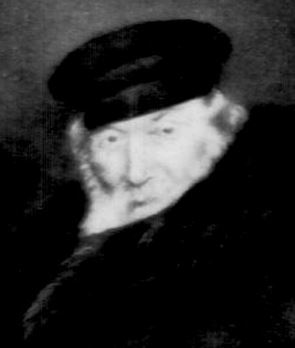
Israel Meir Kagan (1839-1933) was born in what is today Belarus to an Orthodox Polish-Jewish family. After his father’s passing when he was just ten years old, the family moved to Vilnius where Kagan continued his Jewish studies. Quickly noted as a great scholar, at the age of 17 he was married and appointed rabbi of the town of Radin. Soon after, he founded the Radin Yeshiva, which would go on to become one of the greatest yeshivas in the Ashkenazi world. Meanwhile, Rabbi Kagan wrote many popular books of wisdom, most notably Chofetz Chaim, a book about the laws of proper speech, the title of which became Rabbi Kagan’s nickname. His Mishna Berura became a standard text of Jewish law, and still used extensively today. He wrote nearly two dozen other books on a wide array of topics. At the same time, the Chofetz Chaim traveled across Europe to inspire Jews to observe the Torah, and to counter the growing secular movement. He was also an important member of Agudath Israel. Click here to see rare footage of the Chofetz Chaim at the First Congress of Agudath Israel in 1923.

Rav Uziel

Rav Uziel

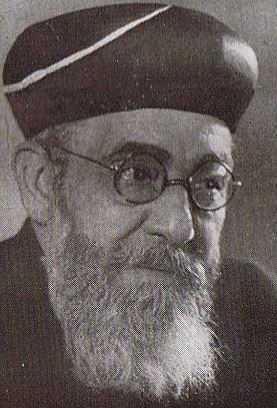
Ben-Zion Meir Chai Uziel (1880-1953) was born in Jerusalem, the son of the president of the city’s Sephardic community. Like the Chofetz Chaim, Uziel was also quickly noted as a great scholar, and by age 20 founded his own yeshiva. By 31, he was the Sephardic Chief Rabbi of Jaffa, where he worked alongside his Ashkenazi counterpart, Rabbi Kook, bridging the two communities together. During World War I, he worked tirelessly to stop the persecution of Jews, which earned him a sentence of exile in Damascus. In 1923 he returned to Israel as the Chief Rabbi of Tel-Aviv, and in 1939 became the Sephardic Chief Rabbi of Israel, a post he held until his passing in 1953. Rabbi Uziel was a founding member of the Jewish Agency, and played a key role in the founding of the State of Israel. Of course, he wrote a great deal of widely-read Torah thought and commentary as well. Rav Uziel and the Chofetz Chaim passed away on the same day, twenty years apart: the 24th of Elul.

Shana Tova! Rosh Hashanah Begins This Sunday

Words of the Week

In Jewish history there are no coincidences.
– Elie Wiesel

Jew of the Week: Yehoshua Sofer

The Father of Israeli Hip Hop – and Hebrew Martial Arts 

Nigel Wilson, aka Yehoshua Sofer

Nigel Wilson, aka Yehoshua Sofer

Nigel Wilson (b. 1958) was born in Jamaica to a Chasidic family, and grew up in Los Angeles. There, he fervently studied the Korean martial arts of Tang Soo Do and Kuk Sool Won, earning black belts in each before working as a martial arts trainer and bodyguard. At the same time, he took a great interest in LA’s hip hop scene. In 1989, Wilson moved to Israel and became a rap artist himself, under the stage name Nigel Ha’Admor. His songs gave rise to a new form of “street Hebrew”, and inspired later famous Israeli rappers like Subliminal and Hadag Nahash, which is why some have described Wilson as the “father of Israeli hip hop”. By 2000, his rapping days were behind him, and Wilson went back to martial arts, heading a Korean martial arts school in Jerusalem for a couple of years before opening his own schools in Tel Aviv and Jerusalem. These schools, however, were quite different, teaching a new martial arts style that Wilson, now known as Yehoshua Sofer, called Abir Qesheth. Hebrew for “Bow Warrior”, Sofer claimed that this was an ancient Israelite martial art going back to at least the time of King David, and passed down in secret from generation to generation by a small group of grandmasters. He claimed to have received this wisdom from his own father, tracing it back through their Yemenite Jewish roots, as the secluded Jews in Yemen were the last to carry on the Abir tradition. Not surprisingly, many scoff at Sofer’s claims, especially in light of his background in the entertainment industry. However, researchers have indeed found a great deal of supporting evidence for his claims, and Abir has grown tremendously in popularity. Today, it is a complete fighting system with unique, practical self-defense tactics based on the letters of the Hebrew alphabet. More significantly, Abir incorporates spiritual teachings, Jewish prayer, and Torah study, making it truly one-of-a-kind. Before all else, Sofer’s greatest vision is to end the age-old stereotype of the “weak diaspora Jew” and bring back the old spirit of the ancient Hebrew warrior.

Words of the Week

Impossible is a word found only in the dictionary of fools.
– Napoleon Bonaparte