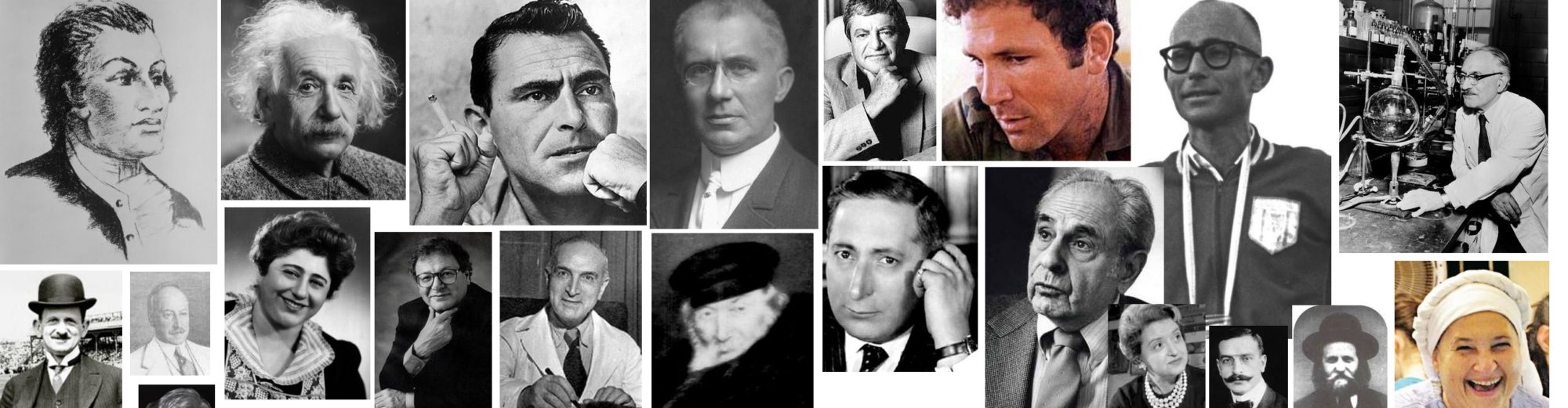
Father of Stand-Up Comedy
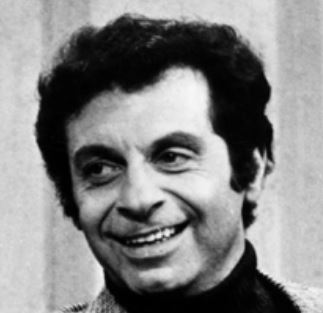 Morton Lyon Sahl (1927-2021) was born in Montreal to an immigrant Jewish family, and grew up in Los Angeles where his father unsuccessfully sought to become a Hollywood writer. As a 15-year old during World War II, Sahl dropped out of high school and joined the US Army by lying about his age. Though the trick didn’t work, Sahl did eventually join the US Air Force. After leaving the military, he earned a degree in urban planning but dropped out of his Master’s program to become an actor and writer. For several years, he struggled to find a gig as a comedian (NBC told him he would never be one!) In the meantime, he worked various odd jobs to make a living, including selling used cars. Eventually, he managed to get hired at the hungry i club in San Francisco for $75 a week. His stand-up show was an instant hit and by the end of the year, he was performing for packed audiences and making $3000 a week. Sahl then travelled extensively to play at various major venues, introducing the art of stand-up (then still new and relatively unknown) to audiences across the country. Instead of being formal and in a suit, reading out a rehearsed performance, Sahl would go on stage in casual dress and a cool attitude, improvising much of the material. He was the first to poke fun at real issues instead of just “reciting punch lines”. For these reasons, Sahl is often called the “father of stand-up comedy”. In 1960, he was featured on the cover of TIME and described as “the best of the New Comedians”. One of Sahl’s biggest fans was President Kennedy, who had Sahl write jokes for him. This was despite the fact that Sahl was primarily a political satirist, and regularly roasted the government (he was once described as “the only real political philosopher” in comedy). He attacked the mainstream media as “spoon-feeding” the public and creating an “ignorance that may sink this country”. After his friend Kennedy’s assassination, Sahl obsessed over finding the perpetrators, and his “dangerous” political messages led to him being blacklisted by nightclubs. Because of this, he was soon mostly forgotten. Sahl was noted for his clean, profanity-free comedy, and his sober image, staying away from cigarettes, drugs, and alcohol. He appeared in over a dozen films and TV shows, and was also the first comedian to record an album, opening the door for countless others to do the same. He was the first comedian to win a Grammy, too. Sahl has been ranked among the greatest comedians of all time by Comedy Central. He inspired an entire generation of future comedians, including Woody Allen, George Carlin, Jon Stewart, Bill Cosby, and Robin Williams. Sadly, Mort Sahl passed away last month.
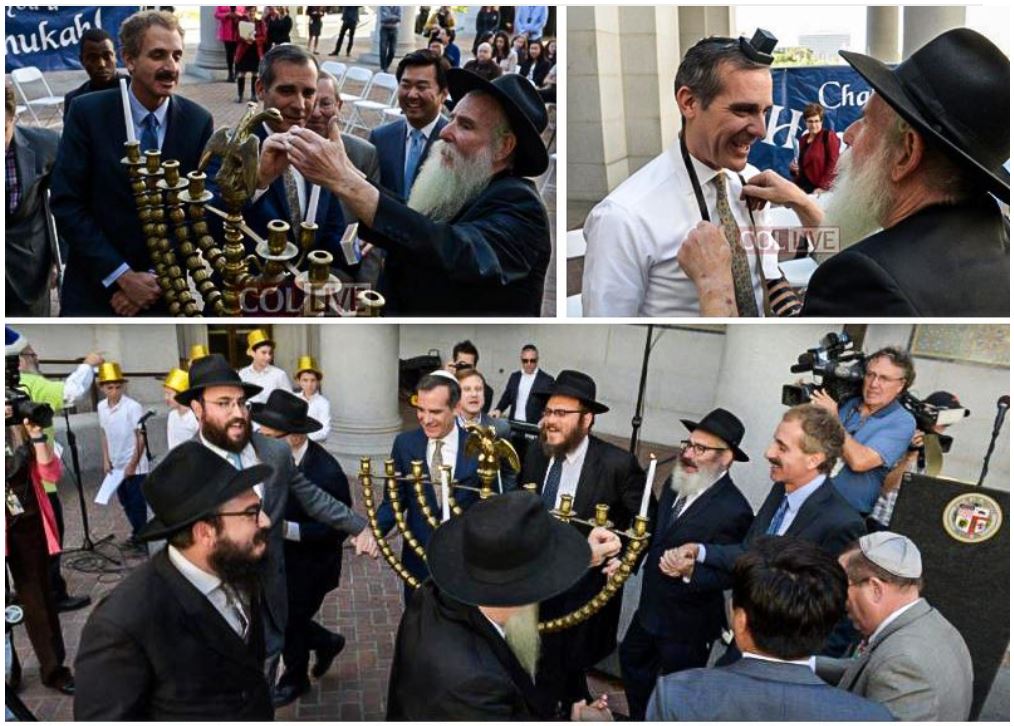
Chanukah Begins This Sunday Night – Chag Sameach!
Chanukah: From Oppression to Freedom (Video)
Death of Hellenism, Then and Now
Words of the Week
…This generation [of Jews] is making up for it by assimilating and becoming nothing. You know, vanilla ice cream. What I’m trying to say is, if I’m Jewish, then they are a fraud. And if they are Jewish, I don’t want to be that.
– Mort Sahl
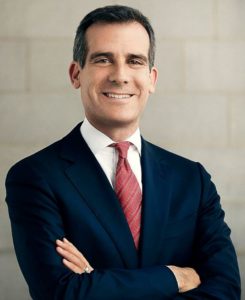
 Dustin Lee Hoffman (b. 1937) was born in Los Angeles to a family with Ukrainian-, Polish-, and Romanian-Jewish ancestry. His father was a set decorator who worked for Columbia Pictures, which likely influenced Hoffman to dream of becoming an actor. His family didn’t share this dream, and Hoffman went to college with plans to become a doctor. He dropped out after one year and joined the Pasadena Playhouse. There, he met fellow actor Gene Hackman, and the two soon moved to New York and shared an apartment (together with Robert Duvall). Hoffman had small roles in film and television over the next decade. His first lead role was in 1967’s The Graduate (the famous “Mrs. Robinson” movie), which was wildly popular and earned him an Oscar nomination. The film was hailed as a breakthrough, with Hoffman said to represent “a new breed of actor” – more human, more complex, and not the perfectly-looking stud that Hollywood employed in those days. It was said that “Hoffman’s character made conventional good looks no longer necessary on screen.” Despite the success, Hoffman turned down film in favour of the stage, starring on Broadway where he won an award for outstanding performance. It wasn’t long before Hoffman returned to film, in 1969’s Midnight Cowboy, and incredibly, was nominated for an Oscar once again. (The Library of Congress later included this iconic film in its registry for preservation.) All in all, Hoffman appeared in 6 plays, 16 TV shows, and some 60 films. He was nominated for Best Actor at the Oscars seven times, winning twice (for Kramer vs. Kramer and Rain Man); and won 6 Golden Globes as well. In recent years, he has reconnected with his Jewish roots, taken on more Torah observance, made sure that his children and grandchildren have bar and bat mitzvahs, and aims to learn Hebrew. Hoffman was recently hailed as one of the greatest performers of all time, and “one of the most versatile and iconoclastic actors of this or any other generation”. Last week he celebrated his 80th birthday.