The Philanthropist Behind PJ Library
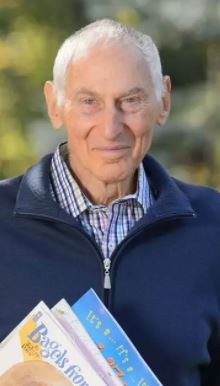
Harold Grinspoon (Credit: Robert Charles Photography)
Harold Grinspoon (b. 1929) was born and raised in Newton, Massachusetts to a family of Jewish-Russian immigrants. He had a difficult childhood, struggling with dyslexia and rampant anti-Semitism, poverty, and losing his father at 19. While a student at Marlboro College, he had his first business idea: Putting together some meagre savings, he bought an old laundry machine and put it in the college dorm, charging 25 cents per load. Meanwhile, he worked on an ice cream truck and soon left school to manage a whole fleet of them. After serving in the Navy, Grinspoon bought his first property in 1959. He renovated it and rented out one of the units, and from there steadily built his real estate development business. He founded Aspen Square Management, now one of America’s top-50 private developers, with 15,000 apartments across 16 states. When diagnosed with cancer at age 59, Grinspoon realized he wanted to do something more meaningful with his life. He was particularly troubled by Jewish assimilation and intermarriage. Together with his wife, he founded the Harold Grinspoon Foundation to fund a variety of Jewish causes, and has since donated over $200 million. At one Passover seder, Grinspoon saw how excited his grandkids were to read Jewish books, and came up with the idea of sending a free Jewish book once a month to every Jewish home. Thus, in 2005 he launched PJ Library. Today, PJ Library operates around the world, delivering nearly 1 million free books each month to kids in some 30 countries. PJ Library also delivers popular Arabic-language books to Arab Israeli children. (It’s the largest Arabic book program in the world!) Meanwhile, PJ Library runs weekend and after-school programs, along with over 3000 events a year. The Harold Grinspoon Foundation funds other Jewish programs, too, including Jewish camps and day schools. In 2015, Grinspoon signed The Giving Pledge to donate more than half of his wealth. Grinspoon and his PJ Library have won a number of prestigious awards, including one from the Library of Congress. Grinspoon has been called “the most important Jewish philanthropist you’ve never heard of”. He is also an avid artist and sculptor, and is still very active at 92 years old. Sign up to PJ Library here!
Words of the Week
We are indignant when we are fooled by others but live comfortably with our unconscious desire for self-deceit.
– Rabbi Abraham Joshua Heschel
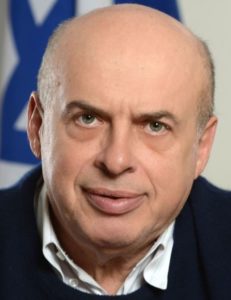 Anatoly Borisovich Sharansky (b. 1948) was born in Donetsk, Ukraine. He was a child chess prodigy, and won his city’s chess championship as a teenager. He went on to study math in Moscow and later worked in a secret Soviet research lab. In 1973, Sharansky applied for an exit visa to Israel and was refused. Henceforth, he became a vocal activist on behalf of Soviet Jewry, and became the world’s most famous refusenik. He soon expanded his scope to work for all human rights, and was the spokesperson for the Moscow Helsinki Group, today Russia’s primary human rights organization. In 1977, Sharansky was arrested on trumped-up charges of treason and espionage, and sentenced to 13 years of hard labour. He was tortured, and kept in solitary confinement for long periods of time. (He would later remark that one of the things that helped him through it was playing chess in his mind.) After ceaseless activism from his wife, mother, and countless international supporters, Sharansky was finally released in 1986. Shortly after, he received a Congressional Gold Medal from the US government. He moved to Israel and started going by his Hebrew name, Natan. A couple of years later, he published a bestselling memoir, Fear No Evil. (This book was passed on by
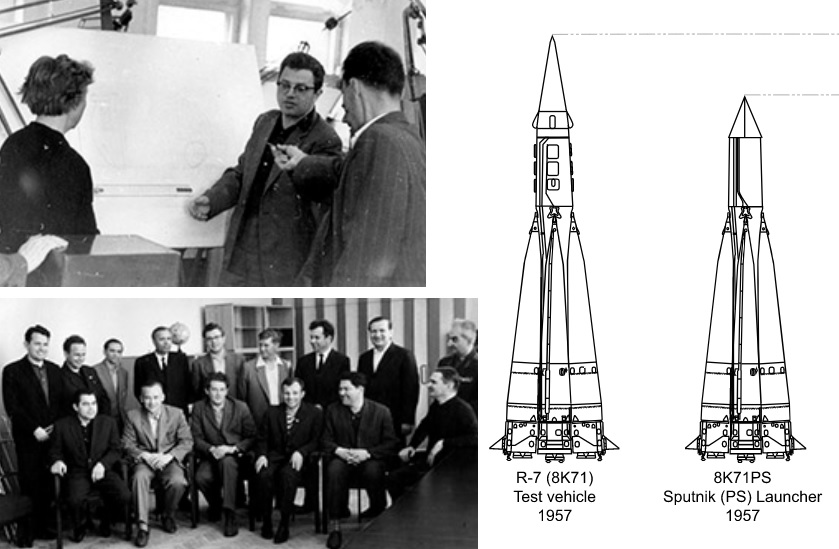
  Anatoliy Davidovich Daron (1926-2020) was born in Odessa, Ukraine. An avid pianist, he initially wished to become a musician. At age 12, he read a book about space and was inspired to become a rocket scientist, with the hopes of one day flying to Mars. That same year, World War II broke out and the family fled to Russia’s Stavropol region. A few years later, the Nazi invasion came to his town just as he was graduating high school—he got his diploma, written by the principal on a scrap piece of paper, while everyone was fleeing! Doron went on to study rocketry in Moscow, and soon joined OKB-456, the Soviet state institution tasked with missile and rocket development, under the leadership of Valentin Glushko. There, Daron worked on the USSR’s first intercontinental ballistic missiles (ICBMs). When the anti-Semitic