Tag Archives: Rabbi

Jew of the Week: Rashi

Illustration of Rashi from 1539

Illustration of Rashi from 1539

Shlomo Itzchaki (1040-1105) was born in Troyes, France, the only child of a rabbi. He began his Torah studies at age 5 under the tutelage of his father. At 17, he married and moved to Worms, Germany to study at the yeshiva of Rabbi Yakar. He later studied under several other rabbis, including his uncle, and the chief rabbi of Mainz. At 25, now himself a rabbi, Itzchaki returned to Troyes and was invited to serve on the town’s rabbinical court. Soon after, he took over as the head of the court, and the central authority on Jewish religious and legal matters. By 30, Rabbi Itzchaki had opened a yeshiva, which went on to become a centre of Torah study for countless Jews. Undoubtedly, the Rabbi is most famous for his profound commentaries on the Bible and Talmud. These are included in just about every publication of the Bible and Talmud since the 1500’s. In these texts, he is referred to simply as “Rashi”, an acronym of his initials. Rashi’s commentary on the Five Books of Moses alone inspired over 300 future commentaries. Even the Christian world studied his texts (here, Rashi was sometimes referred to by his Latinized name, Isaacides). In fact, many Christian commentaries on the Bible are based on Rashi’s texts. One of the more famous ones, that of the monk Nicolas de Lyre, was so heavily drawn from Rashi that de Lyre was nicknamed “Rashi’s ape”. Nonetheless, it was de Lyre’s commentary that inspired Martin Luther, the father of Protestant Christianity, and Luther used this text to produce his famous translation of the Bible. In addition to his commentaries, roughly 300 of Rashi’s other legal texts exist today. These texts are studied by linguistic scholars, too, who are looking to better understand both Hebrew and medieval French. According to tradition, Rashi also worked as a winemaker to support himself financially. He had three daughters who were scholars in their own right, with some suggesting that they completed a number of his unfinished commentaries, and possibly even donned tefillin. Rashi’s grandsons were some of the biggest rabbis of the following generation, including Rashbam and Rabbeinu Tam. Recently, an ancient map was discovered showing the location of Rashi’s grave. It happens to be under a public square in Troyes. A monument now stands over the site.

Words of the Week

The first gulp from the glass of natural sciences will turn you into an atheist, but at the bottom of the glass God is waiting for you.
– Nobel Prize-winning physicist Werner Heisenberg
Jews of the Week: Rav Uziel and the Chofetz Chaim

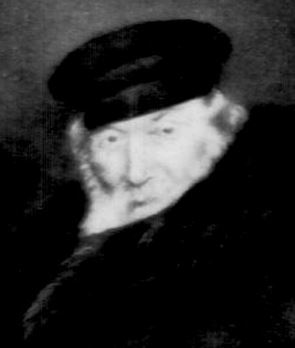
The Chofetz Chaim

The Chofetz Chaim

Israel Meir Kagan (1839-1933) was born in what is today Belarus to an Orthodox Polish-Jewish family. After his father’s passing when he was just ten years old, the family moved to Vilnius where Kagan continued his Jewish studies. Quickly noted as a great scholar, at the age of 17 he was married and appointed rabbi of the town of Radin. Soon after, he founded the Radin Yeshiva, which would go on to become one of the greatest yeshivas in the Ashkenazi world. Meanwhile, Rabbi Kagan wrote many popular books of wisdom, most notably Chofetz Chaim, a book about the laws of proper speech, the title of which became Rabbi Kagan’s nickname. His Mishna Berura became a standard text of Jewish law, and still used extensively today. He wrote nearly two dozen other books on a wide array of topics. At the same time, the Chofetz Chaim traveled across Europe to inspire Jews to observe the Torah, and to counter the growing secular movement. He was also an important member of Agudath Israel. Click here to see rare footage of the Chofetz Chaim at the First Congress of Agudath Israel in 1923.

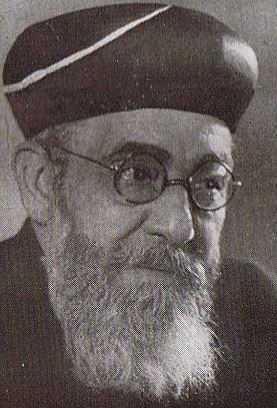
Rav Uziel

Rav Uziel

Ben-Zion Meir Chai Uziel (1880-1953) was born in Jerusalem, the son of the president of the city’s Sephardic community. Like the Chofetz Chaim, Uziel was also quickly noted as a great scholar, and by age 20 founded his own yeshiva. By 31, he was the Sephardic Chief Rabbi of Jaffa, where he worked alongside his Ashkenazi counterpart, Rabbi Kook, bridging the two communities together. During World War I, he worked tirelessly to stop the persecution of Jews, which earned him a sentence of exile in Damascus. In 1923 he returned to Israel as the Chief Rabbi of Tel-Aviv, and in 1939 became the Sephardic Chief Rabbi of Israel, a post he held until his passing in 1953. Rabbi Uziel was a founding member of the Jewish Agency, and played a key role in the founding of the State of Israel. Of course, he wrote a great deal of widely-read Torah thought and commentary as well. Rav Uziel and the Chofetz Chaim passed away on the same day, twenty years apart: the 24th of Elul.

Shana Tova! Rosh Hashanah Begins This Sunday

Words of the Week

In Jewish history there are no coincidences.
– Elie Wiesel

Jew of the Week: Samuel Ullman

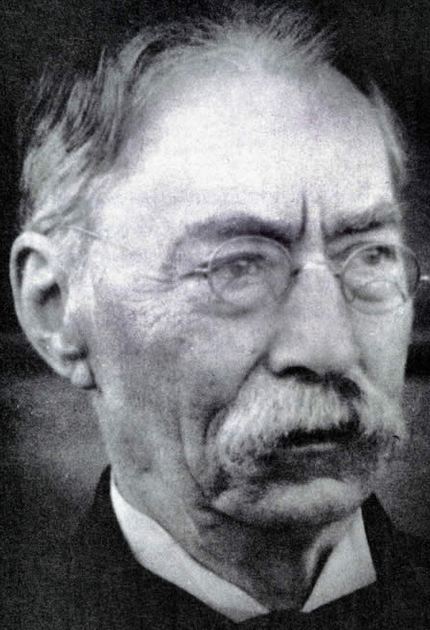
Samuel Ullman (Photo Credit: likesuccess.com)

Samuel Ullman (Photo Credit: likesuccess.com)

Shmuel Ullman (1840-1924) was born in Hechingen, Germany. Due to persecutions of Jews in the region, his family fled to the US in 1850, settling in Mississippi. Ullman spent much of his youth working in his father’s butcher shop. The Civil War broke out when Ullman was just 21, and as a citizen of Mississippi, the young man served in the Confederate Army. Following the war, Ullman got married and started a dry goods business. He became active in his town’s political and religious life, often devoting his time to the needs of the community. He then moved to Alabama and started a new hardware business. Together with his wife, they founded a hospital for the needy. Ullman also served on the Board of Education, was a key civil rights activist, and fought tirelessly to bring equal education for African-American children. His efforts led to the first free public school for blacks. At the same time, he served as the president and unofficial rabbi of Temple Emanu-El in Birmingham. When he finally retired, Ullman devoted his time to writing. The most famous of his essays and poems is titled “Youth”. It was the favourite poem of American General and World War II hero Douglas MacArthur, who credited the poem with getting him through the horrors of the war. MacArthur had it framed and hanging in his Tokyo office, and introduced the poem (and its poet) to the Japanese. Many Japanese, too, were given hope by those words, ultimately making Ullman one of the most popular poets in Japan – even moreso than in America! It was the same poem that inspired Konosuki Matsushita to start a business despite his advanced age, giving birth to Panasonic. Kim Dae Jung often quoted the poem in his successful campaign to become President of South Korea, as did Robert F. Kennedy, and countless other noted figures around the world. Seventy years after Ullman’s passing, his home was turned into a museum by the University of Alabama and the Japan-America Society.

Words of the Week

Youth is not a time of life; it is a state of mind…
… Nobody grows old merely by a number of years. We grow old by deserting our ideals…
… Years may wrinkle the skin, but to give up enthusiasm wrinkles the soul…
– Verses from Samuel Ullman’s “Youth”