Tag Archives: Rabbi

Jew of the Week: Jonathan Sacks

The Rabbi Baron

Rabbi Lord Jonathan Sacks

Rabbi Lord Jonathan Sacks

Jonathan Henry Sacks (b. 1948) was born in London, England, and studied at some of London’s finest schools, earning a Ph.D in philosophy in 1981. In the same year, he received his orthodox rabbinic ordination from Jew’s College, the world’s oldest rabbinic seminary. He went on to become principal of that seminary, while also serving as a community rabbi. In 1991 he was appointed as the British Commonwealth’s Chief Rabbi. He remained in this role for 22 years until retiring last September. Over the years, he taught as a visiting professor at several universities. He also authored 25 books, among them award-winning bestsellers. He was a popular guest on BBC Radio and TV programs, and wrote a regular column for The Times. Sacks holds 16 honourary degrees, together with a number of international awards for his work in promoting social justice and religious liberty, scholarly achievement, leadership, and inspiring Jewish life around the world. In 2009, he was introduced to England’s House of Lords, and was granted the title “Baron”. He was invited to the wedding of Prince William and Kate as the representative of the Jewish community. The Prince of Wales described Sacks as a “light unto this nation… whose guidance on any given issue has never failed to be of practical value and deeply grounded in the kind of wisdom that is increasingly hard to come by.” Former British Prime Minister Gordon Brown described him as “…the greatest scholar I know, the greatest philosopher, the greatest writer I know, one of the greatest thinkers in the world…” Sacks continues to teach as a professor at New York University, Yeshiva University, and King’s College London. He is also a vegetarian.

Update: Sadly, Rabbi Jonathan Sacks passed away on November 7, 2020.

Words of the Week

“A good leader creates followers; a great leader creates leaders.”

“To defend a country you need an army, but to defend a civilization you need education.”

“Technology gives us power, but it does not and cannot tell us how to use that power. Thanks to technology, we can instantly communicate across the world, but it still doesn’t help us know what to say.”

– Rabbi Lord Jonathan Sacks
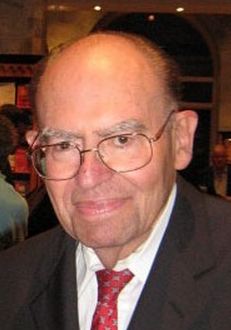
Jews of the Week: Zalman Posner and Herb Gray

In Memory of Two Great Jews

Herb Gray

Herb Gray

Herbert Eser Gray (1931-2014) was born in Windsor, Ontario, the son of Belorussian-Jewish immigrants. He practiced as a lawyer after receiving a degree from Osgoode Hall, before being elected to parliament in 1962. He became the first Jewish cabinet minister in Canada’s history. He would go on to be re-elected a whopping twelve times, setting a record as the longest-serving Canadian parliamentarian in history. During this time, he served in multiple roles including Leader of the Opposition, Solicitor General, and even Deputy Prime Minister. After retiring from politics, he was the Chancellor of Carleton University. Awarded a great many honours, including the Order of Canada, he was just one of a few people to be granted the title “The Right Honourable”, and was nicknamed the “Godfather of Politics”. Beloved by his constituents and on Parliament Hill, Herb Gray sadly passed away last week.


Rabbi Zalman Posner

Rabbi Zalman Posner

Just two days after came the sad news of the passing of Rabbi Zalman Posner (1927-2014). Born in Israel to parents who fled the Soviet Union, Posner’s family later immigrated to the U.S. to help in stimulating Jewish community life. After the Holocaust, Posner went to Europe to help survivors and refugees in DP camps. In 1949, he took up the post as Chabad rabbi of Nashville, Tennessee, and went on to serve as Nashville’s rabbi for 53 years. During this time, he helped open the community’s first Jewish schools, brought Jewish life onto university campuses, became renowned internationally as a profound lecturer, published eight popular books on Judaism, along with penning dozens of intriguing articles, and inspired countless people around the world. Rabbi Posner passed away last Wednesday, and is survived by his five children, and many more grandchildren and great-grandchildren.

Words of the Week

A well from which you drank, cast not a stone into it.
– Midrash Rabbah, Bamidbar 22:4

Jew of the Week: Moses Maimonides

Maimonides

Moshe ben Maimon (1138-1204), known in the Jewish world as the Rambam (his initials) and to the rest of the world as Moses Maimonides, was born in Cordoba, Spain, the son of a famed rabbi. In 1148, the Almohads conquered Cordoba and began persecuting the Jews. Maimonides’ family fled and remained on the move across Spain for 10 years before settling in Morocco. There, Maimonides studied at the University of al-Karaouine, focusing on the field of medicine. At the same time, he composed his famous commentary on the Mishnah – the central text of Jewish oral laws. Along with his two sons, he then traveled to the Holy Land, despite the danger of the ongoing Crusades. After visiting the holy sites and praying at the Temple Mount, he journeyed to Egypt and settled there, continuing his work and studies at the local yeshiva. During this time, he played a central role in saving a community of Jews taken captive by King Amalric I. In 1171, Maimonides was appointed president of the Egyptian Jewish community. When his brother’s merchant ship sank in the Indian Ocean, Maimonides lost all of his wealth and started working as a physician. Having studied both Greek and Arabic medicine, and being well-versed in folk healing and mysticism, Maimonides quickly became the top doctor in the world and was soon hired by the legendary Sultan Saladin. Even after Saladin’s death, Maimonides remained the royal family’s physician, and rejected offers by a handful of European kings. He wrote a number of healing manuals that were influential for many future generations (and still studied today). He also composed several religious and philosophical works, including the famous Guide for the Perplexed and Treatise on Logic. His Mishneh Torah remains one of the central compilations of Jewish law to this day. He also set forth Judaism’s 13 Principles of Faith. Scholars are puzzled at how he was able to accomplish so much: his typical day included a visit to the Sultan’s Palace before returning home to a long line of patients that lasted into the night. He would rarely take any breaks, and ended his day hungry and spent. Even on Shabbat he had little rest, dealing with life-or-death situations that trumped the sanctity of observing the Sabbath. Many believe that he passed away because of this difficult lifestyle. Maimonides writes that he wished he had more time to pray, study, and grow closer to God, but his obligation to care for the masses superseded all these. He passed away on December 12th (809 years tomorrow) to great sorrow, and true to his nature, had demanded the humblest of funerals. He remains highly respected in Spain and across the Middle East, the Arab world (as Abu Musa bin Maymun) and the medical community. Countless institutions continue to bear his name, and he is a central hero for modern Jews as a man who was both pious and worldly, bridging the gaps between Torah and science, Jewish wisdom and secular philosophy.


Words of the Week

Gems from Moses Maimonides:

“Do not consider it proof just because it is written in books, for a liar who will deceive with his tongue will not hesitate to do the same with his pen.”

“Give a man a fish and you feed him for a day; teach a man to fish and you feed him for a lifetime.”

“No disease that can be treated by diet should be treated with any other means.”

“One who wishes to attain human perfection must therefore first study Logic, next the various branches of Mathematics in their proper order, then Physics, and lastly Metaphysics.”

“One should see the world, and see himself as a scale with an equal balance of good and evil. When he does one good deed the scale is tipped to the good – he and the world is saved. When he does one evil deed the scale is tipped to the bad – he and the world is destroyed.”