Tag Archives: Jerusalem

Jew of the Week: Helena of Adiabene

The Jewish Queen of Armenia 
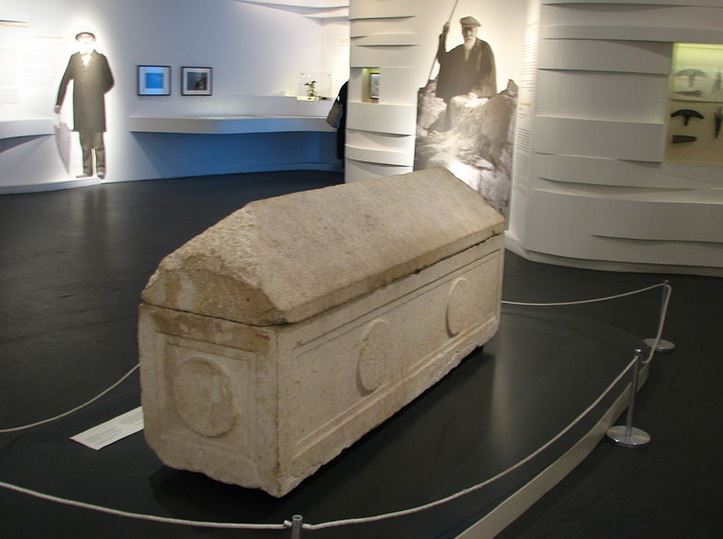
The Sarcophagus of Helena in the Israel Museum

The Sarcophagus of Helena in the Israel Museum

Helena of Adiabene (d. 56 CE) was the Queen of the Persian-Armenian kingdom of Adiabene, a vassal of the Parthian Empire. Essentially nothing is known of her early life. Around 30 CE, after the death of her husband, King Monobaz, she took an interest in Judaism, a little-known religion in her kingdom. After learning with a Jewish merchant named Chananiah, Helena decided to convert. Meanwhile, her son, King Izates, encountered Rabbi Eleazar of Galilee in his royal court and similarly began exploring the wonders of the Torah. Soon, both Helena and Izates, as well as her other son Monobaz II, officially converted to Judaism. In 46-47 CE, Helena traveled to Israel. Witnessing the ongoing famine, she was able to import grain from Egypt and figs from Cyprus to quell the hunger and save countless lives. Helena also commissioned several gifts for the Holy Temple in Jerusalem, including a special candlestick that would indicate the appropriate time to recite Shema Israel, a golden plate engraved with Torah passages, and golden handles for all Temple vessels. The palatial sukkah she had built in her homeland was reported to be over 40 feet high! Towards the end of her life, Queen Helena moved to Jerusalem and had a mausoleum built for herself where she was eventually interred. In the 19th century, her grave was discovered by French archaeologists. Meanwhile, her Jerusalem palace was discovered by Israeli archaeologists in 2007. Among the incredible finds in the palace was a proper mikveh. Ancient historians like Josephus wrote of Helena, and her story is even described in detail in the Talmud. The latter records that Helena was a devout Jewess, spending at least 7 years of her life as a nazirite, a special status of holiness in Judaism that may be loosely compared to a monk or nun. After Helena’s death, her children continued to support the Jewish people, even sending troops to assist Jewish rebels in fighting the Romans during the Great Revolt (66-70 CE), which ended with the destruction of the Second Temple. Ultimately, the Romans invaded Adiabene, too, in 115 CE. Within a few short centuries, the kingdom was all but forgotten.

Words of the Week

Disasters go out through the mouth and disease comes in through it. You must be constantly circumspect about what goes in and out of your mouth.
Kaibara Ekiken (author of Samurai manual ‘Yojokun‘)

Jew of the Week: Shula Cohen

Shula Cohen, "the Pearl"

Shula Cohen, “the Pearl”

Shulamit Cohen (b. 1917) was born in Argentina and raised in Jerusalem with her twelve brothers and sisters. Her father was from a wealthy Egyptian-Jewish merchant family, and her mother was the daughter of a prominent rabbi in Jerusalem. In 1936, the family experienced severe financial strain, and Shulamit’s father arranged her to marry Joseph Kishak-Cohen, a wealthy businessman from Beirut. Shula moved to Lebanon, and had five kids by the time she was 24. One day in 1947, she overheard people discussing military activities against Israel. Shula recorded the information in a letter to the Haganah, which was fighting for a Jewish state in Israel, addressing it to her brother in Jerusalem. Five weeks later, an agent of the Haganah’s secret service contacted her. For the next 14 years, Shula worked as an Israeli spy in Lebanon. Her work consisted of two major goals. The first was to gather intelligence about Arab military activities, which she was able to do by getting herself into Lebanon’s high society, including the home of the prime minister, who considered her like one of his own daughters. The second was to help smuggle Jewish families fleeing persecution in the Arab world, particularly from Syria. Over the years, she helped countless families find safe passage to Israel. Shula communicated with the secret service using invisible ink, under the code name “Pearl”. She was first caught for smuggling in 1952. Pregnant at the time, Shula was taken to jail just three weeks after giving birth, and spent 36 days in confinement. She continued her clandestine activities for another 9 years before things got too dangerous and she moved to Rome for three months. Upon her return in 1961, she was immediately arrested for espionage. The trial went on for several months during which she was brutally tortured. She was initially sentenced to death by hanging, but the verdict was softened because she was a mother of seven. Her sentence was reduced to 20 years of hard labour. During the Six-Day War in 1967, Israel captured Lebanese citizens, and used them in a prisoner exchange for Shula and a captured Israeli pilot. Shula has lived in Israel ever since, and still volunteers at schools and IDF bases, despite her advanced age. Two of her sons have high-ranking roles in the Israeli government. A book about her story has been published, called Shula: Code Name The Pearl.

UPDATE: Sadly, Shula Cohen passed away in May of 2017.

Words of the Week

Success is the ability to go from one failure to another with no loss of enthusiasm.
– Winston Churchill

Jew of the Week: Rav Yitzhak Kaduri

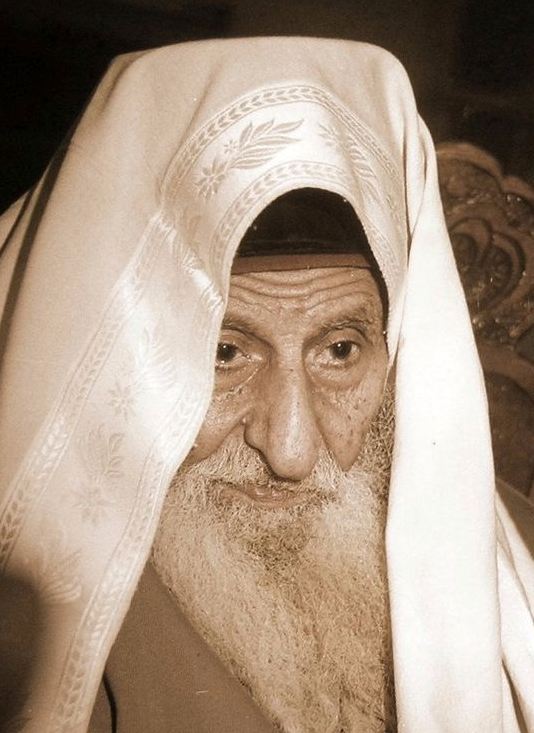
Rav Yitzchak Kaduri

Rav Yitzchak Kaduri

Yitzhak ben Zeev Diva (c. 1902-2008) was born in Baghdad to a rabbi who worked as a spice trader. Early on, he plunged into the depths of Jewish wisdom and by his teenage years was already recognized as a prodigy. In 1923, he settled in the Holy Land to bring spirituality into the secular Zionism that was flourishing in Israel. Upon arrival, he officially changed his last name to Kaduri. He continued his learning under some of the greatest rabbis of the time, particularly at Jerusalem’s famous Porat Yosef Yeshiva. Meanwhile, refusing to live on charity, he worked as a scribe and bookbinder, committing the books that he worked on to memory. It is said that he memorized the entire Talmud (over 5400 pages of dense text), together with its commentaries, along with a multitude of other works. He wrote several mystical texts of his own, which were never published, as Rav Kaduri did not want them getting into the wrong hands. He went on to become the head mekubal (“Kabbalist”) among Israel’s rabbis. His son spearheaded the opening of Rav Kaduri’s own yeshiva – Nachalat Yitzchak – located in the Bukharian Quarter of Jerusalem next to the Rav’s home. Rav Kaduri was famous for eating very little, and speaking very little. Despite his occupation with study, his doors were always open to help others (in fact, he refused to lock the doors of his home even amidst a spate of thefts). Hundreds of people sought his advice and blessings each day, and he was known as a miracle worker and healer. At his funeral, 8 years yesterday, over 300,000 people came to pay their respects.

Words of the Week

When God created the first man, He showed him all the trees of the Garden of Eden, and said to him: ‘See My works, how beautiful and praiseworthy they are. And everything that I created, I created for you. Be careful not to spoil or destroy My world—for if you do, there will be nobody after you to repair it.’
– Midrash Kohelet Rabbah 7:13