Category Archives: Science & Technology

Jews in the World of Science and Technology

Jews of the Week: Mathilde and Arthur Krim

A Couple that Transformed the World
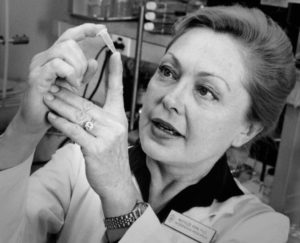
Mathilde Krim

Mathilde Galland (1926-2018) was born in Italy to Christian parents of Swiss and Italian heritage. While studying in medical school at the University of Geneva, she met an Israeli and converted to Judaism to marry him. She became passionate about her new faith, and the Zionist dream, working tirelessly to help Israeli fighters (especially the Irgun) acquire weapons and funds. After receiving her PhD in biology in 1953, the young family settled in Israel, and Mathilde became a researcher at the Weizmann Institute. During this time, she made important discoveries about viruses and cancer, and was part of the team that first developed a way to determine the gender of an embryo. Mathilde moved to New York after getting divorced, and joined a research team at Cornell University.
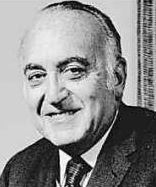
Arthur Krim

During this time, she met Arthur B. Krim (1910-1994), the son of Russian-Jewish immigrants. Krim graduated from Columbia Law School in 1932 at the top of his class, and worked at a law firm until the outbreak of World War II. He served for the War Department doing critical military work, attaining the rank of lieutenant colonel. After the war, Krim launched a film studio start-up, Eagle-Lion Films. When it tanked, he became a manager at United Artists, and was given three years to turn a profit. He did it in six months, and went on to head United Artists for over two decades (producing hit films like Dr. No, which brought James Bond to America, and West Side Story, which won a record 10 Oscars). Krim and his partners made United Artists the largest movie producer in the world by 1967. Krim would later co-found Orion Pictures (Amadeus, Dances with Wolves). All in all, Krim was a film studio exec for 46 years – possibly the longest in Hollywood history – produced and distributed over 1000 films, and was called “the smartest man ever to work in the movie industry.” Aside from movies, Krim was an important member of the Democratic Party, and served as its finance chairman. He was a personal advisor to three presidents: Kennedy, Johnson, and Carter.
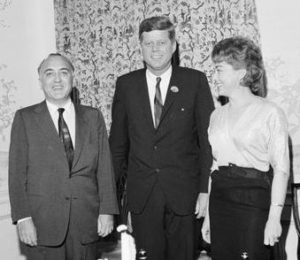
Arthur and Mathilde Krim with President John F. Kennedy

Mathilde and Arthur Krim were famous for their extensive philanthropy and the huge role they played in the civil rights movement, as well as in ending apartheid in South Africa and Zimbabwe, and advancing human rights all over the world. Mathilde continued to work as a researcher throughout her life, and ran the interferon lab at Sloan-Kettering Institute for Cancer Research between 1981 and 1985. During this time, she was one of the first to identify the grave dangers of HIV-AIDS, and did important research to understand the pathology of the disease. In 1983, she founded the AIDS Medical Foundation, and then co-founded the American Foundation for AIDS Research. Aside from her own research work, the Krims donated millions of dollars to the cause. In addition to 16 honourary doctorates, she was awarded the Presidential Medal of Freedom in 2000, the highest civilian honour in America. Her husband had previously received the Presidential Medal of Freedom in 1969.

When is Mashiach Coming?

Words of the Week

Every Hebrew should look upon his Faith as a temple extending over every land to prove the immutability of God and the unity of His purposes.
– Grace Aguilar
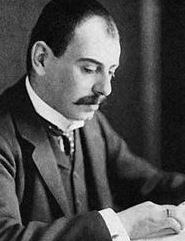
Jews of the Week: Edmund Landau and Lev Landau

Two Math Wizards

Edmund Landau

Edmund Georg Hermann Landau (1877-1938) was born in Berlin. As a young boy, he was recognized as a math prodigy, and earned his Ph.D from the University of Berlin by 22. He immediately received a teaching position at the university, where he taught for the next ten years. Meanwhile, Landau married the daughter of Nobel Prize winner (and past Jew of the WeekPaul Ehrlich. In 1812, Landau presented four complex math problems at the International Congress of Mathematicians. The problems remain unsolved to this day. After over a decade teaching at the University of Göttingen, Landau joined the new Hebrew University. He was a co-founder of its math department, and played a key role in the construction of its Mathematics Institute. He taught himself Hebrew so that he could present a novel math lecture at the University’s grand opening in 1925. Two years later, Landau and his family made aliyah. He taught at the Hebrew University for several years before returning to Göttingen. After being removed from his position by the Nazis, Landau settled back in Berlin and occasionally traveled outside Germany to teach. He died four years later. Landau is renowned for his work on distribution of prime numbers, and on what is now called Landau Prime Ideal Theorem. It was once said that “no one was ever more passionately devoted to mathematics than Landau.”

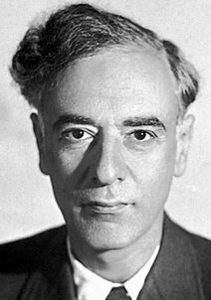
Lev Landau

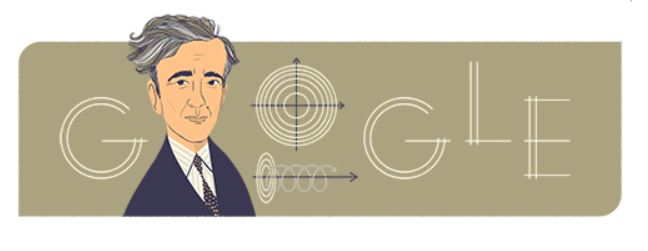
Edmund Landau is not to be confused with another Jewish math prodigy, Lev Davidovich Landau (1908-1968). Born in Azerbaijan (then part of Russia), Lev Landau started university at 13, published his first paper at 18, and got his PhD in math by 26. He received a scholarship from the Soviet government as well as the Rockefeller Foundation to travel and study abroad. He was soon fluent in German, French, Danish, and English. Much of his time was spent working in the lab of Nobel Prize winner (and past Jew of the WeekNiels Bohr. After returning to the Soviet Union, Landau was put at the head of the physics department at Kharkiv Institute of Physics and Technology. He taught at the University of Kharkiv, and at the same time worked with his student Evgeny Lifshitz on a ten-volume textbook. The Course of Theoretical Physics is still one of the most popular graduate physics textbooks used today. In 1938, Landau was arrested for comparing Stalin to the Nazis. After the intervention of other physicists, he was freed. Ironically, he won the Stalin Prize in 1949 and again in 1953, for his work on building the first Soviet nuclear bomb. Landau is famous for, among many other things, his theory of superconductivity, theory of Fermi liquid, for plasma physics, quantum electrodynamics, and most of all for his theory of superfluidity, which won him a Nobel Prize in 1962. Unfortunately, he couldn’t personally collect the prize because he was in a severe car accident and spent two months in a coma. He ultimately died from his injuries in 1968. Several years before this, his students established the Landau Institute for Theoretical Physics near Moscow. It is still one of the most prestigious physics labs in Russia. Landau was featured in the latest Google Doodle. There is a crater on the moon named after him.

The Torah: A Comprehensive Overview

Words of the Week

Both religion and science require a belief in God. For believers, God is in the beginning, and for physicists He is at the end of all considerations… To the former He is the foundation, to the latter, the crown of the edifice of every generalized world view.
– Max Planck

Google Doodle for January 22, 2019, the birthday of Lev Landau.

Jew of the Week: Gertrude Elion

The Woman Who Saved Millions of Lives

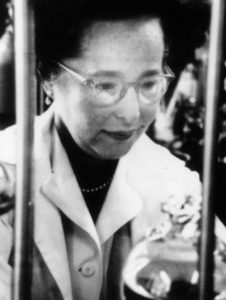
Gertrude Elion

Gertrude Belle Elion (1918-1999) was born in New York to Lithuanian- and Polish-Jewish immigrants. She excelled at school, and when her grandfather passed away from cancer, was determined to find the cure. She went on to volunteer as an assistant in a chemistry lab, and was eventually hired for just $20 a week. She used that money to pay for school, earning her Master’s in chemistry in 1941. Unfortunately, Elion was rejected for all fellowships and post-graduate positions because of her gender. Instead, she went to work for a supermarket, testing food quality. From there, she got a job as an assistant in a New York pharmacology lab (now owned by GlaxoSmithKline). Working under the supervision of George Hitchings, she developed two new anti-cancer drugs by 1950. Elion continued to work at the lab, and eventually became the head of its Experimental Therapy department. Despite never formally earning a Ph.D, she was a professor of pharmacology at Duke University between 1971 and 1999. Among the drugs that Elion developed are Purinethol (the first leukemia medication), Daraprim (to treat malaria), and Acyclovir (the first and most common antiviral medication, used to treat herpes, chicken pox, and shingles). Azathioprine, a drug to prevent organ transplant rejection which Elion discovered in 1963, has since been used to ensure successful kidney transplants for over 500,000 people. She also developed drugs to treat meningitis, gout, urinary, and respiratory infections. While Elion officially retired from drug-making in 1983, she was inspired to continue working due to the then-recent outbreak of HIV/AIDS. She continued working full time until the successful release of AZT, the first drug to treat AIDS. For all of this tremendous work, which saved the lives of countless thousands, Elion was awarded the Nobel Prize in Medicine in 1988. She received a National Medal of Science in 1991, and in that same year became the first woman ever inducted into the National Inventors Hall of Fame. (Elion holds 45 patents.) She finally received an honourary Ph.D from New York University in 1989, and another doctorate from Harvard when she was 80 years old. She is recognized as one of the greatest pharmacologists and biochemists of all time.

Red Sea or Reed Sea: Where is Mount Sinai?

Words of the Week

If you wait until you find the meaning of life, will there be enough life left to live meaningfully?

– Rabbi Menachem Mendel Schneersonthe Lubavitcher Rebbe