
Tag Archives: Yiddish

Jews of the Week: Jerry Seinfeld & Larry David

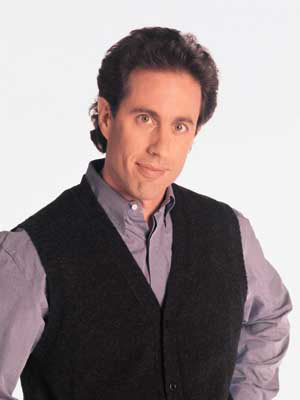
Jerry Seinfeld

Jerry Seinfeld

Voted one of the greatest comedians of all time, Jerome Allen “Jerry” Seinfeld started his career at an open-mic night after graduating from college. He found his way to a Rodney Dangerfield HBO special, then appearances on late night talk shows, and small roles in little-known sitcoms. Finally, in 1989 he created The Seinfeld Chronicles along with fellow New York Jew Larry David. By its fourth season (then known simply as Seinfeld) it had become the most successful sitcom ever, and made Seinfeld the highest-paid celebrity of the time (he earned $267 million in 1998 alone!) Seinfeld is also a bestselling author and winner of multiple Emmy and Golden Globe awards. Interestingly, his father was Austrian Jewish, and his mother’s family is Syrian Jewish, having immigrated to the US from Turkey. Seinfeld also worked in an Israeli Kibbutz when he was 16.
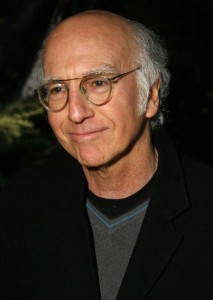
Larry David

Larry David

Meanwhile, Lawrence Gene “Larry” David co-created and wrote 62 episodes for Seinfeld, including “The Contest” which won the distinction of being the best TV show episode of all time. Previously, he was a writer for Saturday Night Live, and many other comedy shows. Larry David is most famous for starring in Curb Your Enthusiasm, a unique show where the script is improvised by the actors as they are being filmed. It has been both criticized and praised for its heavy emphasis on Judaism and Jewish themes, and the show is thought to be based on the Yiddish archetype of a “schlemiel”. Like Seinfeld, Larry David is an author and winner of multiple Emmy awards.

Words of the Week

“A bookstore is one of the only pieces of evidence we have that people are still thinking.”
– Jerry Seinfeld

Jew of the Week: Sami Rohr

Sami Rohr, Top Philanthropist

Shmuel Rohr (1926-2012) was born to an Orthodox family in Berlin, a diligent student of Torah even during the Holocaust while fleeing to Belgium, then France, and finally to Switzerland. Fearing another war in Cold War Europe, Rohr’s father sent him to Colombia. Over the next 25 years, Rohr applied his famous intellect to business, eventually building nearly half of Colombia’s capital city, Bogota. Throughout, he maintained his devotion to Torah, especially the mitzvah of charity. He would go on to donate over $250 million to Jewish causes over his lifetime, including developing a young State of Israel, and reinvigorating Jewish life in the former Soviet Union. After an encounter with Chabad rabbis, Rohr started to donate generously to the organization, eventually bankrolling the salaries of over 500 Chabad rabbi-emissaries around the world. Rohr established a global project to preserve Yiddish literature, and his children set up the Sami Rohr Prize for Jewish Literature, one of the richest literary prizes in the world. Rohr also developed a unique system of philanthropy that is used by wealthy people worldwide. Humble and modest, Rohr often donated anonymously, and never requested his name on any of the institutions or buildings he funded, which is probably why most people have never heard of him. It is therefore said that no one really knows the true extent of his charity work. Sadly, Rohr passed away last week at age 86.


Words of the Week

The righteous promise little and do a lot; the wicked promise much and don’t do even a little.
– Talmud, Bava Metzia 87a

Jew of the Week: Isaac Asimov

Master of Science Fiction

Isaac Asimov: “I am Jewish.”

Isaac Asimov (1920-1992) Born in Belorussia as Itzhak Yudovich Ozimov, his family immigrated to New York when he was only three, starting a chain of candy stores where he worked. After serving in the US Army, Asimov became a biochemistry professor at Boston University. He wrote his first book in 1950, and would go on to write and edit over 500 titles. His short story Nightfall is considered the greatest science-fiction piece of all time. Fluent in Yiddish, he would continue to speak the language throughout his adult life. Interestingly, he writes critically of his father for not having taught him the Orthodox Jewish way. In the opening of Wandering Stars, he writes: “I attend no services and follow no ritual and have never undergone that curious puberty rite, the bar mitzvah. It doesn’t matter. I am Jewish.”


Words of the Week

The wicked in their lifetimes are called “dead”; the righteous in death are called “living”.
Talmud, Berachot 18