Tag Archives: Yeshiva

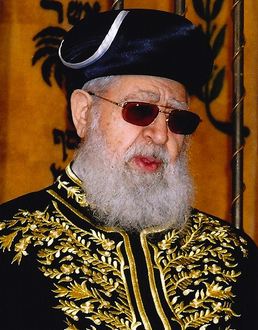
Jew of the Week: Rav Ovadia Yosef

Rav Ovadia Yosef

Rav Ovadia Yosef

Abdullah Ovadia Yousseff (1920-2013) was born in Baghdad, Iraq and immigrated with his family to Jerusalem at the age of 4. He was quickly recognized as a young prodigy with a photographic memory and a profound depth of understanding, and ordained as a rabbi at age 20. Shortly after, Rav Ovadia moved to Cairo, Egypt where he headed a yeshiva and Jewish court until his return to Israel upon the State’s independence. In 1952 he published the first of several great works, which propelled him into the spotlight. He then founded an advanced yeshiva for gifted students. By 1973, Rav Ovadia was appointed Israel’s Sephardic Chief Rabbi. He served in this post until 1984 when he founded the Shas political party – today the 4th largest in the Knesset – and served as its spiritual guide until his last days. A scholar above all else, he pored through thousands of works. Once, he tumbled off a ladder while reaching for a book, breaking his back. As no one was there to help him, he grabbed the nearest text and studied it for 3 hours until someone found him. Possessing a great love for the Jewish people, Rav Ovadia always strove to make life simpler for the Jews, earning a reputation for being very lenient when it came to Jewish law. He was heavily engaged in kiruv – bringing secular Jews back to their heritage and into the spiritual fold. He especially focused his efforts on Mizrahi and Sephardic Jews (who often suffered discrimination and a lower socio-economic status in Israel) and is thus credited with restoring Jewish and national pride among this demographic. Many stories highlight his love and service to the people. Once, he suffered a heart attack and was rushed to hospital for life-saving surgery. He had the surgery delayed for several hours as he was in the middle of writing a letter to a woman in distress, and feared that if he died there would be no one to help her. Sadly, Rav Ovadia passed away on Monday. Nearly a million people attended his funeral in Jerusalem – the largest funeral in Israel’s history. Many have hailed his passing as the end of an era in the country’s history.

Words of the Week

The righteous promise little and do a lot; the wicked promise much and don’t do even a little.
– Talmud, Bava Metzia 87a
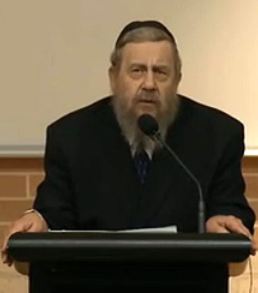
Jew of the Week: Rabbi Dr. Immanuel Schochet

Rabbi Dr. Immanuel Schochet

Rabbi Dr. Immanuel Schochet

Jacob Immanuel Schochet (1935-2013) was born in Switzerland to Jewish-Lithuanian parents. In 1951, the family moved to Toronto, and shortly after Schochet went to study at the Chabad Yeshiva in New York. There he became close with the Lubavitcher Rebbe, who encouraged him to pursue academic subjects. Schochet went on to earn a Master’s in religious studies and a Ph.D in philosophy, studying at the Universities of Toronto, Waterloo, Windsor and McMaster. He became an internationally renowned scholar of philosophy, mysticism and Hasidism, writing 35 books, translating many others, and penning countless articles (click here to read a selection of these). While serving as a community rabbi for over 45 years, he was also professor of philosophy at Humber College and professor of bioethics at the University of Toronto Medical School. Schochet lectured around the world, including at Yale and Oxford. He was a champion of the Jewish cause, successfully combating Christian missionaries, particularly ‘Jews for Jesus’, and openly challenged any missionary to debate him in public. A staunch defender of traditional Jewish beliefs, he was also critical of the Kabbalah Centre, as well as messianic movements within Chabad. His piety, wisdom, and love for Israel were recognized by all who met him. Sadly, Rabbi Schochet passed away on July 27th.


Words of the Week

Do not scorn any man, and do not discount any thing, for there is no man who does not have his hour, and no thing that does not have its place.
– Pirkei Avot 4:3

Jew of the Week: Rabbi Abraham Isaac Kook

Rabbi Kook

Rabbi Kook

Avraham Itzhak Kook (1865-1935) was born in what is now Latvia (then part of the Russian Empire). Recognized as a young prodigy, he spent only a year and a half at the famous Volozhin Yeshiva, and yet, it was said that it was worthwhile for the yeshiva to have been founded just for him. After serving as head rabbi of several European towns, in 1904 Kook settled in Israel to become rabbi of Jaffa (Yafo), overseeing predominantly secular Zionists, whom he was able to inspire with Torah, and lead them to incorporate more observance into their lives. World War I broke out while he was on a trip to Europe, preventing him from returning to the Holy Land. Wasting no time, he served as a rabbi in London, England until the end of the war, then returned to Israel and took up the post in Jerusalem. He was instrumental in establishing the Chief Rabbinate of Israel, and saw it as a stepping stone towards reinstating the Sanhedrin. In 1921 he was appointed Ashkenazi Chief Rabbi of Palestine.

Rabbi Kook wrote excessively on Jewish law and exegesis. Many of these profound writings were only published after his death, and continue to make a powerful impact on people around the world. Kook founded Yeshivat Mercaz HaRav (“Centre of the Many”), Israel’s central academy for religious Zionists. He was beloved as a figure who tried to bridge the gaps between various sectors of Jewish society, especially between secular and religious. He also tried to win over the non-Zionist religious groups, and often preached that the re-establishment of the state of Israel was a necessary precursor for the coming of Mashiach. Kook remained totally apolitical, and refused to join any parties, working to unify groups instead of separating them into even smaller factions. His love for the Torah, the land of Israel, and the Jewish nation was renowned, and at his passing, over 20,000 mourners attended his funeral in Jerusalem (out of a total population of roughly 130,000!) He commanded a photographic memory and it was said there was no mystical secret he did not know. Some consider him to be the most influential religious Jewish thinker of the 20th century.


Words of the Week

The truly righteous do not complain about evil, but rather add justice; they do not complain about heresy, but rather add faith; they do not complain about ignorance, but rather add wisdom.
– Rav Kook