Tag Archives: Yeshiva

Jew of the Week: Shimon bar Yochai

The Zohar

One of the greatest sages of all time, Shimon bar Yochai (c. 2nd century CE), also known as Rashbi, lived in the era following the destruction of the Second Temple nearly two thousand years ago. He was one of just a handful of new students of the great Rabbi Akiva, whose original 24,000 students all perished, likely at the hands of the Roman Empire. Judaism was literally on the verge of extinction when Rabbi Shimon and a few others began to teach the masses once again. However, a spy informed on bar Yochai, forcing him to hide in a cave with his son for 13 years, where they did nothing but study Torah, living off a nearby carob tree and a spring of water. They attained such a level of greatness that it is said the whole universe was sustained only in their merit. After a change in the Roman government, Shimon and his son emerged from the cave. They established an academy in Tekoa where the top minds of the day studied (including Yehuda haNasi, who would later begin the process of writing down the Oral Torah). Unfortunately, a new Roman government began persecuting Jews once more. Rabbi Shimon headed a delegation to Rome. It just so happened that the Emperor’s daughter was suffering from an incurable ailment that no physician could cure. With his mystical powers, Shimon cured the girl and for his reward, asked that the edict against the Jews be rescinded. He thus saved the community, and returned to Israel spending the rest of his life re-establishing the Jewish nation. It was on the 18th of Iyar, the 33rd day of the Omer period, that Rashbi gathered his students and began revealing the deepest secrets of the Torah. It is said that of all the secrets he revealed, just one out of 22 parts was ultimately preserved. This one volume was later published as the famous Zohar, the primary text of Kabbalah. Because of this great revelation of light, Shimon bar Yochai’s extraordinary life is celebrated on Lag B’Omer (“Lag” meaning 33), with the lighting of large bonfires and many other mystical customs.

Words of the Week

There are three crowns: the crown of the Torah, the crown of priesthood, and the crown of royalty; but the crown of a good name surpasses them all.
– Rabbi Shimon bar Yochai
Jew of the Week: Wolf Wissotzky

Tea!

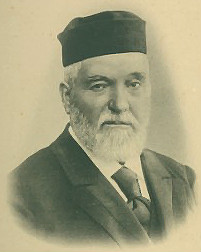
If you had a name like Kalonimus Kalman Vulf Ze’ev Yankelevich Wissotzky, you’d kick ass, too.

Kalman Ze’ev Yankelevich Wissotzky (1824-1904) was the son of struggling merchants in Russia. After studying at the famous Volozhin Yeshiva, he joined an agricultural colony which paved his way into the tea trade. In 1849, he established the Wissotzky Tea company in Moscow and very soon became known as the “King of Russian Tea.” By 1904, Wissotzky Tea was popular across the world, with branches in Europe and America. Meanwhile, the situation in Russia worsened to the point that Wissotzky Tea moved their headquarters to Israel. (During the Russian Revolution, the masses protested “Jewish domination” and chanted their slogan: “Tea of Wissotzky, Sugar of Brodsky, and the Tzar is Leiba Trotsky!”) In 1936, Wissotzky Tea opened a factory in Israel, becoming the first tea company in the region. Since then it has been Israel’s leading tea brand. It would surely make Wolf Wissotzky proud – he was an ardent Zionist and one of the main shakers of the movement. He gave 10,000 rubles to the Alliance Israelite for Zionist causes, then another lump sum of 20,000, as well as 6000 rubles to start one of Israel’s first monthly magazines (called HaShiloach). Wissotzky personally traveled to Israel and laid the groundwork for the Lod, Nablus and Gaza settlements. He also established and financed the first school in Jaffa. Outside of Israel, too, Wissotzky was a great philanthropist. In 1898, he gave 70,000 to build a yeshiva in Byelostok. Most amazingly, he worked tirelessly to help the Cantonists – young Russian Jews forcibly taken from their homes and conscripted into life-long military service. Wissotzky ensured many of them had Shabbat services and Passover meals, and helped bring countless young boys back to Judaism. Ultimately, he would leave over 1 million rubles to charity. In those days, one ruble was equal to 0.514 ounces of gold, which in today’s value is nearly $1,000. So, Wissotzky donated nearly one billion dollars to charity! Now that’s philanthropy!

Words of the Week

Great minds discuss ideas; average minds discuss events; small minds discuss people.
– Eleanor Roosevelt

Jews of the Week: Asenath Barzani & the Maid of Ludomir

Two Amazing Women

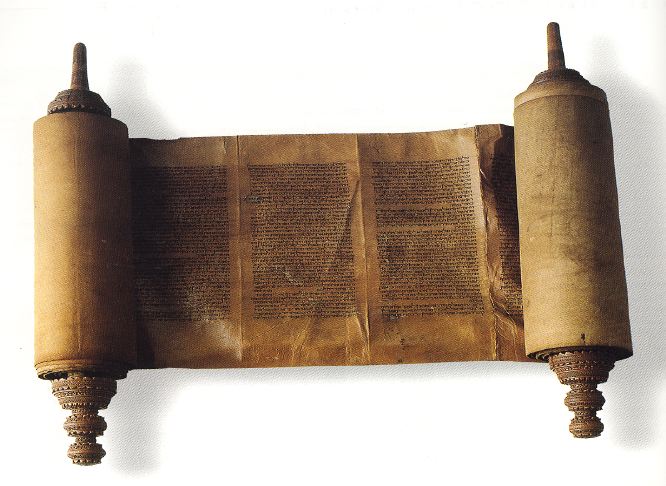
Torah

Asenath Barzani (1590-1670) was born in Mosul, Iraq to the chief rabbi of Kurdistan, Shmuel Barzani. After her father’s passing she took over his role, serving as the head of the Mosul Yeshiva and teaching Torah to the masses (preferring to do this from behind a curtain, for she was also very beautiful). Asenath was given the title Tanna’it (“Great Teacher”) and was known for performing incredible miracles, including reviving a dead dove, bringing a legion of angels down from Heaven, and fighting crime using only her mystical powers. To this day, people make pilgrimages to her grave in Iraq.

On the other side of the world, in the Ukranian town of Ludomir, lived a woman named Hannah Rachel Verbermacher (1805-1888). After a midnight incident at a cemetery, where she had a certain revelation, Hannah Rachel transformed into a highly respected Torah teacher famous across Eastern Europe (she, too, gave her speeches from behind a screen for modesty). Many Hassidim became her devoted followers, building a synagogue and study house for the great ‘Maid of Ludomir’. Some even called her rebbe, and she was often seen wearing tefillin and a tallit (which stirred up quite a bit of controversy). At the end of her life, she made Aliyah to Israel and is said to have joined a descendant of the great Yemenite sage Shalom Shabazi in the mission of bringing Mashiach. However, according to legend the angel Eliyahu came down to stop them, for the world was not yet ready!

Words of the Week

Don’t ask for a lighter burden, ask for broader shoulders.
– Jewish Proverb