Tag Archives: Torah

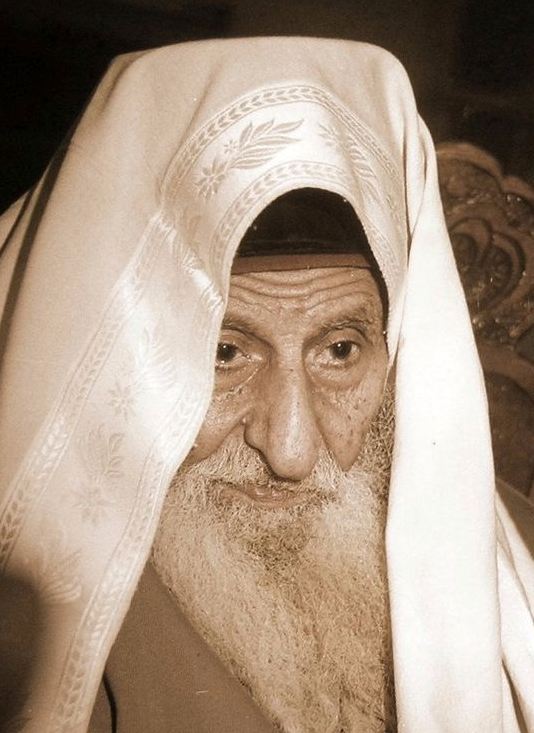
Jew of the Week: Rav Yitzhak Kaduri

Rav Yitzchak Kaduri

Rav Yitzchak Kaduri

Yitzhak ben Zeev Diva (c. 1902-2008) was born in Baghdad to a rabbi who worked as a spice trader. Early on, he plunged into the depths of Jewish wisdom and by his teenage years was already recognized as a prodigy. In 1923, he settled in the Holy Land to bring spirituality into the secular Zionism that was flourishing in Israel. Upon arrival, he officially changed his last name to Kaduri. He continued his learning under some of the greatest rabbis of the time, particularly at Jerusalem’s famous Porat Yosef Yeshiva. Meanwhile, refusing to live on charity, he worked as a scribe and bookbinder, committing the books that he worked on to memory. It is said that he memorized the entire Talmud (over 5400 pages of dense text), together with its commentaries, along with a multitude of other works. He wrote several mystical texts of his own, which were never published, as Rav Kaduri did not want them getting into the wrong hands. He went on to become the head mekubal (“Kabbalist”) among Israel’s rabbis. His son spearheaded the opening of Rav Kaduri’s own yeshiva – Nachalat Yitzchak – located in the Bukharian Quarter of Jerusalem next to the Rav’s home. Rav Kaduri was famous for eating very little, and speaking very little. Despite his occupation with study, his doors were always open to help others (in fact, he refused to lock the doors of his home even amidst a spate of thefts). Hundreds of people sought his advice and blessings each day, and he was known as a miracle worker and healer. At his funeral, 8 years yesterday, over 300,000 people came to pay their respects.

Words of the Week

When God created the first man, He showed him all the trees of the Garden of Eden, and said to him: ‘See My works, how beautiful and praiseworthy they are. And everything that I created, I created for you. Be careful not to spoil or destroy My world—for if you do, there will be nobody after you to repair it.’
– Midrash Kohelet Rabbah 7:13

Jew of the Week: Moses Maimonides

Maimonides

Moshe ben Maimon (1138-1204), known in the Jewish world as the Rambam (his initials) and to the rest of the world as Moses Maimonides, was born in Cordoba, Spain, the son of a famed rabbi. In 1148, the Almohads conquered Cordoba and began persecuting the Jews. Maimonides’ family fled and remained on the move across Spain for 10 years before settling in Morocco. There, Maimonides studied at the University of al-Karaouine, focusing on the field of medicine. At the same time, he composed his famous commentary on the Mishnah – the central text of Jewish oral laws. Along with his two sons, he then traveled to the Holy Land, despite the danger of the ongoing Crusades. After visiting the holy sites and praying at the Temple Mount, he journeyed to Egypt and settled there, continuing his work and studies at the local yeshiva. During this time, he played a central role in saving a community of Jews taken captive by King Amalric I. In 1171, Maimonides was appointed president of the Egyptian Jewish community. When his brother’s merchant ship sank in the Indian Ocean, Maimonides lost all of his wealth and started working as a physician. Having studied both Greek and Arabic medicine, and being well-versed in folk healing and mysticism, Maimonides quickly became the top doctor in the world and was soon hired by the legendary Sultan Saladin. Even after Saladin’s death, Maimonides remained the royal family’s physician, and rejected offers by a handful of European kings. He wrote a number of healing manuals that were influential for many future generations (and still studied today). He also composed several religious and philosophical works, including the famous Guide for the Perplexed and Treatise on Logic. His Mishneh Torah remains one of the central compilations of Jewish law to this day. He also set forth Judaism’s 13 Principles of Faith. Scholars are puzzled at how he was able to accomplish so much: his typical day included a visit to the Sultan’s Palace before returning home to a long line of patients that lasted into the night. He would rarely take any breaks, and ended his day hungry and spent. Even on Shabbat he had little rest, dealing with life-or-death situations that trumped the sanctity of observing the Sabbath. Many believe that he passed away because of this difficult lifestyle. Maimonides writes that he wished he had more time to pray, study, and grow closer to God, but his obligation to care for the masses superseded all these. He passed away on December 12th (809 years tomorrow) to great sorrow, and true to his nature, had demanded the humblest of funerals. He remains highly respected in Spain and across the Middle East, the Arab world (as Abu Musa bin Maymun) and the medical community. Countless institutions continue to bear his name, and he is a central hero for modern Jews as a man who was both pious and worldly, bridging the gaps between Torah and science, Jewish wisdom and secular philosophy.


Words of the Week

Gems from Moses Maimonides:

“Do not consider it proof just because it is written in books, for a liar who will deceive with his tongue will not hesitate to do the same with his pen.”

“Give a man a fish and you feed him for a day; teach a man to fish and you feed him for a lifetime.”

“No disease that can be treated by diet should be treated with any other means.”

“One who wishes to attain human perfection must therefore first study Logic, next the various branches of Mathematics in their proper order, then Physics, and lastly Metaphysics.”

“One should see the world, and see himself as a scale with an equal balance of good and evil. When he does one good deed the scale is tipped to the good – he and the world is saved. When he does one evil deed the scale is tipped to the bad – he and the world is destroyed.”

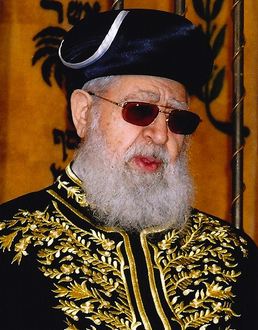
Jew of the Week: Rav Ovadia Yosef

Rav Ovadia Yosef

Rav Ovadia Yosef

Abdullah Ovadia Yousseff (1920-2013) was born in Baghdad, Iraq and immigrated with his family to Jerusalem at the age of 4. He was quickly recognized as a young prodigy with a photographic memory and a profound depth of understanding, and ordained as a rabbi at age 20. Shortly after, Rav Ovadia moved to Cairo, Egypt where he headed a yeshiva and Jewish court until his return to Israel upon the State’s independence. In 1952 he published the first of several great works, which propelled him into the spotlight. He then founded an advanced yeshiva for gifted students. By 1973, Rav Ovadia was appointed Israel’s Sephardic Chief Rabbi. He served in this post until 1984 when he founded the Shas political party – today the 4th largest in the Knesset – and served as its spiritual guide until his last days. A scholar above all else, he pored through thousands of works. Once, he tumbled off a ladder while reaching for a book, breaking his back. As no one was there to help him, he grabbed the nearest text and studied it for 3 hours until someone found him. Possessing a great love for the Jewish people, Rav Ovadia always strove to make life simpler for the Jews, earning a reputation for being very lenient when it came to Jewish law. He was heavily engaged in kiruv – bringing secular Jews back to their heritage and into the spiritual fold. He especially focused his efforts on Mizrahi and Sephardic Jews (who often suffered discrimination and a lower socio-economic status in Israel) and is thus credited with restoring Jewish and national pride among this demographic. Many stories highlight his love and service to the people. Once, he suffered a heart attack and was rushed to hospital for life-saving surgery. He had the surgery delayed for several hours as he was in the middle of writing a letter to a woman in distress, and feared that if he died there would be no one to help her. Sadly, Rav Ovadia passed away on Monday. Nearly a million people attended his funeral in Jerusalem – the largest funeral in Israel’s history. Many have hailed his passing as the end of an era in the country’s history.

Words of the Week

The righteous promise little and do a lot; the wicked promise much and don’t do even a little.
– Talmud, Bava Metzia 87a