
Canada’s First Black and Jewish Party Leader
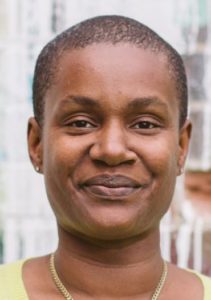
Annamie Paul, leader of the Green Party of Canada
Annamie Paul (b. 1972) was born in Toronto to parents from the Caribbean islands of Nevis and Dominica. She was interested in politics from childhood, and at the age of 12, started working as an assistant in Ontario’s provincial parliament. From there, she became an assistant in Canada’s Senate. She went to law school at the University of Ottawa, passed the bar in 1998, and also got a Master’s in Public Affairs from Princeton. It was while studying at Princeton that Paul took a greater interest in Judaism, and started learning with the head of the university’s Center for Jewish Life. Soon, she decided to convert, and although she studied primarily with a Conservative Jewish rabbi, went on to do a full Orthodox conversion. Paul married international human rights lawyer Mark Freeman, and the two made sure to put their kids through Jewish schools, and continue to keep a kosher home today. Meanwhile, in 2001, Paul founded the Canadian Centre for Political Leadership, an organization focused on getting more minorities and more women into government. She was also part of Canada’s Mission to the European Union, and worked at the International Criminal Court. She has won a number of awards for her human rights work and social activism. In 2019, Paul became a member of the Green Party of Canada and, earlier this month, was elected its leader. That makes her the first Jewish and first black woman to lead a political party in Canada.
Words of the Week
Just call to mind all those terrible episodes of the slave trade, of human beings who, merely because they were black, were stolen like cattle, taken prisoner, captured and sold. Their children grew up in strange lands, the objects of contempt and hostility because their complexions were different. I am not ashamed to say, though I may expose myself to ridicule for saying so, that once I have witnessed the redemption of the Jews, my people, I wish also to assist in the redemption of the Africans.
– Theodor Herzl


 Lina Bauer (1830-1909) was born to a wealthy, religious German-Jewish family in Breslau (now Wroclaw, Poland). Her parents were noted social justice activists and philanthropists. Among other things, her father built an apartment building to provide housing for destitute workers, while her mother and aunts sought to save women from brothels and give them a proper education. Lina was raised with these important values. At just 18 years of age, amidst the wars of 1848, she established the Penny Society for Poor Pupils to raise money for shoes, clothes, and books for needy children. The organization would continue to operate for the next eighty years, providing countless children with basic necessities. Lina received an extensive education in music, literature, history, and science, and was so passionate about her studies that her mother wanted to take her out of school. Undeterred, Lina continued to study in secret at night. Meanwhile, she fell in love with a poor Polish Jew and married him in 1854 despite her parents’ wishes. The couple moved to Berlin and Lina (now Morgenstern) started to write to help pay the bills. Morgenstern was heavily influenced by the German thinker Friedrich Fröbel, famous for his concept of a “kindergarten” where small children can learn, play, and grow healthy and happy. Fröbel’s preschools did not go very far, and were even suppressed by the Prussian authorities. It wasn’t until Morgenstern co-founded the Berlin Women’s Association for the Advancement of Fröbelian Kindergartens that the idea took off. She chaired the organization for five years, during which time she established eight kindergartens, and a training academy for kindergarten educators. Fröbel’s other students established the first kindergartens in America, and the institution was soon adopted around the world. Morgenstern ultimately left her post to start a new charity: the Volksküche, or “people’s kitchen”. This organization distributed healthy meals to the poor, inspiring the thousands of soup kitchens that operate around the world today. Morgenstern herself opened up ten such kitchens, each serving as many as 2500 people per day! Morgenstern also published a number of important works on feminism, education, health, and child care. Her Das Paradies der Kindheit (“The Paradise of Childhood”) was the kindergarten textbook used globally for decades, and went through seven editions in her lifetime alone. Meanwhile, her Illustrated Universal Cooking Book – a result of all those years working in soup kitchens – was so popular that the Nazis did not include it in their Jewish book-burning list. Among the other organizations that Morgenstern founded are the School for Further Education of Young Ladies, the Berlin Housewives’ Association, the International Congress of Women, and the Berlin Society for Child Protection. During the Franco-Prussian War of 1870, she started a group for the care of soldiers, assisting some 60,000 troops. Morgenstern had become so popular and beloved that the German emperor and empress, Wilhelm and Augusta, visited her and became her patrons. Morgenstern was awarded the Victoria Medal, the Service Cross, and the War Medal. Despite all this, she was a central target for anti-Semites, and their attacks ultimately forced her into bankruptcy and illness. The Empress sent her to San Remo to recover, but it was not enough. Morgenstern left the public sphere and spent her last years writing. Among her final works is a collection of 250 biographies of inspiring women. In those last years she also directed the German Peace Society, advocating for pacifism, arms reduction, and peaceful coexistence. Disbanded by the Nazis, the organization was reformed in 1945, and continues to operate to this day. Morgenstern quietly passed away in 1909, and is buried in Berlin’s Jewish cemetery.