The Great Liberator
 Milton Friedman (1912-2006) was born in Brooklyn to poor Jewish immigrants from what is today Ukraine (then part of Hungary). He graduated high school at just 15 and earned a big scholarship to Rutgers University. Initially wishing to be a mathematician, the Great Depression inspired Friedman to become an economist instead. After post-graduate studies at the University of Chicago, and a fellowship at Columbia University, Friedman headed to Washington to work as an economist for the government. To help pay for World War II, it was Friedman who introduced the payroll withholding tax system (“pay-as-you-earn”), where income taxes are deducted automatically from an employee’s paycheck. (Friedman later regretted it very much and said he wished it hadn’t been necessary.) He also spent much of the war working on weapons design and military statistics. He finally earned his Ph.D from Columbia after the war, following which he took a professorship at the University of Chicago, where he taught for the next 30 years. He wrote a popular weekly column for Newsweek, for which he won a prestigious award. His 1962 book Capitalism and Freedom was an international bestseller and made Friedman world-famous, while his A Monetary History of the United States became the standard textbook for understanding the Great Depression and the effects of monetary policy. Friedman argued passionately for a free-market economy and for the government to stay out of business. He proposed such important concepts as the permanent income hypothesis, the quantity theory of money, floating exchange rates, sequential sampling, and the natural rate of unemployment. He also argued for abolishing the Federal Reserve, whom he blamed for many economic ills. He was opposed to minimum wages and foresaw that they would actually lead to increases in unemployment. He is also credited with bringing an end to America’s military draft, transitioning the US military into an all-volunteer paid army. He believed conscription was unethical and prevented young men from choosing their own life path. Friedman later said abolishing the draft was his greatest and proudest accomplishment. Friedman won the Nobel Prize in Economics in 1976. After retiring from the University of Chicago the following year, he continued to do research in San Francisco, and also worked on a popular ten-part TV show called Free to Choose (the companion text of which was the bestselling nonfiction book of 1980). Friedman was an economic advisor to Ronald Reagan, and was called the “guru” of the Reagan administration. In 1988, he won a National Medal of Science and a Presidential Medal of Freedom. Friedman stayed busy until his final days, and his last article for The Wall Street Journal was published a day after his death! He has been called “the Great Liberator” and has been compared to Adam Smith. The Milton Friedman Prize for Advancing Liberty is named after him. He is widely considered one of history’s most significant economists. Today was his yahrzeit.
The End of World War I and the Beginning of the Jewish State
Words of the Week
A society that aims for equality before liberty will end up with neither equality nor liberty.
– Milton Friedman
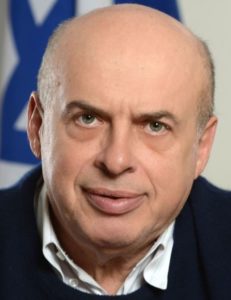 Anatoly Borisovich Sharansky (b. 1948) was born in Donetsk, Ukraine. He was a child chess prodigy, and won his city’s chess championship as a teenager. He went on to study math in Moscow and later worked in a secret Soviet research lab. In 1973, Sharansky applied for an exit visa to Israel and was refused. Henceforth, he became a vocal activist on behalf of Soviet Jewry, and became the world’s most famous refusenik. He soon expanded his scope to work for all human rights, and was the spokesperson for the Moscow Helsinki Group, today Russia’s primary human rights organization. In 1977, Sharansky was arrested on trumped-up charges of treason and espionage, and sentenced to 13 years of hard labour. He was tortured, and kept in solitary confinement for long periods of time. (He would later remark that one of the things that helped him through it was playing chess in his mind.) After ceaseless activism from his wife, mother, and countless international supporters, Sharansky was finally released in 1986. Shortly after, he received a Congressional Gold Medal from the US government. He moved to Israel and started going by his Hebrew name, Natan. A couple of years later, he published a bestselling memoir, Fear No Evil. (This book was passed on by