
The Feminine Mystique
 Bettye Naomi Goldstein (1921-2006) was born in Illinois to Jewish parents of Russian and Hungarian heritage. She experienced a great deal of antisemitism in her youth which, she would later explain, fueled her “passion against injustice”. She became a writer in high school, and later penned award-winning poems. She graduated with a degree in psychology from the all-women’s Smith College in 1942, then did research at UC Berkeley. Shortly after, she dropped out of school, moved to New York, married Carl Friedan, and became a housewife, while doing some freelance writing on the side. It was at her high school’s fifteenth reunion that she saw an underlying unhappiness in the lives of her former classmates. The discussions, research, and study that came out of this eventually crystallized in a 1963 book called The Feminine Mystique. Friedan wrote about the problem “with no name”, of the “depressed suburban housewife” who was not given the opportunity to fulfil “the basic human need to grow”. The book was an instant bestseller, and is credited with launching the second wave of feminism. In 1966, Friedan co-founded the National Organization of Women (NOW), of which she was the first president. The organization was founded in her hotel room, with its purpose written on a napkin: to ensure legal equality and employment equality for all. The organization also worked to establish subsidized child care. In 1970, Friedan led and organized the Women’s Strike for Equality, with marches in over 40 cities, and 50,000 in New York City alone. Friedan supported many other women in important leadership roles, including Shirley Chisholm, America’s first black congresswoman. (Chisholm had an incredible encounter with the Lubavitcher Rebbe, and credited him with inspiring much of her good work). Friedan worked hard to ensure that feminism not be equated with homosexuality (calling lesbian feminists “the lavender menace”), or with hating men, or with abortion (she did support a woman’s right to choose, but called it a “secondary” issue). She would say: “The women’s movement was not about sex, but about equal opportunity in jobs and all the rest of it.” She maintained the supreme value of a traditional family unit, and that children should “ideally come from mother and father”. Though originally self-described as “agnostic”, in her later years she saw the value in religion and started to regularly attend prayer services at her local synagogue. Friedan had also cofounded the First Women’s Bank in 1973 and Women Against Gun Violence in 1994. Among her many awards are Humanist of the Year (1975), the Eleanor Roosevelt Leadership Award (1989), induction into the National Women’s Hall of Fame, and multiple honorary degrees.
Words of the Week
A rabbi who is an optimist taught me that what you may think is a challenge is a gift from God, and if poor babies have milk, and poor children have food, it’s because this rabbi in Crown Heights had vision.
– Shirley Chisholm, American’s first black congresswoman, on the Lubavitcher Rebbe
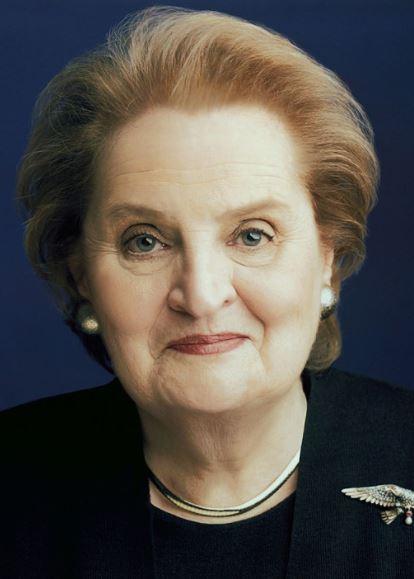
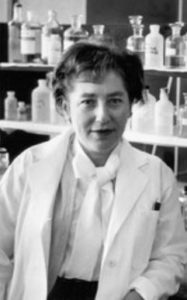 Mildred Cohn (1913-2009) was born in New York to Jewish-Russian immigrants. Her father was a rabbi and Cohn grew up in a religious, Yiddish-speaking home, though one which also prioritized secular education and the arts. Cohn graduated high school by the age of 14 and got her Bachelor’s degree in biochemistry at 18, followed by her Master’s from Columbia University. Unable to afford any further schooling, Cohn got a job researching for the National Advisory Committee for Aeronautics (NACA), which would later become NASA. She was the only woman among seventy men, and was told she shouldn’t expect any promotions. Two years later, she had enough money to return to school, pursuing her PhD at Columbia under recent Nobel Prize-winner Harold Urey. Cohn focused her work on carbon and oxygen isotopes. From there, she moved on to Washington University to do research on metabolism using sulfur isotopes. Later, she switched to using nuclear magnetic resonance and made a huge breakthrough in 1958 when she was able to visualize ATP, the central energy molecule that powers human cells and essentially all living things. Cohn discovered much of what we know about ATP and how it works. All in all, she wrote 160 scientific papers and won numerous awards, including the National Medal of Science (awarded to her by President Reagan). She was the first female editor of the Journal of Biological Chemistry and the first female president of the American Society for Biochemistry and Molecular Biology. In 2009 she was inducted in the National Women’s Hall of Fame. Cohn was married to renowned Jewish physicist Henry Primakoff. Many of her ATP discoveries came while she was working at the lab of another great Jewish scientist, Gerty Cori.
 Gerty Theresa Radnitz Cori (1896-1957) was born in Prague. Her father was a chemist who had invented a new way of refining sugar. At 16, Cori decided to become a doctor, but found that she was missing nearly all the prerequisites. So, in one year she took eighteen years-worth of courses in Latin, science, and math. Cori passed her entrance exam and was among the first women ever to be admitted to Prague’s medical school. After graduating, she worked at a children’s hospital and also did research on blood disorders, the thyroid gland, and the body’s ability to regular temperature. Due to persistent food shortages and rising anti-Semitism after World War I, Cori and her husband (also a doctor and scientist) left Prague and moved to New York. The couple did research together at what is now the Roswell Park Cancer Institute in Buffalo, focusing on glucose metabolism. Cori published 11 papers of her own, and another 50 together with her husband. By 1929, the Coris had figured out how the body metabolized glucose in the absence of oxygen, a process now known as the Cori Cycle. For this, they won a Nobel Prize in 1947. This made Cori the first American woman to win a Nobel Prize (and only the third woman overall), as well as the first woman ever to win a Nobel Prize in Medicine. In 1931, the couple took over a lab at Washington University (with Cori being paid one-tenth her husband’s salary). Here they made many more vital scientific discoveries, and mentored a new generation of scientists—six of which went on to win Nobel Prizes of their own. For this reason, their lab was deemed a National Historic Landmark in 2004. Like Mildred Cohn, Gerty Cori won countless awards and was inducted into the National Women’s Hall of Fame. There are craters on the Moon and on Venus named after her, as well as a commemorative US stamp. After battling the disease for a decade, Cori succumbed to bone cancer, likely caused by her extensive work with X-rays.