The Colour Master
 Moishe Shagal (1887-1985) was born in the shtetl of Liozna, in what is today Belarus, the oldest of nine children in a Hasidic Jewish family. Shagal went to a religious heder school until age 13, but wanted to learn a wider breadth of subjects, so his mother managed to bribe a local high school to take him in. (Jews were then forbidden from public schools, and the bribe was a whopping 50 roubles—three months salary—a small fortune for their impoverished family.) This is where he discovered his passion for art. He soon enrolled in Yehuda Pen’s art school in Vitebsk, and was given free tuition since he was so poor. While most Jewish artists in Russia at the time hid their Jewishness, Shagal embraced it. He would later say how Hasidism greatly influenced his artwork, and many of his pieces are deliberately meant to preserve Jewish culture. He wrote that every single one of his artworks “breathed” with the “spirit and reflection” of his childhood home and memories. In 1906, Shagal moved to St. Petersburg and joined a prestigious art academy (using a friend’s passport). A few years later, he left to Paris and henceforth went by “Marc Chagall”. Among his biggest influences were Rembrandt, Van Gogh, and (former Jew of the Week) Pissarro, though he did not want to be associated with any particular type of art. An exhibit in Germany in 1914 first brought him wider renown. He then returned to Russia to get married and start a family. In 1917, while broke and going hungry for days, Chagall was offered a job as arts commissar in Vitebsk. He accepted, and went on to found the Vitebsk Arts College which would go on to become the top art academy in the USSR. A few years later, Chagall moved to Moscow to be the stage designer of the State Jewish Chamber Theater, where he produced some of his most famous murals. In 1923, Chagall moved yet again, back to France, and partnered with Ambroise Vollard. The latter commissioned many of Chagall’s greatest works, including illustrations from the Tanakh. For inspiration, Chagall moved to Tel-Aviv and stayed at the home of Meir Dizengoff, the city’s first mayor. (That home was where the State of Israel would be proclaimed in 1948, and is today known as Independence Hall.) The Holy Land made a huge impact on Chagall, causing him to become something of a ba’al teshuva and return to his Jewish faith. He immersed himself in Jewish studies, and worked diligently on his “Old Testament” collection (which took until 1956 to complete, and was then hailed as being “full of divine inspiration”). Chagall returned to France shortly before the Nazi invasion. He was imprisoned and had his citizenship revoked. Pressure from the United States got him released, and he arrived in New York in the summer of 1941. His favourite hangout was the heavily-Jewish Lower East Side, where Chagall felt at home and spent much of his time socializing in Yiddish. Meanwhile, Chagall worked as a set and costume designer for the Ballet Theatre. He would return to France after the war, and in his later years produced sculptures, ceramics, tapestries, and stained glass. He painted the ceiling of the Paris Opera (covering 2400 square feet and using 200 kilos of paint), and wrote an autobiography, too. Chagall has been called the “greatest image-maker” of our time, and Picasso said that he was “the only painter left who understands what colour is.”
Words of the Week
I did not see the Bible, I dreamed it. Ever since early childhood, I have been captivated by the Bible. It has always seemed to me and still seems today the greatest source of poetry of all time.
– Marc Chagall

Marc Chagall’s “Abraham and the Three Angels”
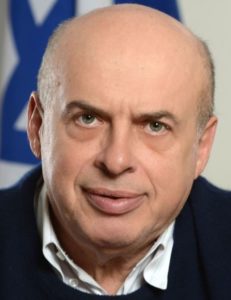 Anatoly Borisovich Sharansky (b. 1948) was born in Donetsk, Ukraine. He was a child chess prodigy, and won his city’s chess championship as a teenager. He went on to study math in Moscow and later worked in a secret Soviet research lab. In 1973, Sharansky applied for an exit visa to Israel and was refused. Henceforth, he became a vocal activist on behalf of Soviet Jewry, and became the world’s most famous refusenik. He soon expanded his scope to work for all human rights, and was the spokesperson for the Moscow Helsinki Group, today Russia’s primary human rights organization. In 1977, Sharansky was arrested on trumped-up charges of treason and espionage, and sentenced to 13 years of hard labour. He was tortured, and kept in solitary confinement for long periods of time. (He would later remark that one of the things that helped him through it was playing chess in his mind.) After ceaseless activism from his wife, mother, and countless international supporters, Sharansky was finally released in 1986. Shortly after, he received a Congressional Gold Medal from the US government. He moved to Israel and started going by his Hebrew name, Natan. A couple of years later, he published a bestselling memoir, Fear No Evil. (This book was passed on by
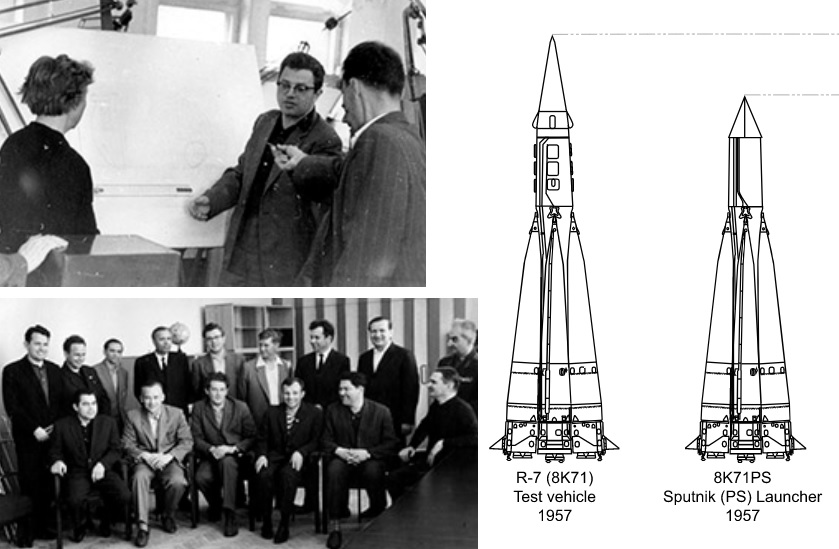
  Anatoliy Davidovich Daron (1926-2020) was born in Odessa, Ukraine. An avid pianist, he initially wished to become a musician. At age 12, he read a book about space and was inspired to become a rocket scientist, with the hopes of one day flying to Mars. That same year, World War II broke out and the family fled to Russia’s Stavropol region. A few years later, the Nazi invasion came to his town just as he was graduating high school—he got his diploma, written by the principal on a scrap piece of paper, while everyone was fleeing! Doron went on to study rocketry in Moscow, and soon joined OKB-456, the Soviet state institution tasked with missile and rocket development, under the leadership of Valentin Glushko. There, Daron worked on the USSR’s first intercontinental ballistic missiles (ICBMs). When the anti-Semitic