Visionary Architect
 Moshe Safdie (b. 1938) was born in Haifa to a Mizrachi Jewish family originally from Syria. He grew up on a kibbutz where he was a beekeeper and goatherd. When he was 15, the family moved to Montreal, Canada. Safdie went on to study architecture at McGill University. For his thesis, he came up with the idea of 3D, prefabricated modular units. Safdie quickly made a name for himself as a young architect and, at just 23, was invited to design Habitat 67 during Montreal’s World Expo. In 1970, Safdie opened a branch of his firm in Jerusalem to focus on restoring the Old City and building up the new city post-reunification. He designed the famous Porat Yosef Yeshiva (originally the vision of the great Ben Ish Chai), the beautiful Mamilla Center, as well as Yad Vashem, and Ben Gurion International Airport. Safdie achieved international renown, and went on to design some of the most iconic buildings in the world (see below). This includes the Marina Bay Sands in Singapore, the National Gallery of Canada, and the world’s longest “horizontal skyscraper” in China. Meanwhile, Safdie has taught at Harvard’s Graduate School of Design, and directed it for a number of years. He has also published a dozen books, and has been featured in six films. Today, Safdie Architects has offices in Boston, Jerusalem, Toronto, Shanghai, and Singapore. Safdie is still deeply involved, and maintains a research fellowship at his firm to develop new architectural ideas and futuristic projects. He has won countless awards, including the Order of Canada, the Wolf Prize in Architecture, and multiple honorary doctorates. The Moshe Safdie Archive at McGill University is among the largest architectural collections in the world, with over 140,000 drawings, 100,000 photos, and over 2000 sketches.
*November is Mizrachi Heritage Month.*
Moshe Safdie at TED: How to Reinvent the Apartment Building
Words of the Week
Woe to mankind! For they see, but do not know what they see; they stand, but do not know upon what they stand.
– Rabbi Yose (Talmud, Chagigah 12b)

Some of Moshe Safdie’s best-known projects, clockwise from top left: Porat Yosef Yeshiva in Jerusalem’s Old City, Kauffman Center in Kansas City, National Gallery of Canada in Ottawa, Habitat 67 in Montreal, Jewel Changqi Airport in Singapore, and Marina Bay Sands in Singapore.
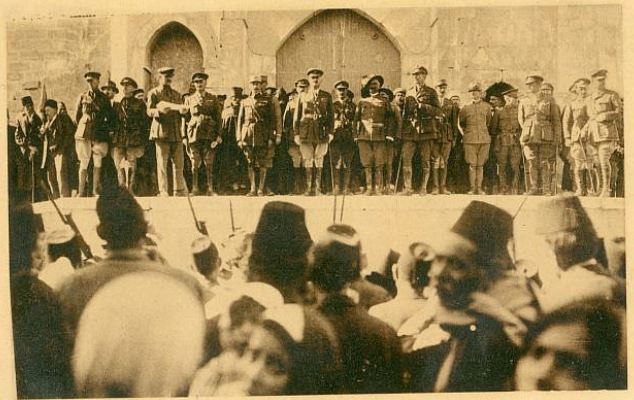
 Abraham Tzvi Idelsohn (1882-1938) was born in Latvia to a religious Jewish family. He studied to be a synagogue cantor. At 27, he made aliyah to Israel and worked as a musician and composer. In 1919, he opened a Jewish music school. A few years later, he left for Ohio where he served as professor of Jewish music at Hebrew Union College, the major seminary of Reform Judaism. Between 1914 and 1932 he published his ten-volume magnum opus, Thesaurus of Hebrew Oriental Melodies. Many consider him “the father of Jewish musicology”. His most famous melody is undoubtedly ‘Hava Nagila’. In December of 1917, British army general Edmund Allenby defeated the Ottomans and conquered the Holy Land for Great Britain. The Jews of Israel were elated, and celebrated the general’s arrival in Jerusalem. They asked Idelsohn to compose a song for the special occasion. Idelsohn remembered an old happy tune he had adapted from a Hasidic niggun. The song was a hit. A few years later, he asked his music class to write words for the song.
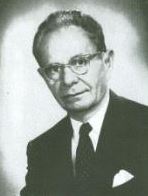 A young Moshe Nathanson (1899-1981) was in that class, and wrote a couple of simple lines based on Scriptural verses from Psalm 118. The rest is history. Nathanson was born in Jerusalem, the son of a rabbi. In 1922 he moved to Canada and double-majored in law and music at McGill University. He ended up studying at what is now the prestigious Julliard School of Music in New York. From there, he was hired to be the cantor of the first Reconstructionist Synagogue, and served in that role for the next 48 years. He wrote an important four-volume tome of liturgical songs. Nathanson also spent 10 years broadcasting Jewish music on American airwaves (“Voice of Jerusalem”) and dedicated much of his life to promoting Jewish folk music. Today, Nathanson’s and Idelsohn’s ‘Hava Nagila’ is the most recognizable Jewish/Hebrew song in the world, and a staple of every bar mitzvah and wedding. There is even a full-length documentary about it, called Hava Nagila (The Movie). This past year marked the song’s centennial anniversary.