“The Angel”
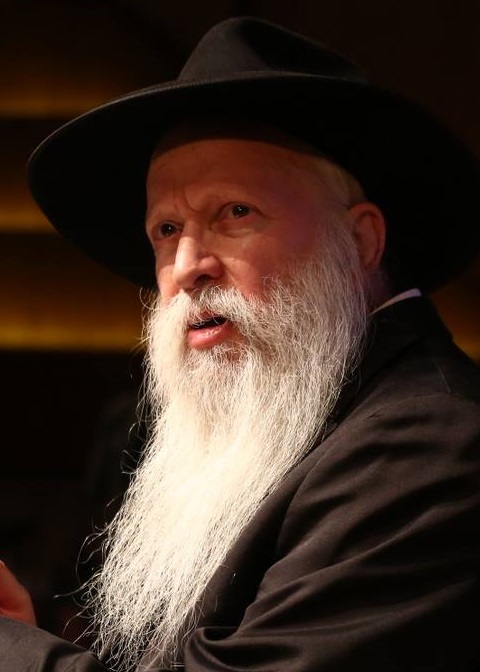
HaRav Yitzchak Ginsburgh
Yitzchak Feivish Ginsburgh (b. 1944) was born in St. Louis, Missouri and grew up in Cleveland, Ohio. He was recognized as a math prodigy when still a child. While spending a year in Israel as a teenager, Ginsburgh began learning Torah and becoming more religiously observant. He went on to study philosophy and mathematics, and got a Master’s degree in the latter. He left his Ph.D studies to go yeshiva in Jerusalem instead, becoming a rabbi. After the Six-Day War, he was one of the first people to move into the newly-liberated Jewish Quarter. Around this time, he met the Lubavitcher Rebbe for the first time and became his disciple, eventually resettling in Kfar Chabad. During the Yom Kippur War, he served as the Rebbe’s emissary to the IDF, and even delivered a lulav and etrog to Ariel Sharon on the front line for Sukkot. After this, Ginsburgh founded the first Chabad House in the Sinai, which was later destroyed when Israel gave up the area in its peace treaty with Egypt. The rabbi went on to head the Od Yosef Chai Yeshiva near Joseph’s Tomb. He has written over 120 books on a variety of subjects, in both Hebrew and English. He is considered one of the world’s foremost experts on Hasidism and Kabbalah, as well as gematria (Jewish numerology), Torah and science, Jewish psychology, and meditation. He is a pioneer of “Hasidic psychotherapy” and is the dean of the Torat Hanefesh School of Hasidic Psychology. Rabbi Ginsburgh is also an avid musician and has composed dozens of popular songs. He has met some controversy in the past for his passionate support of Jewish settlement across all of Israel’s ancestral lands, and for his opposition to government concessions to Israel’s enemies. Despite some of the negative press he has received from the mainstream media, Rabbi Ginsburgh is well-known for his humility, righteousness, profound wisdom, and gentle demeanour. Many refer to him as HaMalakh, “the angel”. Rabbi Ginsburgh has thousands of devoted students around the world, and still presides over a network of Jewish schools in Israel. He is undoubtedly among the greatest contemporary Jewish scholars and religious leaders. Today is his 77th birthday.
Words of the Week
Ours is the first generation in modern times to understand the truly universal human condition and to seek to bring all peoples of the earth together in peace and harmony.
– Rabbi Yitzchak Ginsburgh
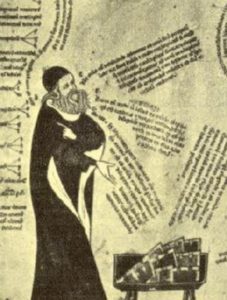 Avraham bar Chiya (c. 1070-1145) was born in Barcelona to a Sephardic Jewish family. It appears that his family was persecuted by its Christian rulers, so they fled to the neighbouring Arab kingdom of Zaragoza. Bar Chiya came from a long line of rabbis, and was also extensively trained in science, math, and astronomy. Famed for his wisdom, he became the court astronomer of Al-Musta’in II. Eventually, he was appointed minister of police and given the title sahib al-shurtah, “city governor”. This is why he was known in the Jewish community as HaNasi, “the prince” or “the president”. Al-Musta’in II was unable to defend his domain from the Christians, who soon took over. Bar Chiya moved to southern France for a while and lived in Narbonne and Provence. There he composed some of the most important scientific texts of the Medieval era. He translated a number of Arabic works into Latin, opening their study for Europeans, and played a key role in introducing the Hindu numerals we use today (by way of Arabia) to Europe, and thus to the rest of the world. Bar Chiya also synthesized ancient Greek wisdom with contemporary Arabic knowledge, and published new discoveries in number theory, arithmetic, geometry, optics, astronomy, and music theory. His Treatise on Measurement and Calculation inspired later greats like Plato of Tivoli and the world-famous Fibonacci. Meanwhile, Bar Chiya also served as the chief rabbi of the Jewish communities he presided over, and composed two important Jewish commentaries and texts. He is credited with being the first person to write a scientific book in Hebrew, and played an instrumental role in the development of the Hebrew language. His disciples included both Jews and non-Jews, among them the great