
The Secret Hero of Purim
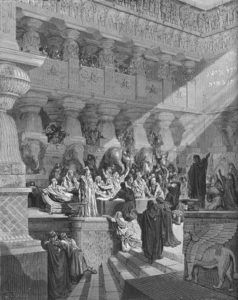
‘Daniel Interpreting the Writing on the Wall’ by Gustav Doré
Daniel (c. 6th-5th century BCE) was born in Jerusalem to a noble family of scribes and scholars. In the third year of King Yehoyachin’s reign, King Nebuchadnezzar of Babylon subdued the Kingdom of Judah and made it a tributary of the Babylonian Empire. Nebuchadnezzar took a number of noble Jewish families with him back to Babylon, including young Daniel. Together with his friends Hananiah, Mishael, and Azariah, Daniel was raised in the royal palace and trained by the Babylonian wise men. The four were given new names: Shadrach, Meshach, Abednego, and Beltshazzar. However, the Jewish youths held on to their faith, and refused to eat the non-kosher food of the Babylonians. God blessed them to be wiser than all the greatest sages of Babylon. Daniel grew up to become one of the trusted advisors of Nebuchadnezzar and his successors. Daniel also served as an important leader of the exiled Jewish community in Babylon. His prophecies were later collected by the Knesset HaGedolah (“the Men of the Great Assembly”) and make up the Biblical Book of Daniel. In one famous episode, we read how envious ministers in King Darius’ court passed a law to forbid praying to any deity except the king. They then accused Daniel of praying to his God—which he did and did not deny. Daniel was punished by being thrown into a lions’ den, from which he was miraculously saved. The envious ministers were themselves consumed by the lions. King Darius and his court were then convinced of the existence and supremacy of God: “I make a decree, that in all the dominion of my kingdom men tremble and fear before the God of Daniel; for He is the living God, and steadfast forever, and His kingdom is that which shall not be destroyed…” (Daniel 6:27) The Talmud points out that Daniel is the same person referred to as Hatach in the Book of Esther. It was he who took care of Esther in the royal palace and communicated between her and Mordechai. And so, Daniel was also the secret hero of the Purim story!
Words of the Week
Purim and Chanukah are both about antisemitism. There is one obvious difference between them: Haman, of the Purim story, wanted to kill Jews. Antiochus, of the Chanukah story, wanted to kill Judaism. It was the difference between Nazi Germany and Soviet Communism.
– Rabbi Jonathan Sacks
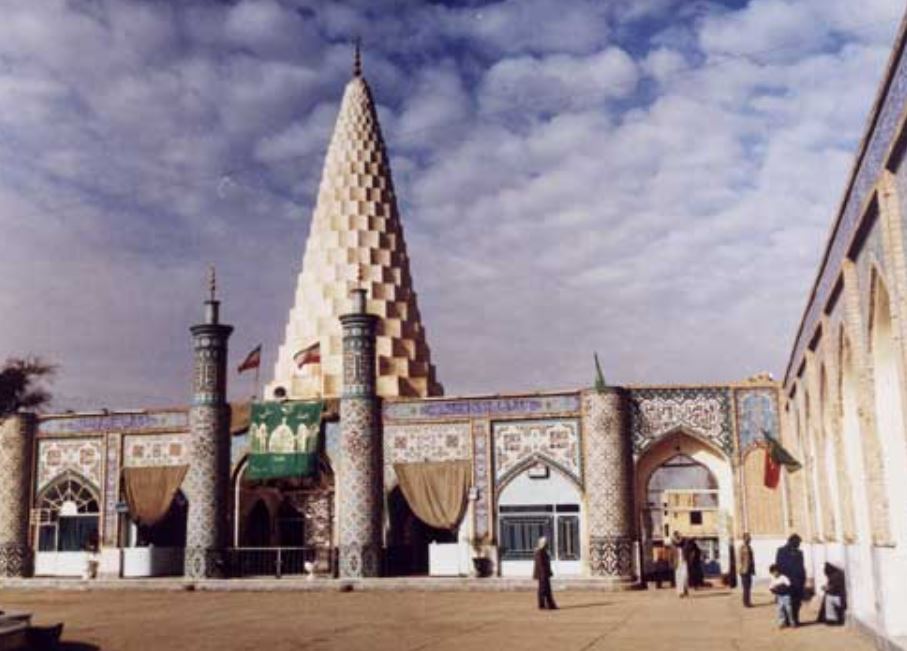
Tomb of Daniel in Shush (Susa), Iran.
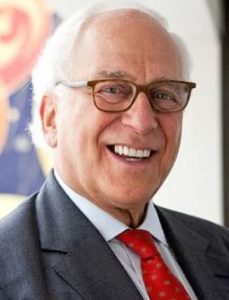
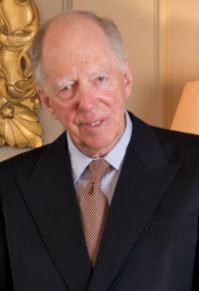
 Ezer Weizman (1924-2005), the nephew of Israel’s first president, Chaim Weizmann, was born in Tel Aviv and raised in Haifa. In his youth, he joined the Haifa Aviation Club and was flying planes by age 16. At 18, in the midst of World War II, he enlisted in the British Royal Air Force and served in Africa and India. After the war, Weizman lived in London and studied aeronautics. It was there that he joined the Zionist paramilitary group, Irgun. Weizman returned to Israel to fight in the Independence War. He was one of Israel’s very first fighter pilots, co-founded its air force, and participated in the first air force mission. He continued working for the army after the war, and in 1958 became the commander of the Israeli Air Force. He modernized the IAF, personally trained its pilots, and transformed it into the powerful and feared juggernaut that it is today. In 1967, Weizman was the IDF’s chief of military operations, and helped persuade the Israeli government to launch a preemptive strike against its aggressors. He directed the surprise attack on Arab air forces on the first day of the Six-Day War, totally destroying their air power and thus securing Israel’s lightning victory. (It has been said that the Six-Day War was won by the Israeli air force in the first six hours!) In 1969, Weizman – now a major general and deputy chief of staff – retired from the military and joined the Gahal political party (the precursor of Likud). He served as a Minister of Transportation and later as Defense Minister. He oversaw the development of Israel’s Lavi fighter jet, and the critical 1978 campaign in Lebanon (Operation Litani). Meanwhile, Weizman also became an important peace negotiator. He spoke Arabic fluently, and grew close to Egyptian president Anwar Sadat, who went so far as to call Weizman his “younger brother”. Not surprisingly, Weizman played a key role in Israel’s 1979 peace treaty with Egypt. He later founded his own party, Yachad, and sat on the Knesset between 1984 and 1992, serving as Minister for Arab Affairs and Minister of Science and Technology. A year after leaving the Knesset, Weizman was elected Israel’s seventh president. By this point, he had built a reputation as a dove, and worked hard to promote peace. He was credited with making the office of president more relevant in Israeli society, and was praised for his warmth and concern for all of Israel’s citizens, including Arabs and Druze. After being reelected to a second term, Weizman resigned as president in 2000, and passed away five years later. He has been voted the 9th greatest Israeli of all time.