The Greatest Rabbi of All Time?
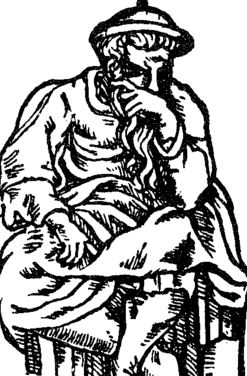
An illustration of Rabbi Akiva in the 16th century Mantua Haggadah
Akiva ben Yosef (d. 135 CE) was born in Israel to a poor family in the last years of the Second Temple, possibly the grandson of converts to Judaism. Despite being unlearned and impoverished, he fell in love with Rachel, the daughter of one of Jerusalem’s wealthiest men (and his employer). Rachel agreed to marry Akiva on the condition that he would eventually go to study. Her father rejected her choice, and the couple lived in extreme poverty. Finally, aged 40, Akiva enrolled at the yeshiva of Lod, without even knowing the Hebrew alphabet. He returned home only twelve years later, but upon nearing the door of his home, overheard his wife say to a neighbour that if it were up to her, her husband would study for another twelve years. Akiva thus went back to Lod for another dozen years, by the end of which he had become a renowned rabbi with some 24,000 students. This time, he returned home to a huge procession and an adoring crowd. His wife tried to get through and was blocked by his students. Rabbi Akiva famously told them: “Leave her alone, for what is mine and yours, is hers.” His father-in-law recognized the huge mistake he had made, and ended up leaving his fortune to the sage. Rabbi Akiva is credited with setting the foundations of Judaism as we know it. He completed the codification of the Tanakh, and commissioned Aquila of Sinope to produce a new accurate translation of the Torah into Greek – an indispensable tool for the Jewish majority at the time. He helped to quell a number of heretical movements, and ensured the survival of traditional Judaism in the face of the new Christian sect. Some even see him as one of the earliest feminists: it was Rabbi Akiva that banned the practice of separating women from society during their days of menstruation. He also spearheaded the abolition of both slavery and capital punishment in Israel. Rabbi Akiva taught that the most important Torah principle was loving your fellow, and unraveled new techniques in Torah interpretation. (One legend has it that God showed Moses a vision of Rabbi Akiva’s future classroom, and it was so deep that Moses did not understand any of it and began to cry!) Rabbi Akiva also participated in the Bar Kochva Revolt in an attempt to re-establish an independent Jewish kingdom and rebuild the Holy Temple. Unfortunately, the revolt failed with catastrophic results. All of Rabbi Akiva’s students perished. The rabbi was able to find five new students and transmit the Torah to them before his own cruel death at the hands of the Romans. This act is sometimes credited with saving Judaism from extinction. One of those five students was Rabbi Shimon bar Yochai, the traditional author of the Zohar, and the first to publicly reveal the vast mystical dimensions of Judaism. (These teachings he learned from Rabbi Akiva, who was such a great mystic himself that the Talmud states he was the only sage to ascend to the Heavens and return to Earth unscathed.) Rabbi Akiva set the stage for the compilation of the Mishnah, and its eventual evolution into the Talmud. His kindness was legendary, as was his love for Israel – both the nation and the land. He died defending both, being flayed with iron combs by the Romans. He prayed until his last breath, which stunned both his executioner and his students, who asked how he was able to praise God at such a moment. His reply: “All my life I was worried about the verse, ‘[to love Him] with all your soul’ …And I said to myself, when will I ever be able to fulfill this command? And now that I am finally able to fulfill it, I should not?” He then recited the Shema, and just as the last word “echad” left his lips, his soul departed his body. Some scholars title him “the father of Rabbinic Judaism”.
Words of the Week
One of the gifts of Jewish culture to Christianity is that it has taught Christians to think like Jews… Any modern man who has not learned to think as though he were a Jew can hardly be said to have learned to think at all.
– Lord William Rees-Mogg
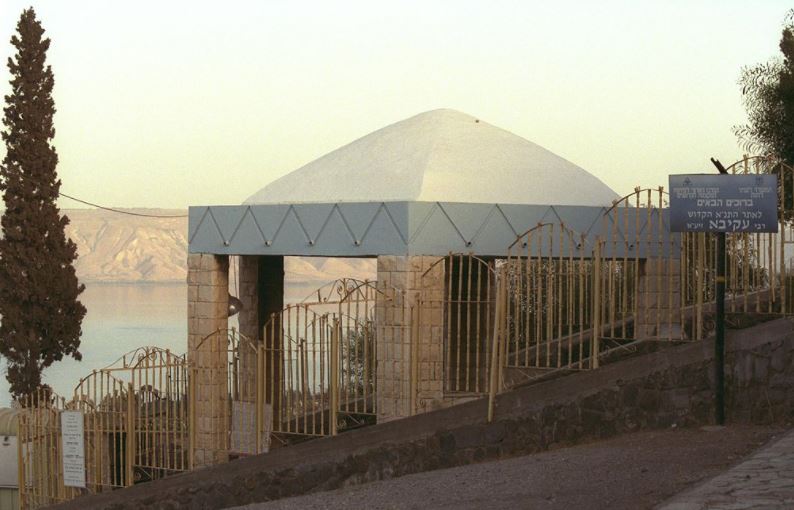
Rabbi Akiva’s Tomb in Tiberias, Israel
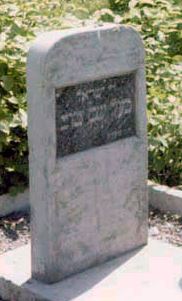
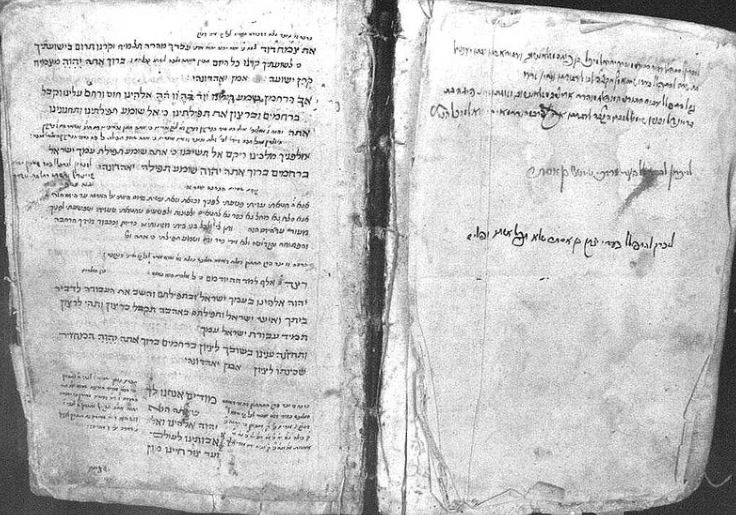
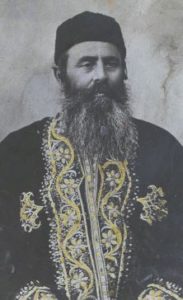 Shlomo ben Yakov Moussaieff (1852-1922) was born in the emirate of Bukhara (present-day Uzbekistan). Both a renowned rabbi and a wealthy businessman, he made aliyah to the Holy Land in 1888 – bringing with him forty cases of gold – and was one of the founders of Jerusalem’s famous Bukharian Quarter. Moussaieff built four synagogues, and homes for 25 poor families. Meanwhile, he published a prayer book and disseminated it widely, making it his mission to inspire more Jews to pray regularly. He also continued his business ventures, particularly in real estate, tea, silk, and gemstones. Moussaieff was an avid collector of rare manuscripts, and amassed an impressive library with 225 ancient texts, including prized manuscripts of Maimonides and the mystical teachings of the Arizal. Until his last days, Moussaieff was committed to the development of Israel, and stated in his will that only those of his seven children that remain in Israel would receive any inheritance.
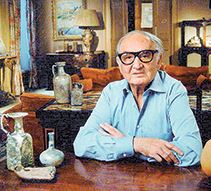 His grandson, also Shlomo Moussaieff (1923-2015), though better known as Sam, would become even more famous. One of twelve children raised in Jerusalem, Sam Moussaieff ran away from home as a teen to avoid his strict father. Living in a synagogue, he worked for a carpenter and sold ancient coins he would find in Jerusalem’s caves and tombs. Once arrested by Arab policemen, he ended up in a Muslim school for nearly a year, becoming proficient in Arabic and the Koran. At 17, Moussaieff enlisted in the British Army to fight the Nazis. After World War II, he fought for Israel’s independence and was captured by the Jordanians, who imprisoned him for a year. Moussaieff returned to Jerusalem and joined the family jewellery business. He soon opened his own antiquities shop in Jaffa, at times getting in trouble for smuggling goods. In 1963, Moussaieff was offered to have his record cleared of legal issues, as well as the rights to an exclusive shop in London’s Hilton Hotel, in exchange for handwritten letters from Maimonides which he owned. Moussaieff accepted and moved to London. His shop soon specialized in jewellery, and he became the dealer of choice for wealthy barons from Arab oil states thanks to his pristine Arabic. Moussaieff became world-renowned for his extremely rare and special gems. He owned the most precious stone in the world: a red diamond valued at $20 million. In 2011, he was ranked among the richest Londoners, with an estimated worth of some $350 million. Moussaieff amassed a personal collection of over 60,000 ancient artifacts, including millennia-old seals from Jerusalem’s First Temple, and reportedly even items associated with the forefather Abraham! His stated goal was to collect indisputable evidence proving the accuracy of the Torah. Moussaieff was given an honourary degree by Bar Ilan University (to whom he donated many artifacts, including his grandfather’s ancient manuscripts) which established the Dr. Shlomo Moussaieff Center for Kabbala Research. Interestingly, Moussaieff once purchased an ancient Torah scroll for $1 million from the Allenby family – who had the Torah because the elder Shlomo Moussaieff gave it as a gift to General Allenby during World War I!