Tag Archives: Kabbalah

Jew of the Week: Menachem Mendel Schneerson

The Lubavitcher Rebbe
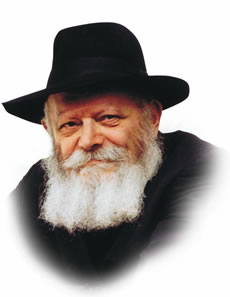
Menachem Mendel Schneerson – The Lubavitcher Rebbe

Menachem Mendel Schneerson (1902-1994) was the 7th and final Rebbe of Chabad-Lubavitch. From an early age he was focused on the well-being of others, diving into the Black Sea to save a drowning boy when he was just 9 years old. After marrying, he settled in Germany, where he studied math, physics, and philosophy at the University of Berlin. Simultaneously, he began writing commentaries on the Torah. With the rise of the Nazis, Rabbi Schneerson moved to France in 1933, and studied mechanics and engineering at ESTP, then enrolled at the world-famous Sarbonne and studied math until the outbreak of World War II. In 1941, the Rebbe finally made it to America. Immediately, he went to work at the Brooklyn Navy Yard to help the war effort, and was on the team that supplied the U.S.S. Missouri battleship. By 1942, Rabbi Schneerson began taking charge of Chabad. He reluctantly accepted the title of Rebbe in 1951. Over the years, he launched many campaigns to reignite Judaism globally. He sent thousands of emissaries, called shluchim, around the world, setting up Chabad houses on every continent (except Antarctica, for now), thereby putting kosher food, warm hospitality and prayer services always within reach for Jews anywhere in the world. He was a noted kabbalist, and gave countless penetrating discourses. He touched the lives of thousands of people, and inspired countless more. In 1983, the US Congress established the Rebbe’s birthday as “Education Day”. Posthumously, he was awarded the Congressional Gold Medal.

Words of the Week

You must approach a fellow Jew as though you are the King’s servant sent with a message to His most precious child.


– Rabbi Menachem Mendel Schneerson, the Lubavitcher Rebbe

Jew of the Week: Shimon bar Yochai

The Zohar

One of the greatest sages of all time, Shimon bar Yochai (c. 2nd century CE), also known as Rashbi, lived in the era following the destruction of the Second Temple nearly two thousand years ago. He was one of just a handful of new students of the great Rabbi Akiva, whose original 24,000 students all perished, likely at the hands of the Roman Empire. Judaism was literally on the verge of extinction when Rabbi Shimon and a few others began to teach the masses once again. However, a spy informed on bar Yochai, forcing him to hide in a cave with his son for 13 years, where they did nothing but study Torah, living off a nearby carob tree and a spring of water. They attained such a level of greatness that it is said the whole universe was sustained only in their merit. After a change in the Roman government, Shimon and his son emerged from the cave. They established an academy in Tekoa where the top minds of the day studied (including Yehuda haNasi, who would later begin the process of writing down the Oral Torah). Unfortunately, a new Roman government began persecuting Jews once more. Rabbi Shimon headed a delegation to Rome. It just so happened that the Emperor’s daughter was suffering from an incurable ailment that no physician could cure. With his mystical powers, Shimon cured the girl and for his reward, asked that the edict against the Jews be rescinded. He thus saved the community, and returned to Israel spending the rest of his life re-establishing the Jewish nation. It was on the 18th of Iyar, the 33rd day of the Omer period, that Rashbi gathered his students and began revealing the deepest secrets of the Torah. It is said that of all the secrets he revealed, just one out of 22 parts was ultimately preserved. This one volume was later published as the famous Zohar, the primary text of Kabbalah. Because of this great revelation of light, Shimon bar Yochai’s extraordinary life is celebrated on Lag B’Omer (“Lag” meaning 33), with the lighting of large bonfires and many other mystical customs.

Words of the Week

There are three crowns: the crown of the Torah, the crown of priesthood, and the crown of royalty; but the crown of a good name surpasses them all.
– Rabbi Shimon bar Yochai

Jews of the Week: Sarah & Serah

Don’t Confuse These Two!

Having entered the month of Adar, famous for the holiday of Purim and the heroics of Queen Esther, it is fitting to speak of the very first Jewish heroine: Sarah (c. 1803-1677 BCE). According to the Talmud, Sarah was among the four most beautiful women that ever lived (as was Esther). She was the first matriarch of Israel, and in many ways the first Jewish woman; a wise teacher and a great prophetess who “made souls” (see Genesis 12). A woman of great strength, she survived two abductions over the course of her travels across the Middle East, from present-day Iraq, to Syria, Israel and Egypt. Miraculously, she became pregnant at age 90. Sarah reached such a level of holiness that her tent shone with the Divine Presence. Sarah (שרה) is not to be confused with a lesser-known Biblical character: Serah (שרח). With her expert musical skills, Serah (also spelled Serach, or Serakh) soothed and saved her grandfather Jacob from devastation. Legend has it that for this she was blessed with immortality, living to the times of the Exodus and helping Moses in some of his endeavours. In fact, many believe she was the very person who identified Moses as the redeemer of Israel! Having never died, it is said Serah owns a palace in the afterlife where she teaches the Word of God to the masses.

Words of the Week

We, all of Israel, are emissaries of God, each of us has Divine Providence decreed for us. None of us is free from this sacred task placed on our shoulders…
– Rabbi Yosef Yitzchak of Lubavitch (1880-1950)