
Code of Jewish Law

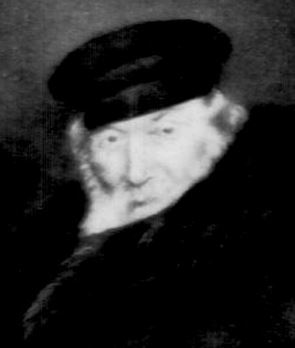
19th Century Illustration of Rabbi Yosef Karo
Yosef ben Ephraim Karo (1488-1575) was born in Toledo, then in the Spanish kingdom of Castile. The infamous 1492 Spanish Expulsion of the Jews took place when he was just four years old. The family first fled to Portugal, and were then expelled from there as well in 1497. They eventually settled in Nikopolis, in the Ottoman Empire, which had opened its doors to Sephardic Jewish refugees. (The Ottoman Sultan at the time, Bayezid II, reportedly said: “They tell me that Ferdinand of Spain is a wise man, but he is a fool, for he takes his treasure and sends it all to me.”) Karo was tutored by his rabbi father and soon became a rabbi himself. He also studied under the great Rabbi Yosef Taitazak in Salonica. For a couple of years, he served as a rabbi in Adrianople, and eventually resettled in Tzfat. At the time, Tzfat was experiencing a resurgence of Jewish life and a renaissance in Jewish scholarship, thanks mainly to an influx of Sephardic Jewish refugees. It soon became the “capital” of Jewish mysticism, and Rabbi Karo was one of its most famous mystics and scholars. It was in Tzfat that he composed the Shulchan Arukh, to this day the standard code of Jewish law worldwide. (Tzfat boasted one of the first printing presses in the Middle East, helping to spread the Shulchan Arukh far and wide and making it extremely popular and accessible.) The Shulchan Arukh was itself only a summary of the far broader and more complex Beit Yosef, which was Rabbi Karo’s true magnum opus that he worked on for over twenty years. Rabbi Karo opened his own yeshiva, with 200 students including the renowned “Ramak”, Rabbi Moshe Cordovero. Karo also served as the chief rabbi on the Tzfat beit din. In fact, he was one of the main leaders in a rabbinic attempt to re-establish the ancient Sanhedrin. Rabbi Karo was recognized as the preeminent authority for all Sephardic Jewry worldwide, and was deeply respected by Ashkenazi Jews as well who, on several occasions, asked him to intervene in local European disputes. Among his other noted publications are Kesef Mishneh, a commentary on the Mishneh Torah of Maimonides, along with a textbook for Talmudic study. One of his most intriguing works is Maggid Meisharim, a personal journal which records his prophetic experiences and the teachings he received from an angel over a period of fifty years. Rabbi Karo is often referred to simply as Maran, “Our Master”.
Words of the Week
Today, what is demanded of the Jewish people is mesirut nefesh, self-sacrifice, and this is particularly true with regard to chinuch, education. The resources for which we have labored must be dedicated to the education of children – both our own, and the children of others.
– Rabbi Menachem Mendel Schneerson, the Lubavitcher Rebbe
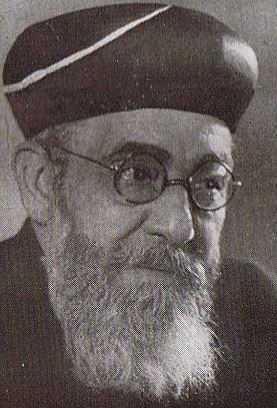
 Chaim Yosef David Azulai (1724-1807) more commonly known as the Chida (derived from his initials), was born in Jerusalem to a family with a long line of rabbis. From childhood he showed amazing proficiency in Jewish study, and learned under the great Torah scholars of the day. His name was soon well-known across the Jewish community of the Holy Land, and before he was 30, the Chida was selected to be the community’s emissary to Europe. He would go on several international trips to raise support and funds for the Jews in Israel (long before the start of the Zionist movement). Two of these trips lasted over 5 years each, and took him across Africa and Europe. Many credit him with sustaining the small Jewish community of Israel, which would have otherwise been extinguished by various Turkish and Arab warlords. During his travels he made sure to visit any ancient libraries he came across, and diligently studied their manuscripts, which earned him fame as a great scholar of all subjects. Meanwhile, he was able to publish roughly 70 different works on Judaism (writing his first book at age 16), ranging from Jewish law and scriptural commentaries to prayer books, mysticism and Kabbalah. His works are also important to secular scholars, as the Chida recorded a detailed diary during his trips around the world, giving historians an eyewitness account of the 18th-century. His incredible travels included a meeting with the Sultan of Turkey and King Louis XVI of France, a stint as Chief Rabbi of Cairo, as well as some dangerous encounters with the Knights of Malta and the Russian Navy. By the end of his life, he was considered a saint by both Jews and non-Jews alike.