Tag Archives: Israelis

Jews of the Week: Dov Moran, Dan Harkabi, and the USB Key

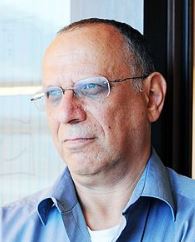
Dov Moran

The Universal Serial Bus (USB) key was invented in Israel by a tech company called M-Systems. The company was founded in 1989 by Dov MoranĀ (b. 1955), a graduate of Haifa’s Technion Institute. Their first major project was creating an easy to use digital storage device that could hold a great deal of information in a small space. In 1995, M-Systems released DiskOnChip, the first ever flash drive. Building on this success, M-Systems patented the DiskOnKey in April 1999. The technology was quickly licensed by IBM and debuted in the US in late 2000, known as the USB Key. With 8 Mb of storage, it held over 5 times more data, wrote 10 times faster, and was far more durable (and smaller) than the standard floppy disk. The USB rapidly rose to popularity, and is now the most ubiquitous personal digital storage device.
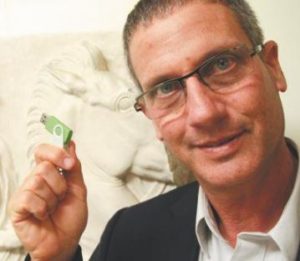
Dan Harkabi

The project to develop the USB was led by Dan Harkabi, along with Amir Ban, Oron Ogdan, and company founder Dov Moran. In 2006, M-Systems was acquired by competitor SanDisk for $1.6 billion. Moran went on to start a company called Modu, which was acquired by Google in 2011. He now chairs two more Israeli tech companies, and recently launched a new start-up called Comigo, which is building systems to intertwine handheld devices with televisions. Meanwhile, Dan Harkabi – who served in the Israeli Air Force for over 20 years – is CEO of Picosmos, where he continues to work on flash drive technology.

Words of the Week

The tongue is secured behind the teeth and behind the lips, yet there is no end to the damage it causes. Imagine if it were outside!
Yalkut Shimoni

Jews of the Week: Nathan Rosen & Brian Podolsky

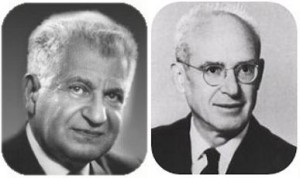
Podolsky and Rosen

Nathan Rosen (1909-1995) was born in Brooklyn and studied at MIT during the Great Depression. While still young, he published several famous papers, including ‘The Neutron’, which predicted the structure of the nucleus a year before it was discovered. Between 1935 and 1945 he was Albert Einstein’s personal assistant at Princeton. Together, they discovered (mathematically) a “bridge” connecting distant areas of space – now called a wormhole. With Einstein’s encouragement, Rosen moved to the nascent State of Israel and joined Haifa’s Technion in 1953. He later served as President of Ben-Gurion University, founded the Israel Academy of Sciences and Humanities, the Physical Society of Israel, and the International Society for General Relativity and Gravitation. Aside from all this, he is most famous for coming up with the well-known “EPR Paradox” together with Einstein and a fellow Jewish scientist named Podolsky (hence “EPR”).

Boris Yakovlevich Podolsky (1896-1966) was born in Russia to a poor Jewish family which immigrated to the U.S. in 1913. He served in the US Army and worked as an electrical engineer before returning to school and earning a PhD from Caltech. In 1933 he was given a fellowship at Princeton, which led to his collaboration with Einstein and Rosen on the EPR Paradox. Interestingly, some have suggested that Podolsky was a Soviet spy, codenamed “Quantum”, and helped the Soviets start their nuclear program during World War II. His major legacy, however, is in the great work he did on solving various complex physics problems of the day.

Words of the Week

Education is not the learning of facts, but the training of the mind to think.
– Albert Einstein

Jews of the Week: Keleti and Gorokhovskaya

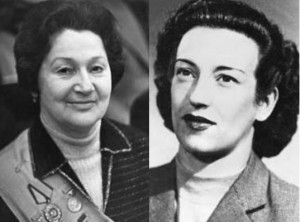
Gorokhovskaya and Keleti

Agnes Keleti (b. 1921) was born in Budapest and was Hungary’s national gymnastics champion by age 16. Shortly after, World War II began, forcing Keleti to go into hiding. Much of her family, including her father, were killed in the Holocaust. KeletiĀ survived by posing as a Christian villager. After the war, she began training once more, but had to overcome injuries that prevented her from competing. Determined to go on, she qualified for the 1952 Helsinki Olympics, and won 4 medals, including a gold. Keleti returned to the Olympics in 1956, winning 6 more medals, 3 of which were gold. Being 35 years old at the time made her the oldest-ever gold medal winner in her sport. Her ten total medals makes her among the most decorated female athletes of all time. She also won at the 1954 World Championship. After the Soviet Union’s invasion of Hungary in 1956, Keleti immigrated to Israel, where she still lives today.

A very similar story is that of Maria Gorokhovskaya. Like Keleti, she was born in 1921 (in Ukraine) and took up gymnastics at a young age. After surviving the war, she also competed at the 1952 Helsinki Games, winning 2 golds and 5 silvers. Her 7 medals in one Olympiad is still a world record. Like Keleti, Gorokhovskaya won at the 1954 World Championships, too. With the collapse of the Soviet Union, she made aliyah to Israel in 1990. Both Keleti and Gorokhovskaya have been inducted in the Jewish Sports Hall of Fame. In addition, Keleti has been inducted to the Hungarian and Gymnastics Halls of Fame.

Words of the Week

Everything that is for the sake of God should be of the best and most beautiful… When one feeds the hungry, one should feed them of the best and sweetest of one’s table. When one clothes the naked, one should clothe them with the finest of one’s clothes.
– Maimonides