Greatest Jewish Historian
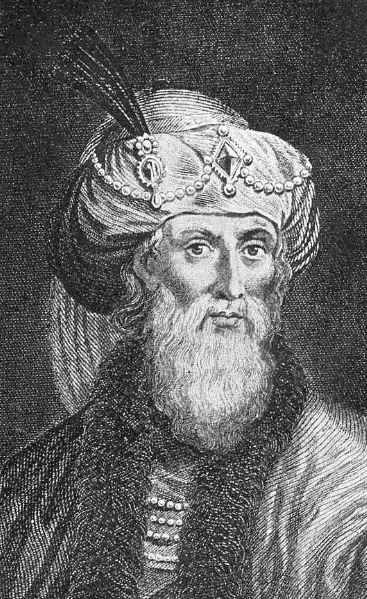
An 1817 depiction of Josephus
Yosef ben Matityahu (c. 37-100 CE) was born in Jerusalem to a wealthy family of kohanim descended from the Maccabees. As a young man, he explored various philosophies and schools of thought, ultimately resolving to become a Pharisee and live a Torah-observant life. He traveled to Rome as part of a delegation to free Jewish captives. When the First Jewish-Roman War (or “Great Revolt”) broke out, Yosef was appointed military commander of the Galilee region. After several initial successes, he lost to the Romans during the siege on Yodfat. Pigeon-holed in a cave with 40 other soldiers, the group resolved to commit suicide rather than surrender. As Yosef would later write, the other soldiers all killed each other to avoid capture, but he chickened out and gave himself up to the Romans. He offered to be useful to the Roman general Vespasian (soon to become Caesar) and helped him navigate the Judean terrain. He also served as his translator and negotiator. After the war ended (with the destruction of Jerusalem’s Holy Temple), he settled in Rome, was granted Roman citizenship, and continued to work for the new Flavian Dynasty, taking on the name “Flavius Josephus”. For this treachery, Josephus was never looked well upon by Jews. Nonetheless, he spent much of his remaining years writing extensively about Jews and Judaism, dispeling myths about the mysterious people, and helping to portray them more positively. Today, Josephus’ works are a wealth of knowledge for historians and Jewish scholars. They provide eye-witness accounts of the Great Revolt, and a detailed explanation of Jewish life at the end of the Second Temple era, as well as a treasure trove of information about the Roman Empire. Though he did not mention Jesus, his writings have been used extensively by Christian scholars to understand the context in which Christianity emerged. His work has also been used extensively by archaeologists to make sense of ancient finds in Israel, most notably at Masada, and even to discover the tomb of King Herod. Among his books are Antiquities of the Jews, Wars of the Jews, and Against Apion, which was a defense of Judaism debunking the claims of the antisemitic Greek writer Apion Mochthos. Today, Josephus’ works are considered among the most important historical texts of all time.
Tisha b’Av Begins Tonight, Have a Meaningful Fast!
What is the Meaning of Tisha b’Av?
Why Was Jerusalem’s Holy Temple Really Destroyed?
Words of the Week
Should anyone of our nation be asked about our laws, he will repeat them as readily as his own name. The result of our thorough education in our laws from the very dawn of intelligence is that they are, as it were, engraved on our souls.
– Josephus
 Eilat Mazar (1956-2021) was born in Israel to a family of archaeologists, and grew up playing and learning on excavation sites. Her grandfather, Benjamin Mazar, was the State of Israel’s first official archaeologist, and was the president of the Hebrew University. Eilat studied archaeology at the same university, and began her field work in 1981. She made a big splash right away by discovering the Royal Quarter of the ancient City of David in Jerusalem, including what is thought to be the royal palace of King David himself. She went on to uncover some of the biggest finds of the last century, including parts of the walls built by King Solomon, the seal of King Hezekiah, and the seal of the Prophet Isaiah. Mazar was driven by her belief that the Tanakh records actual historical events (whereas many of her secular colleagues often viewed the Tanakh as mythology). She would say that “I work with the Bible in one hand and the tools of excavation in the other.” Over the decades, her work played a major role in helping to prove the authenticity of the Bible. Mazar discovered countless treasures from the First and Second Temples in Jerusalem, and was a vocal activist trying to stop Palestinian and Jordanian authorities from