
Discovering the Quark
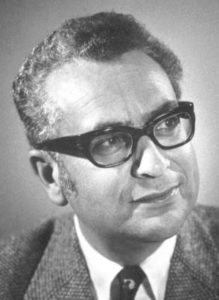
Murray Gell-Mann
Murray Gell-Mann (1929-2019) was born in Manhattan to Austrian-Jewish immigrants from what is now Ukraine. Passionate about math and science from childhood, he graduated high school at the top of his class years ahead, and began studying at Yale when he was 14 on a full scholarship. He had his PhD from MIT by 22. He did research at multiple universities before moving to Caltech in 1955, where he became the youngest professor in the school’s history, and taught there until retirement. In 1958, together with Richard Feynman, he made a huge discovery with regards to the weak nuclear force (one of the four fundamental forces of nature). He went on to make many more important discoveries in the field of quantum physics. He is most famous for proposing the quark model – revolutionizing the world of sub-atomic particles – and for coining the term “quark”. Gell-Mann won a Nobel Prize in 1969 for his work. He is also credited with defending and popularizing string theory. In the 1960s, Gell-Mann was a co-founder of the Jason Division which advised the US military and helped to develop anti-ballistic missiles. He was a science adviser for presidents Nixon and Clinton, and was an editor of the Encyclopaedia Britannica. Later in life, he delved into “complexity science”, tackling some of the most challenging problems in nature (especially biology). He even co-founded the Santa Fe Institute for researching this kind of complex science. Gell-Mann wrote a best-selling science book called The Quark and the Jaguar, and inspired the Gell-Mann Amnesia effect (see below). Sadly, Gell-Mann passed away last month.
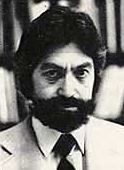
George Zweig
Gell-Mann was not alone in his proposal of the quark model. The same model was devised independently by George Zweig (b. 1937), who was born in Moscow to German-Jewish parents fleeing Nazi Germany. The family moved to the US in 1938 and settled in Detroit. Zweig earned a bachelor’s in math in 1959, and a PhD from Caltech in 1964 (a graduate student of Richard Feynman). He then went to work at the world-famous CERN, where he developed the quark model. (He called quarks “aces”, but Gell-Mann’s name stuck.) Zweig continued to do important work in quantum physics for some time before switching to neurobiology. He helped uncover how the cochlea in the ear transduces sounds into nerve impulses, and how the brain maps sounds, and made other key discoveries with regards to the amazing complexity of the ear. He also invented a device called a signiscope. Zweig was a professor at Caltech for over three decades. Nominated for a Nobel Prize, he has yet to win one, though he has won multiple other prestigious science prizes.
A Jewish Take on the Classic Moral Problem of the Trolley
Words of the Week
The Gell-Mann Amnesia effect is as follows: You open the newspaper to an article on some subject you know well… You read the article and see the journalist has absolutely no understanding of either the facts or the issues… you read with exasperation or amusement the multiple errors in a story, and then turn the page to national or international affairs, and read as if the rest of the newspaper was somehow more accurate about Palestine than the baloney you just read.
– Michael Crichton
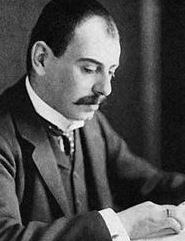
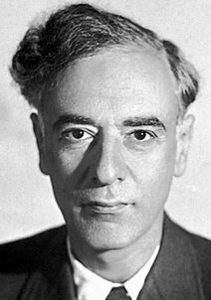
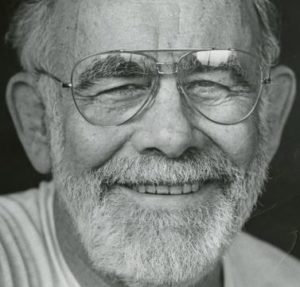 Gerald Wexler (1917-2008) was born in The Bronx to an immigrant family of German-Jewish and Polish-Jewish background. He graduated from high school by age 15, but there was little to do in the difficult days of the Great Depression. Wexler spent much of his time with a small circle of friends listening to music and discussing literature. It was only after returning from World War II military service that he finally pursued a career in journalism and music. He got a job as a reporter for Billboard Magazine, and soon became its editor. At the time, the magazine had a separate music chart for “black music”, called “Race Records”. Wexler took a stand against racism and came up with a new title, renaming the chart “Rhythm & Blues”. He thus coined the now popular term “R&B”. In 1953, the president of the start-up Atlantic Records (a fellow Jew named Herb Abramson) was drafted to the US Army. Wexler was offered to take his place. Under Wexler’s leadership, Atlantic Records became one of the world’s most successful music labels, and produced some of the biggest names in music, including Ray Charles and Aretha Franklin. For bringing the latter to the world, Wexler was named Record Executive of the Year in 1967. (Franklin had struggled to find success in music until Wexler convinced her to join him at Atlantic, and produced her breakout hit song, “Respect”.) The following year, he signed a young group called Led Zeppelin. Wexler would go on to work with other big stars, including Bob Dylan, the Bee Gees, Richard Pryor, Carlos Santana, and George Michael. He was inducted into the Rock and Roll Hall of Fame in 1987. Wexler played a central role in ending the era of “race music” (and stopping the practice of white musicians covering songs of black musicians and raking in all the fame and fortune for themselves). He opened the door for more “black music” to enter the once all-white Billboard charts, and has been credited with bringing “black music to the masses”. Not surprisingly, Wexler has been called “a prophet of roots and rhythm” and “the Jewish king of black music”.