
The Producer Who Discovered Janis Joplin
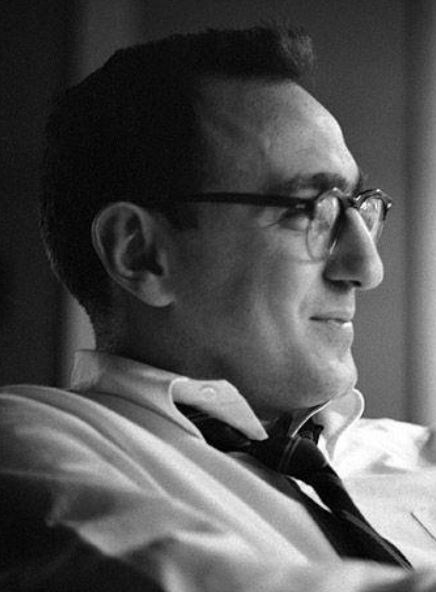
Bob Shad (Courtesy: Herman Leonard Photography)
Abraham Shadrinsky (1920-1985) was born and raised in Brooklyn, New York. His parents were early Bolsheviks that were actively fighting the Czar, and his father was exiled before the Russian Revolution. Young Abee Shadrinsky soon became “Bobby Shad”. His passion was music and especially the popular jazz of the time. In the 1940s, when the music producers’ union went on strike, a totally inexperienced Shad took the opportunity to go to the Savoy Label and offered to produce some jazz. He spent much of the next forty years in the recording studio, producing over 800 albums. He founded the great Emercy jazz label for Mercury Records, as well as Sitting In, Time, Brent, and Mainstream Records. He recorded many of the jazz legends and was personally responsible for developing the careers of greats like Quincy Jones, Sarah Vaughan, Dinah Washington, and Clifford Brown. He recorded pop artists, too, including Patti Page, the Platters, and Vic Damone. Shad was an incredibly creative man who was able to foresee many of the trends in music, such as early stereo, high fidelity, avant-garde, and acid rock. In the sixties, it was Shad who first discovered Ted Nugent and Janis Joplin, recording and producing her first album with the Big Brother band. Joplin went on to become one of the top-selling musicians in American history, and was ranked among the 100 Greatest Artists of All Time by Rolling Stone. Despite the great success, Shad lived modestly and remained true to his love of music, devoting most of his career and financial resources to the world of jazz. Having grown up in an atheistic home, he was not religious. Nonetheless, he was a real Jew at heart and was deeply in dialogue with God, especially regarding the Holocaust. He would often recount how special the Jewish people were and, because he was a pilot and had a private twin engine plane, he even assisted in smuggling arms for Israel at one point! Altogether, Shad recorded thousands of songs, including some of the greatest hits of the 20th century (listen to some of his music here). He is the father of Hollywood screenwriter Samantha Shad, and grandfather of author and professor Robert Apatow, and comedy filmmaker Judd Apatow.*
Words of the Week
People think loving one’s fellow means to give him a pat on the back. Loving one’s fellow means that if a Jew on the other side of the world has a problem, you feel it.
– Rabbi Yisroel Friedman, the Ruzhiner Rebbe (1796-1850)
*The above Jew of the Week was a guest submission by Robert (Avraham) Apatow, about his grandfather Bob Shad.
 Lawrence Harvey Zeiger (1933-2021) was born in Brooklyn to Orthodox Jewish immigrants from Belarus. His father died when he was just a child, leaving the family impoverished. Young Larry was fascinated by radio and always wished to become a broadcaster. In Miami, he found a job cleaning at a radio station and, when the station’s broadcaster suddenly left the show, Larry was given a chance to take his place. The manager said “Zeiger” was not a good stage name, so Larry quickly chose “King” (based on an ad he had just seen for King’s Wholesale Liquor store). He got the job to radio DJ for three hours every morning, earning $50 a week. King soon started doing interviews, too, and would occasionally have a celebrity who was in town to do a show. He was then hired as a commentator for the NFL’s Miami Dolphins. It was in 1978 when The Larry King Show aired its first episode (on radio). It would be broadcast live every weekday at midnight, starting with a one-hour interview and followed by several hours of discussion. By 1985, King was a household name and was hired by CNN to star in a television version of his interview show. CNN’s Larry King Live went on to set a Guinness World Record as the “longest-running TV show hosted by the same person on the same network”. Many iconic moments took place in his studio, including the Perot-Gore debate of 1993 (which became CNN’s most-watched segment ever), and the joint interview of
  Alan Stuart Shlomo Veingrad (b. 1963) was born in Brooklyn and grew up in New Jersey and Miami. He went to Hebrew school as a child, then to Miami Sunset High School where he was captain of the football team. Veingrad was also an All-American track and field athlete. He went to what is now Texas A&M University on a sports scholarship. In 1984, he was voted the Lone Star Offensive Lineman of the Year. Despite working out round-the-clock and gaining over 100 pounds he was still considered too small for the NFL and went undrafted in 1985. Still, he was able to sign with the Tampa Buy Buccaneers as an undrafted free agent. The following year he signed with the Green Bay Packers and played on the starting line up as a right offensive tackle. In 1991 he signed with the Dallas Cowboys and was instrumental in helping the team win Super Bowl XXVII in 1993. After earning his championship, Veingrad retired from professional football. Since then, he has worked in real estate and finance, as a motivational speaker, and an