The Rabbi Who Discovered the Quadratic Formula
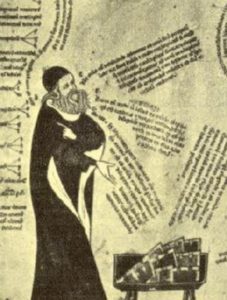 Avraham bar Chiya (c. 1070-1145) was born in Barcelona to a Sephardic Jewish family. It appears that his family was persecuted by its Christian rulers, so they fled to the neighbouring Arab kingdom of Zaragoza. Bar Chiya came from a long line of rabbis, and was also extensively trained in science, math, and astronomy. Famed for his wisdom, he became the court astronomer of Al-Musta’in II. Eventually, he was appointed minister of police and given the title sahib al-shurtah, “city governor”. This is why he was known in the Jewish community as HaNasi, “the prince” or “the president”. Al-Musta’in II was unable to defend his domain from the Christians, who soon took over. Bar Chiya moved to southern France for a while and lived in Narbonne and Provence. There he composed some of the most important scientific texts of the Medieval era. He translated a number of Arabic works into Latin, opening their study for Europeans, and played a key role in introducing the Hindu numerals we use today (by way of Arabia) to Europe, and thus to the rest of the world. Bar Chiya also synthesized ancient Greek wisdom with contemporary Arabic knowledge, and published new discoveries in number theory, arithmetic, geometry, optics, astronomy, and music theory. His Treatise on Measurement and Calculation inspired later greats like Plato of Tivoli and the world-famous Fibonacci. Meanwhile, Bar Chiya also served as the chief rabbi of the Jewish communities he presided over, and composed two important Jewish commentaries and texts. He is credited with being the first person to write a scientific book in Hebrew, and played an instrumental role in the development of the Hebrew language. His disciples included both Jews and non-Jews, among them the great Rabbi Abraham ibn Ezra, and the Flemish astronomer Rudolf of Bruges. The first historical appearance of the quadratic equation (with a complete solution of x2 – ax + b = c) appears in one of Bar Chiya’s works! He is also referenced in many philosophical works as “Abraham Judaeus”. All in all, his impact on the development of science, mathematics, and human history is unparalleled.
Jew of the Week Turns 10 Years Old Today!
What I Learned from 10 Years of Writing Jew of the Week
Words of the Week
The mind of man plans his way, but God directs his steps.
– King Solomon (Proverbs 16:9)
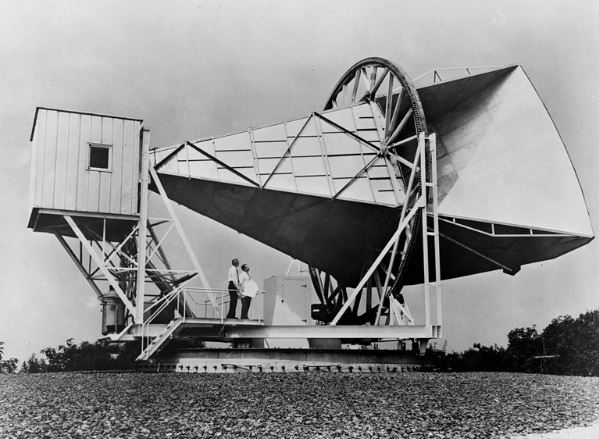
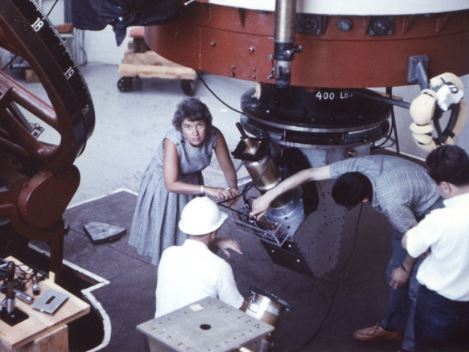
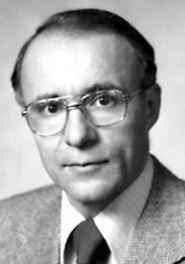 Arno Allan Penzias (b. 1933) was born in Munich. As a six year old, he was evacuated from Nazi Germany through the British Kindertransport rescue operation which saved 10,000 Jewish children. He was later reunited with his parents, who brought the family to New York. Penzias grew up in Brooklyn and went on to study physics. He graduated among the top of his class, then served two years in the US Army as a radar officer. From there, he got a research position at Columbia University’s Radiation Lab, where he helped to develop the maser (a “microwave laser”). After earning a Ph.D in physics from Columbia, Penzias got a job at Bell Labs to do astronomy research with microwave receivers. He was soon joined by Robert Wilson. The two noticed their antenna picking up an inexplicable signal. After ruling out all forms of interference, and carefully cleaning the antenna, the weak signal persisted. The two collaborated with another physicist, Robert Dicke, to show that this signal was the cosmic microwave background (CMB) radiation, the remnants of the universe’s birth, as predicted by the Big Bang Theory. The existence of CMB confirmed that the universe had a beginning, with a burst of radiation, and simultaneously confirmed ancient Jewish teachings about the universe’s origins. The Zohar, a famous mystical commentary on the Torah that was first published some 700 years ago, explains that the universe began with a nikuda hada d’zohar, a singular point of radiance, from which all things were formed. The Zohar explains that this ever-expanding radiance continues to fill the universe, based on the words in the Biblical Book of Daniel (12:3) which describes the “radiance of the firmament”. In fact, this is how the book got its name, Zohar meaning “radiance”. Penzias’ and Wilson’s monumental discovery brought about a beautiful harmony between Torah and science, at once confirming both the modern Big Bang Theory and the holy words of the ancient Jewish Sages. The two physicists won the 1978 Nobel Prize in Physics. Penzias continued his work at Bell Labs for a total of 37 years, rising to the position of Vice President of Research. He was made a Fellow of the American Academy of Arts and Sciences, and the National Academy of Sciences. Penzias later moved to Silicon Valley to advise venture capitalists and tech start-ups. Despite being in his 80s, he is still a venture partner at New Enterprise Associates, and says he has “no plants to retire”.