First Self-Made Female Millionaire
 Chaya Helena Rubinstein (1872-1965) was born in the Jewish ghetto of Krakow, Poland, the oldest of eight daughters in a very religious family. Her cousin was Martin Buber. At age 16, she was arranged to be married but refused to go along with it, instead running away to Switzerland, and then Australia. Although she spoke no English, the local ladies fell in love with her fashion sense and makeup. After agreeing to sell off most of what was in her luggage, she realized she could start a business. With help from an aunt, Rubinstein found her way to the region of Coleraine, famous for its millions of sheep, which produce lanolin, the key ingredient in her creams. Rubinstein worked as a waitress by day, and experimented with her creams by night. With some help from a wealthy admirer, Rubinstein launched her business. It didn’t take long for her to open up her own shop in the heart of Melbourne. Within five years, she opened two more locations: in Sydney and London, England. At the time, women were barred from getting bank loans, so Rubinstein saved up all the money herself and paid in cash. In 1912, she moved to Paris with her first husband, and there opened a new salon. During World War I, the family fled to New York, and Rubinstein opened up shop there as well. Business boomed, and Rubinstein expanded to another twelve cities. She soon became the most famous businesswoman in the world—and the richest. She has been credited as the world’s first self-made female millionaire. After her first marriage fell apart, Rubinstein tied the knot with a Georgian prince, and took on the title “Helena Princess Gourielli”. Rubinstein was a huge philanthropist, and her charity distributed around $130 million to causes around the world. She had a great life-long rivalry with Elizabeth Arden, of whom she said: “With her packaging and my product, we could have ruled the world.” Rubinstein faced a tremendous amount of adversity, as well as anti-Semitism. (In 1941, she was rejected from living in a Park Avenue apartment because she was Jewish, so she bought the whole building!) Nonetheless, she persevered through it all and became a pioneer in the cosmetics industry, in business, and in marketing, continuing to work into her 90s. Among her innovations were waterproof mascara and what may be the first sunscreen. Today, her company is owned by L’Oréal, which presents the Helena Rubinstein Women in Science Awards yearly in her honour.
Words of the Week
We have been waiting for 2,000 years. Is that hurrying?
– Golda Meir, to King Abdullah of Jordan in a May 10, 1948 meeting, when he asked not to “hurry” to declare independence.
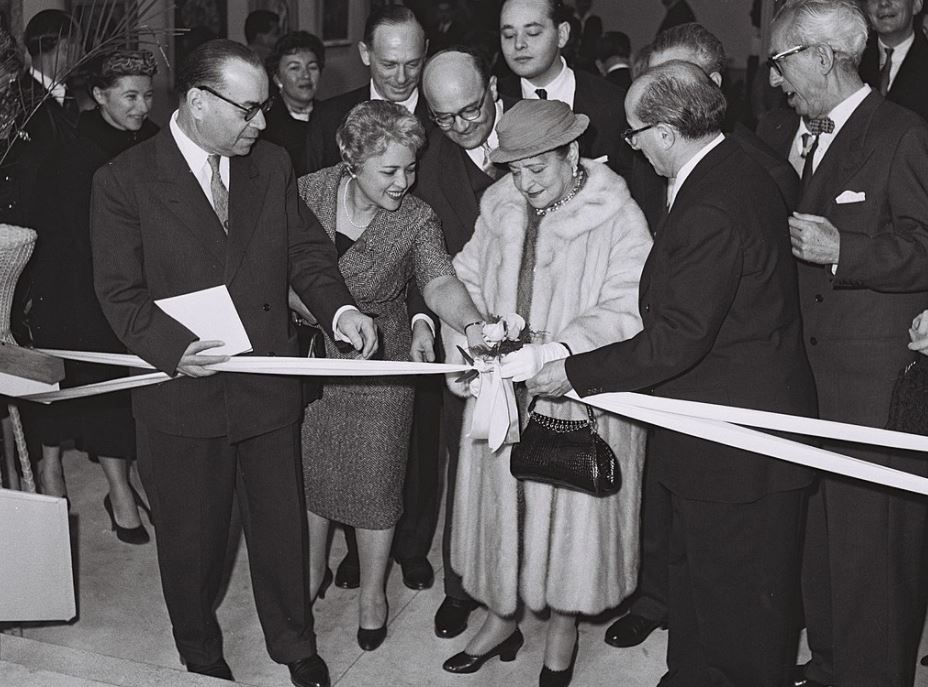
Helena Rubinstein cuts the ribbon at the grand opening of her Museum of Art in Tel-Aviv (1959)
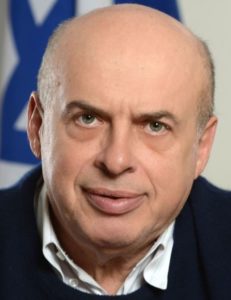 Anatoly Borisovich Sharansky (b. 1948) was born in Donetsk, Ukraine. He was a child chess prodigy, and won his city’s chess championship as a teenager. He went on to study math in Moscow and later worked in a secret Soviet research lab. In 1973, Sharansky applied for an exit visa to Israel and was refused. Henceforth, he became a vocal activist on behalf of Soviet Jewry, and became the world’s most famous refusenik. He soon expanded his scope to work for all human rights, and was the spokesperson for the Moscow Helsinki Group, today Russia’s primary human rights organization. In 1977, Sharansky was arrested on trumped-up charges of treason and espionage, and sentenced to 13 years of hard labour. He was tortured, and kept in solitary confinement for long periods of time. (He would later remark that one of the things that helped him through it was playing chess in his mind.) After ceaseless activism from his wife, mother, and countless international supporters, Sharansky was finally released in 1986. Shortly after, he received a Congressional Gold Medal from the US government. He moved to Israel and started going by his Hebrew name, Natan. A couple of years later, he published a bestselling memoir, Fear No Evil. (This book was passed on by
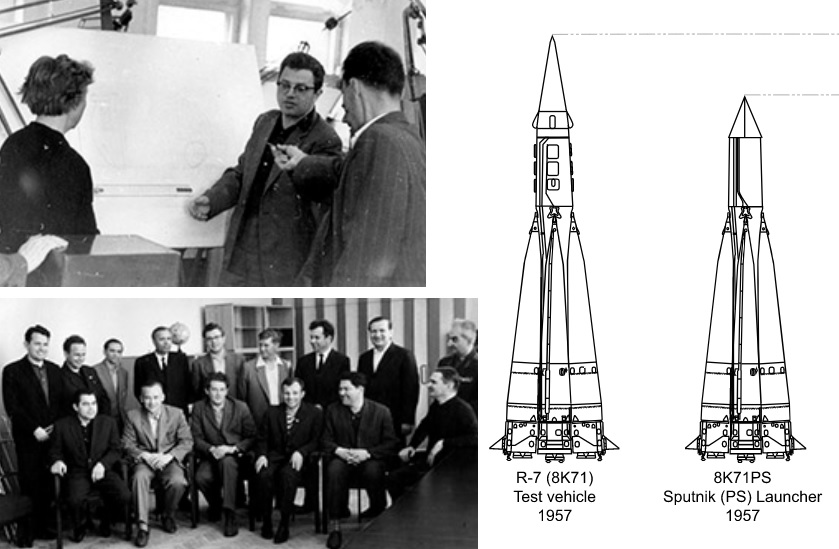
  Anatoliy Davidovich Daron (1926-2020) was born in Odessa, Ukraine. An avid pianist, he initially wished to become a musician. At age 12, he read a book about space and was inspired to become a rocket scientist, with the hopes of one day flying to Mars. That same year, World War II broke out and the family fled to Russia’s Stavropol region. A few years later, the Nazi invasion came to his town just as he was graduating high school—he got his diploma, written by the principal on a scrap piece of paper, while everyone was fleeing! Doron went on to study rocketry in Moscow, and soon joined OKB-456, the Soviet state institution tasked with missile and rocket development, under the leadership of Valentin Glushko. There, Daron worked on the USSR’s first intercontinental ballistic missiles (ICBMs). When the anti-Semitic