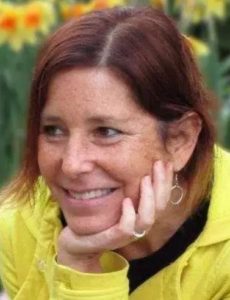
 Amy Renee Krouse Rosenthal (1965-2017) was born in Chicago and studied at Tufts University. A naturally creative and spiritual person, she described herself simply as “a person who likes to make things”. After working in advertising for nine years, Rosenthal decided to pursue her passion and becoming a writer. She published her first book in 1998 and went on to write 30 more, most of them children’s books. Many were New York Times Bestsellers, and Rosenthal is the only author to have three children’s books on the list of Best Children’s Books for Family Literacy in the same year. Her book Duck! Rabbit! was read publicly at the White House in 2010, and her adult book Encyclopedia of an Ordinary Life was named one of the top ten memoirs of the decade. She also published 10 journals and created many short films, several of which went viral. Rosenthal was often seen at TED talks, designing three conferences and speaking at another three. She wrote for a number of newspapers and magazines as well, including Parenting, The Oprah Magazine, and The New York Times. It was in the latter publication that she wrote an essay earlier this month revealing that she had terminal cancer. The essay was written in the style of a dating profile for her husband – with whom she fell in love on the first (blind) date – for him to find a new love once she would inevitably pass away. Sadly, this would be her last creation to go viral. Rosenthal tragically succumbed to her cancer last week.
Words of the Week
Do any human beings ever realize life while they live it?
– Thornton Wilder (This was Amy Krouse Rosenthal’s favourite quote.)