
Category Archives: Religious Leaders

Spiritual and Religious Greats of the Jewish People

Jews of the Week: Gabi and Rivki Holtzberg

In Memory of a Holy Couple
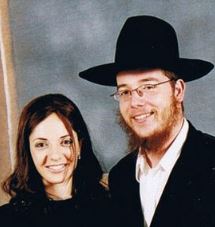
Rabbi Gavriel and Rivka Holtzberg

Gavriel Noach Holtzberg (1979-2008) was born in Kiryat Malachi, Israel to a Chabad family, and grew up in Crown Heights, New York. A young prodigy with a prolific memory, Holtzberg had memorized an entire order of Mishnah word-for-word (a total of 681 passages in 88 chapters). He was a two-time champion in Mishnah competitions, and placed second in an international Talmud competition. He studied to be a rabbi and mohel in New York and Argentina, while doing community service through Chabad in Thailand and China. Holtzberg married Rivka Rosenberg (1980-2008) of Afula, Israel in 2002. A year later, the young couple moved to Mumbai, India to open a Chabad House of their own. Mumbai had a Jewish community numbering several thousand, along with countless Israeli tourists. The Holtzbergs provided vital Jewish services, including kosher food, a mikveh, and a place to pray, with Rabbi Gabi shechting his own chickens, officiating at Jewish weddings, and performing brit milahs. The couple would regularly host thirty or more people for meals every Shabbat. They also oversaw the conversion of a number of Indians to Judaism (including former Jew of the Week Sarah Avraham). The Holtzbergs were so popular that by 2006 they had raised enough money to purchase a six-story building known as the Nariman House. This became known as Mumbai’s “Jewish headquarters”, and in addition to being a synagogue and a Chabad House, also provided aid for the poor and ran a drug addiction clinic. During this time, the Holtzbergs suffered the loss of two of their three children who succumbed to Tay-Sachs disease. Then came the worst of tragedies: exactly ten years ago, on the 26th of November, the Holtzbergs’ Chabad House was attacked by Muslim terrorists who had descended upon multiple key targets in Mumbai. The couple was taken hostage, and were murdered the following morning, along with four of their guests. (A total of 164 people were killed in the Mumbai attacks.) It was later revealed that Rivki was five months pregnant. The Holtzbergs’ two-year old son Moshe was saved by his Indian nanny, Sandra Samuel. Five years ago, a new rabbinical couple was sent to Mumbai to continue the holy work of the Holtzbergs, and the Chabad House has now been rebuilt. The centre continues to grow, and now runs a nursery and Jewish school, too. A second Chabad couple is on its way to help. Among other things, the Chabad House is currently working to construct a rooftop memorial for all 164 victims of the attack. Moshe Holtzberg will have his Bar Mitzvah at the House next year.

Moshe Holtzberg: Ten Years Later

The Mumbai Doctor Who Smashed His Idols and Converted to Judaism

Words of the Week

I vow that we will avenge the deaths of Gabi and Rivki. But not with AK-47s, not with grenades and tanks. We will take revenge in a different way. We will add light. We will add good deeds…
– Rabbi Moshe Kotlarsky
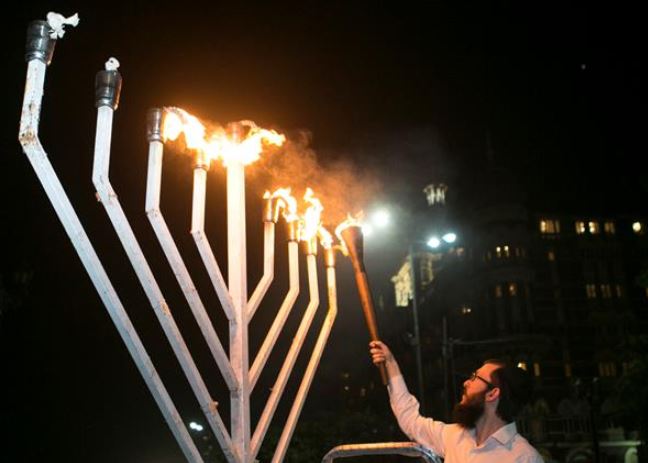
Chabad’s new Mumbai emissary, Rabbi Kozlovsky, lights the city’s Chanukah menorah.
Jews of the Week: Rav Saragossi and the Radbaz

Two Inspiring Sages

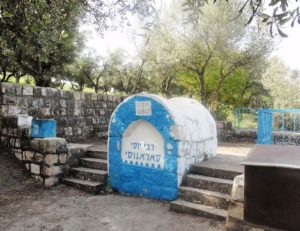
Tomb of Rabbi Yosef Saragossi in Ein Zeitim, Israel

Yosef Saragossi (1460-1507) was born to a religious Sephardic family, either in Saragossa, Spain, or in Syracuse, Sicily. He became a respected rabbi at a young age. Around the time of the Spanish Expulsion of 1492, Rav Saragossi settled in Tzfat. He discovered a tiny community of just 300 poorly-educated Jews, with not a single full-time rabbi among them. Rav Saragossi revived the three synagogues in the city and founded new schools, reinvigorating Jewish life. His yeshiva soon attracted students from far and wide. Within a century, Tzfat was a major centre of Jewish learning, and the capital of Jewish mysticism. There, Rabbi Yosef Karo would produce the Shulchan Arukh, still the central code of Jewish law, and there the Arizal (Rabbi Isaac Luria) revealed his Kabbalistic system, forever revolutionizing Judaism. Rav Saragossi was beloved not only by Tzfat’s Jews, but by its Muslim residents, too. In fact, the Muslim governor at the time paid two-thirds of Rav Yosef’s salary just to keep him from leaving. Rav Saragossi’s tomb remains an important pilgrimage site, and is known as a place of miracles. Because of one such miracle involving 500 white hens, he has been called Tzadik haLavan, “the White Saint”.

One of Rav Saragossi’s foremost students was David ben Shlomo ibn Abi Zimra (c. 1479-1589). He, too, was born in Spain, and was exiled around the time of his bar mitzvah. His family settled in Tzfat, and the young David studied in Rav Saragossi’s yeshiva. Becoming a renowned rabbi of his own (later known by his initials, Radbaz, as is common among Jewish sages), he moved to Egypt and became a member of its beit din, the Jewish court. He would soon be appointed Hakham Bashi, Egypt’s chief rabbi. Meanwhile, the Radbaz made some good investments, and became exceedingly wealthy. He built a new yeshiva in Cairo, and it was there that a young Isaac Luria, the Arizal, would get his start. After serving as Chief Rabbi for nearly forty years, writing a number of important books, and penning over 3000 responsa, the Radbaz retired at age 90. He left most of his wealth for the poor, then returned to the Holy Land. Although he wished to settle in Jerusalem, the Ottomans made it difficult for Jews to live there, so the Radbaz returned to Tzfat. He was immediately placed on the highest beit din, alongside Rav Yosef Karo. The Radbaz merited to live many more years, inspiring a new generation of rabbis, including the great Rabbi Chaim Vital. He was over 100 years old when he passed away.

Words of the Week

It is never too late to be what you might have been.
– George Eliot

Jew of the Week: the Alter Rebbe

Founder of Chabad

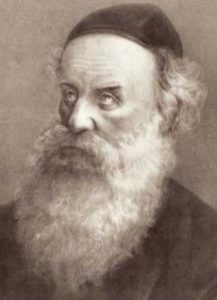
Schneur Zalman of Liadi (1745-1812) was born in the shtetl of Liozna in what is now Belarus. A child prodigy, he wrote his first commentary on the Torah when he was eight years old. Shortly after, he was sent to the nearby town of Lubavitch to begin advanced Talmudic studies, and was sent back home at the age of 12 as he had surpassed the knowledge of his teachers. He married at 15, and around the same time was first exposed to Kabbalah by two Bohemian refugees that settled in Liozna. They also taught him math, astronomy, and philosophy. A few years later, Rav Schneur Zalman met the Hasidic master Dov Ber, “the Maggid [Preacher] of Mezeritch”, who was himself the disciple of the Baal Shem Tov, founder of the Hasidic movement. Rav Schneur Zalman became the Maggid’s devoted student, and when the latter died in 1772, was recognized as his successor. Unfortunately, there was still great opposition to the Hasidic movement at the time, most notably from the Vilna Gaon, who attempted to ban the Hasidim. Rav Schneur travelled to Vilnius in an effort to assuage the Gaon, but was refused a meeting. Despite the opposition, Hasidism flourished across Eastern Europe, and many Hasidic masters were emerging in towns large and small. Rav Schneur Zalman’s approach was unique in that he placed rationalism and thought above all else, and held by the mantras of “mind over matter” and “intelligent, not blind faith”. He therefore called his branch of Hasidism “Chabad”, based on the acronym for the Kabbalistic sefirot of Chokhmah, Binah, and Da’at, loosely translated as Wisdom, Understanding, and Knowledge. Rav Schneur Zalman would become known as the Alter Rebbe, the “Elder Rabbi”, the founder of Chabad. His magnum opus, known as the Tanya, is sometimes considered the “Bible of Hasidism”. The Alter Rebbe also put together a new Hasidic code of law, a prayer book, and multiple discourses on Hasidic teachings. During the Napoleonic Wars, he sided with the Czar, despite the fact that the Russians oppressed the Jews while Napoleon brought emancipation to them. He believed that while the Russians threatened the Jewish body, Napoleon threatened the Jewish soul, as his “emancipation” would lead to mass assimilation of Jews in Europe. History would prove him right. In 1812, the Alter Rebbe fled Napoleon’s approaching armies, and succumbed to an illness on the difficult journey. His disciples split among two potential successors: some supported Aharon Horowitz, based in the town of Strashelye, while others supported Rav Schneur Zalman’s son, Dov Ber, based in Lubavitch. Over time, the Strashelye branch dissipated, leaving the Lubavitch stream. This is one reason why the movement is still known as Chabad-Lubavitch. The organization has become the most successful Jewish outreach group in history, mainly due to the work of the seventh and last Lubavitcher Rebbe, Menachem Mendel Schneerson. Today, there is a Chabad House on every continent (except Antarctica, for now), with over 1300 Chabad-run institutions around the world. Yesterday, the 18th of Elul, was the Alter Rebbe’s birthday.

A Secret History of Zionism

Words of the Week

A little bit of light dispels a lot of darkness.
– the Alter Rebbe

In a letter to his grandson, dated 24 Tevet 5583 (December 1812, shortly before his passing), the Alter Rebbe wrote: “I no longer see a table, a chair, a lamp… only the letters of the Divine Utterances.” As we read in the Torah, God “spoke” the world into existence, and all material things are only a reflection of their spiritual inner essence, composed of a combination of Hebrew letters, the building blocks of Creation. Like other great Kabbalists before and after him, the Alter Rebbe saw through the illusory material world, and beheld the spiritual “code” within, reminiscent of this famous scene from ‘The Matrix’.