
Category Archives: Law, Politics & Military

Jews in the World of Law and Politics

Jew of the Week: Hilik Magnus

“The Godfather of Search & Rescue”
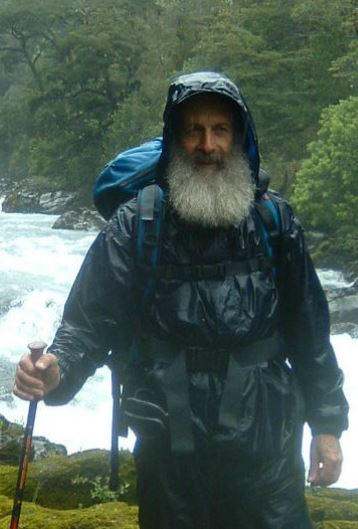
Hilik Magnus (Courtesy of Hilik Magnus and Times of Israel)

Hilik Magnus

Yechiel “Hilik” Magnus (b. 1949) was born in Sweden to a German-Polish-Jewish family that moved to Israel while he was still an infant. Magnus grew up in the Holy Land, and served in the IDF as an elite paratrooper, as well as with the special forces, and later with the Mossad. After his military career, he worked as the director of nature conservation in Israel’s southern regions. During an Israeli-Japanese cultural project, Magnus found a new passion in traveling to the Far East, and toured the region extensively. Due to his intense military and intelligence training, Magnus was soon involved in a number of rescue missions to save Israeli backpackers trapped in Asia. By 1994, he turned this into a full-time job, creating an international search and rescue team that works with insurance companies and worried parents. He has helped bring thousands of families back together, earning the nickname of Israel’s “national rescuer”. These missions have included saving people from natural disasters, accidents, druggings, hostage situations, and even freeing Israelis from prison. Several years ago, he tracked down the body of a young man missing for over a month in Brazil. Most recently, he journeyed to Nepal to help those trapped in the snowstorm that killed dozens. His expertise makes him sought out by various governments and organizations all over the world. He is the first man Israeli parents call when their children abroad are in trouble. Soon, it won’t be just Israeli parents, as Magnus has grown his search and rescue team, and intends on offering these services to any family in need of assistance. Despite being in his mid-60s, Magnus still leads even the most difficult of missions.

Words of the Week

Climb mountains not so the world can see you, but so you can see the world.
– David McCullough Jr.
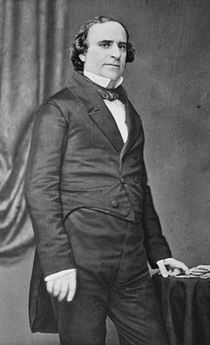
Jews of the Week: Moses Levy and David Levy Yulee

The Abolition of Slavery and the First Jewish Senator 

David Levy Yulee

David Levy Yulee

Moshe Eliyahu Levy Yulee (1782-1854) was born in Morocco to a wealthy Sephardic Jewish family. His father was a prominent figure in the Ottoman Empire, and an adviser to the Sultan. Moshe went off on his own across the Atlantic, settling in the US Virgin Islands, and dropping the family name of “Yulee”, now going by Moses Elias Levy. He made his own fortune in the lumber and merchant trades, then moved the whole family to Florida. There, he purchased 100,000 acres of land and established it as a refuge for persecuted European Jews. He also planned for a 50,000 acre “New Jerusalem” in Florida. Levy has been described as a “proto-Zionist”, as he sought to re-establish a Jewish homeland in Israel long before the official Zionist movement began. Though he originally owned slaves, Levy soon joined the anti-slavery movement, and in 1828 published the popular treatise A Plan For the Abolition of Slavery. Levy’s work was instrumental in abolishing slavery in both the United States and across the British Empire. In 1835, Levy’s fortunes soured with the outbreak of the Second Seminole War, which devastated his land in Florida, destroyed the refuge, and strained his finances. In poor health, Levy retired to St. Augustine, Florida, where he slowly rebuilt his wealth.

His son, David Levy Yulee (1810-1886) was elected to the House of Representatives in 1841. When Florida became a state in 1845, he became the first Jew in the US Senate. The following year, he married into a prominent Kentucky family, and to do so, had to convert to Christianity. Though he only did this in name at the request of his wife, the move drove a wedge between David and his father, and the two became permanently estranged. After failing to win re-election in 1850, David turned to business, first opening a sugar plantation, and then spearheading the construction of railroads across Florida. Yulee returned to the Senate in 1855, after his father’s death. When the Civil War began, he joined the Confederates, for which he was imprisoned following the war. After being released, Yulee continued his railroad ventures, and went on to be nicknamed the “Father of Florida Railroads”. The town of Yulee and Yulee County in Florida are named after him, and he was selected as one of the “Greatest Floridians” in 2000.

Words of the Week

You are not as great as you think, and the world is not as bad as it seems.
– Rabbi Wolf of Strikov

Jew of the Week: Moe Berg

Baseball Player, Lawyer… and Secret Agent 

Moe Berg

Moe Berg

Morris Berg (1902-1972) was born in New York to Russian-Jewish immigrants. He began playing baseball at age 7, and by 16 was on Newark’s baseball “dream team”. He studied first at New York University, then Princeton, and graduated with a degree in languages, learning to speak seven of them. By his senior year, he was captain of Princeton’s baseball team. A day after his last game with Princeton, Berg signed a contract with the Brooklyn Robins. In the off-season, he headed to Paris and continued his studies at the world-famous Sorbonne (University of Paris). There, he began a personal routine of reading as many as 10 newspapers every single day. Berg was never very good at baseball, and was often traded and loaned between many different teams. Always a scholar first, in 1926 he told the Chicago White Sox that he is skipping spring training because he was enrolled in law school at Columbia University. He earned his law degree in 1930, and then split his time between baseball in the summer and working at a prestigious Wall Street law firm in the winter.

In 1932, Berg toured Asia, visiting Japan, China, Siam, India, and Egypt. A couple of years later, he returned to Japan with a video camera, later traveling to the Philippines, Korea, and Russia, before returning to play with the Red Sox for 5 seasons, then coaching the team for 2 more. After the attack on Pearl Harbor, Berg joined the war effort and eventually became a spy. He shared his video footage of Japan, which was instrumental in planning American raids during the war. After serving in South America and the Caribbean, Berg was parachuted into Yugoslavia to assist resistance groups fighting the Nazis. His next mission was to travel across Europe and convince scientists working for the Nazis (particularly on their nuclear bomb project), to come work for the U.S. instead. In 1951, he requested that the CIA station him in Israel. Instead, they sent him to Europe to spy on Soviet nuclear work. In 1954, the CIA let him go and for the rest of his life Berg lived with his siblings, having never married. His wishes were to be cremated, and his ashes were scattered in Jerusalem. Berg was inducted into the Jewish Sports Hall of Fame, and Baseball’s Shrine of the Eternals. He was awarded the Medal of Freedom, and his baseball card is on display at CIA headquarters. Berg was described as “the most scholarly professional athlete”, and the “strangest man ever to play baseball.”

Words of the Week

If you begin a good deed, finish it, for a mitzvah is credited to the one who concludes the task.
– Talmud, Sotah 13b