The Real James Bond
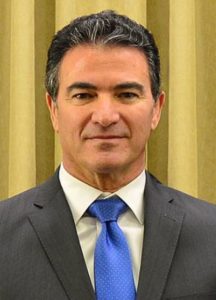 Yosef Meir Cohen (b. 1961) was born in Jerusalem to a religious-Zionist family with deep roots in the ancient city. He is a 9th-generation Israeli, and his ancestors were among the founders of the Mea Shearim neighbourhood, one of the first outside Jerusalem’s Old City walls. Cohen grew up studying in yeshivas and was a member of the Bnei Akiva religious-Zionist youth movement. After completing his military service in the IDF as a paratrooper, he spent some time studying in London. Returning to Israel in 1982, he joined the Mossad and quickly made a name for himself. He was the only religious officer in the Mossad at the time, and originally worked as a spy recruiter and handler. Over the years, he also led a number of daring spy missions which are, of course, all classified. Cohen was awarded the Israel Defense Prize, given to those distinguished individuals who are recognized for playing an instrumental role in keeping the Jewish State safe. By 2011, Cohen had risen to deputy director of the Mossad. Two years later, he was appointed Netanyahu’s national security advisor. In 2016, he took over Israel’s top spy job, becoming Mossad’s director. His task was to clean up the organization, restore its prestige (after some high-profile failures) and, most importantly, end the threat from Iran. It was Cohen who oversaw the stunning 2018 operation to raid Tehran’s nuclear archives. And it was Cohen who oversaw last week’s devastating assassination of Iran’s nuclear chief. Back in 2016, he similarly took out Hamas’ terror chief in a complex operation in Tunisia. Over the past four years, Cohen has transformed the Mossad into, by some counts, the world’s second-largest intelligence agency (after the CIA). He presides over a network of an estimated 7000 agents. Meanwhile, thanks to Cohen’s diplomatic wisdom and his fluency in English, French, and Arabic, he has also served as Netanyahu’s chief negotiator, and was behind the Abraham Accords that brought peace between Israel, the UAE, and Bahrain. He is working to bring more peace agreements with neighbouring countries, including Oman and Saudi Arabia. Last year, The Jerusalem Post ranked Cohen as the most influential Jew in the world. Netanyahu has said that he believes Cohen alone to be capable of leading the nation in the future. Despite being a grandfather, Cohen still runs marathons. All of this, combined with his gracefulness and charm, is the reason he has been described as Israel’s James Bond.
Words of the Week
The thing about smart people is that they seem like crazy people to dumb people.
– Stephen Hawking
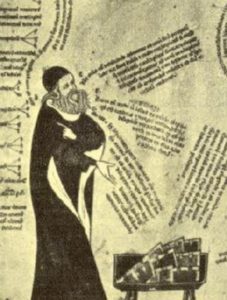 Avraham bar Chiya (c. 1070-1145) was born in Barcelona to a Sephardic Jewish family. It appears that his family was persecuted by its Christian rulers, so they fled to the neighbouring Arab kingdom of Zaragoza. Bar Chiya came from a long line of rabbis, and was also extensively trained in science, math, and astronomy. Famed for his wisdom, he became the court astronomer of Al-Musta’in II. Eventually, he was appointed minister of police and given the title sahib al-shurtah, “city governor”. This is why he was known in the Jewish community as HaNasi, “the prince” or “the president”. Al-Musta’in II was unable to defend his domain from the Christians, who soon took over. Bar Chiya moved to southern France for a while and lived in Narbonne and Provence. There he composed some of the most important scientific texts of the Medieval era. He translated a number of Arabic works into Latin, opening their study for Europeans, and played a key role in introducing the Hindu numerals we use today (by way of Arabia) to Europe, and thus to the rest of the world. Bar Chiya also synthesized ancient Greek wisdom with contemporary Arabic knowledge, and published new discoveries in number theory, arithmetic, geometry, optics, astronomy, and music theory. His Treatise on Measurement and Calculation inspired later greats like Plato of Tivoli and the world-famous Fibonacci. Meanwhile, Bar Chiya also served as the chief rabbi of the Jewish communities he presided over, and composed two important Jewish commentaries and texts. He is credited with being the first person to write a scientific book in Hebrew, and played an instrumental role in the development of the Hebrew language. His disciples included both Jews and non-Jews, among them the great