Category Archives: Writers & Thinkers

Jews in the Wonderful World of Literature, Thought, and Scholarship

Jews of the Week: Belkinds and Hankins

Israel’s Great Pioneers
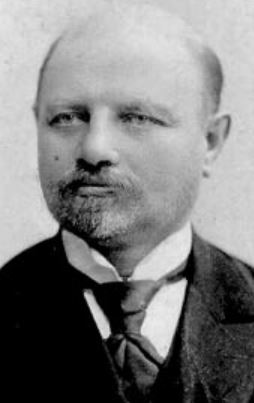
Israel Belkind (1861-1929) was born near Minsk, Belarus. After a Hebrew elementary school education, he enrolled at a Russian gymnasium and planned to study in university. However, the terrible 1881 pogroms turned him into a passionate Zionist, and the rest of his life was dedicated to saving the plight of diaspora Jews. He founded an organization called BILU (an acronym of Beit Yaakov Lechu v’Nelcha, from an End of Days prophecy in Isaiah 2:5, where the Biblical prophet encourages Jews to get up and take possession of their land). In the summer of 1882, Belkind led the first group of Biluim to the Holy Land. After several years of working on Jewish agricultural settlements, he decided to focus on education instead. He taught at a school in Jaffa, and then in Jerusalem. In 1904, Belkind started his own school for children orphaned by the devastating Kishinev Pogrom. Meanwhile, Belkind wrote several important Zionist texts, and was also a noted anthropologist. Intriguingly, he did a great deal of research among the local Arab population and came to the conclusion that they must be the descendants of Jews who had been forcibly converted to Islam! He noted how the locals did not even refer to themselves as “Arabs”, but only “Muslims” (they called the Bedouins “Arabs”), and many of them knew about their Hebrew ancestors. They had various customs that resembled Jewish ones, used an Arabic dialect peppered with old Jewish terms, and venerated the same Biblical figures as the Jews. His dream was thus to open Hebrew schools for the Palestinians, and slowly return them to the Jewish fold. (Later, thanks to the opportunities created by the Zionist movement, a massive influx of non-indigenous Arab immigrants came from neighbouring areas, particularly Egypt, Syria, and Lebanon.)

Yehoshua and Olga Hankin in 1910

Belkind’s older sister was Olga Hankin (1852-1943). She studied in St. Petersburg to become a midwife. Olga joined her brother in the Holy Land during the First Aliyah of 1886, making her the first professional midwife in the region. She soon became the most famous midwife in the land, and was sought out by Jews, Christians, and Muslims alike. She made a name for herself as being the only woman to ride alone on horseback—even at night—and became something of a feminist icon. Olga married Yehoshua Hankin (1864-1945), originally from Russia. Hankin was well-respected by local Arabs, and was able to negotiate a purchase of a massive plot of land on behalf of the Zionist movement in 1890. This land became what is today the city of Rehovot, a name proposed by Israel Belkind based on a verse in Genesis. In 1891, using donations from diaspora Jews, the Hankins purchased what is today Hadera (the neighbourhood of Givat Olga in Hadera is named after Olga Hankin). In 1908, Yehoshua Hankin joined the Palestine Land Development Company and became its number-one real estate agent in the Holy Land. His most famous deal was the Sursock Purchase, acquiring Haifa Bay and the Jezreel Valley from the Sursocks (an Orthodox Christian family who had purchased the land from the Ottomans decades earlier). Hankin’s work secured hundreds of thousands of dunams of land for the Jewish cause, and he is credited with being the top negotiator of land purchases in Israel’s history.

Understanding the Arab-Israeli Conflict in 5 Easy Points

The Incredible Story of the “Mensch of Malden Mills”

Words of the Week

We are worth what we are willing to share with others.
Sir Moses Montefiore

Jew of the Week: Milton Friedman

The Great Liberator

Milton Friedman (1912-2006) was born in Brooklyn to poor Jewish immigrants from what is today Ukraine (then part of Hungary). He graduated high school at just 15 and earned a big scholarship to Rutgers University. Initially wishing to be a mathematician, the Great Depression inspired Friedman to become an economist instead. After post-graduate studies at the University of Chicago, and a fellowship at Columbia University, Friedman headed to Washington to work as an economist for the government. To help pay for World War II, it was Friedman who introduced the payroll withholding tax system (“pay-as-you-earn”), where income taxes are deducted automatically from an employee’s paycheck. (Friedman later regretted it very much and said he wished it hadn’t been necessary.) He also spent much of the war working on weapons design and military statistics. He finally earned his Ph.D from Columbia after the war, following which he took a professorship at the University of Chicago, where he taught for the next 30 years. He wrote a popular weekly column for Newsweek, for which he won a prestigious award. His 1962 book Capitalism and Freedom was an international bestseller and made Friedman world-famous, while his A Monetary History of the United States became the standard textbook for understanding the Great Depression and the effects of monetary policy. Friedman argued passionately for a free-market economy and for the government to stay out of business. He proposed such important concepts as the permanent income hypothesis, the quantity theory of money, floating exchange rates, sequential sampling, and the natural rate of unemployment. He also argued for abolishing the Federal Reserve, whom he blamed for many economic ills. He was opposed to minimum wages and foresaw that they would actually lead to increases in unemployment. He is also credited with bringing an end to America’s military draft, transitioning the US military into an all-volunteer paid army. He believed conscription was unethical and prevented young men from choosing their own life path. Friedman later said abolishing the draft was his greatest and proudest accomplishment. Friedman won the Nobel Prize in Economics in 1976. After retiring from the University of Chicago the following year, he continued to do research in San Francisco, and also worked on a popular ten-part TV show called Free to Choose (the companion text of which was the bestselling nonfiction book of 1980). Friedman was an economic advisor to Ronald Reagan, and was called the “guru” of the Reagan administration. In 1988, he won a National Medal of Science and a Presidential Medal of Freedom. Friedman stayed busy until his final days, and his last article for The Wall Street Journal was published a day after his death! He has been called “the Great Liberator” and has been compared to Adam Smith. The Milton Friedman Prize for Advancing Liberty is named after him. He is widely considered one of history’s most significant economists. Today was his yahrzeit.

The End of World War I and the Beginning of the Jewish State

Words of the Week

A society that aims for equality before liberty will end up with neither equality nor liberty.
Milton Friedman

Jew of the Week: Moses Mendelssohn

Father of Jewish Enlightenment 

Moshe ben Mendel (1729-1786) was born in the Germanic municipality of Dessau to an impoverished, religious Jewish family. His father was a sofer (a Torah scribe), and trained young Moshe in the scribal arts, as well. Moshe also learned Torah and Talmud with Rabbi David Frankel. When Frankel took up a rabbinic post in Berlin, Moshe moved with him to the capital. To keep him safer and open more opportunities, his father had asked him to make his name more German-sounding, resulting in the name Moses Mendelssohn (“son of Mendel”). Mendelssohn continued in his rabbinic studies with the intention of becoming a rabbi, but also took up the study of mathematics, Latin, and philosophy. He soon began learning French and English as well, with an influential Jewish physician and tutor. That tutor introduced Mendelssohn to renowned German philosopher and writer Gotthold Ephraim Lessing. The two became good friends, and Mendelssohn inspired Lessing’s popular play Nathan the Wise. Mendelssohn’s genius soon spread throughout the secular world, and he even won the top Berlin Academy prize for mathematical proofs of metaphysics (second place went to Immanuel Kant!) In 1763, the King of Prussia granted Mendelssohn the special status of schutzjude, “Protected Jew”. At a time when secularism and atheism were sweeping Europe, Mendelssohn remained a believer and resolved to convince the masses On the Immortality of Souls, published in 1767. The treatise became so popular that people began calling him the “German Plato” and the “German Socrates”. In 1775, an order of expulsion was being drawn up against Swiss and German Jews, so Mendelssohn intervened to get the expulsion rescinded. Mendelssohn was constantly mired in theological debates with his German acquaintances, and often pressured to convert to Christianity. He resisted and defended his faith. Nonetheless, the stress was so great on him that he eventually fell deeply ill and was bedridden. At this point he resolved “to dedicate the remains of my strength for the benefit of my children or a goodly portion of my nation”. To make it more accessible to a wider audience, he started a new German translation and commentary of the Torah. The resulting Biur was hugely popular, and received approbations from many rabbis. Meanwhile, he worked to get various restrictions on Jews repealed, and played an instrumental role in getting Jews in Europe basic human and civil rights. In his Jerusalem, he argued passionately for freedom of religion, and for the Christian authorities to leave the Jews alone. Mendelssohn corresponded with one of the leading sages of the day, Rabbi Yakov Emden, and wrote how he “thirsted” for the rabbi’s teachings. Intriguingly, while Rabbi Emden had criticized the Zohar (the famous “textbook” of Jewish mysticism), Mendelssohn actually defended its authenticity. He also defended the authenticity of nikkud, the traditional Hebrew vowel system. Although he was widely admired and respected in his own day, Mendelssohn’s work opened up the door to more Jews learning secular subjects and entering mainstream society, which led to wider assimilation. Four of his own six children ended up converting to Christianity, and just one grandson remained Jewish. (Another grandson was renowned composer Felix Mendelssohn.) Mendelssohn was later credited with being the “father of Haskalah”, the so-called “Jewish Enlightenment”. Because of this, in the decades after his death he became something of a villain in the Orthodox world, and any positive mention of his name was expunged. Today, he is still viewed negatively in religious Jewish circles, although he had truly done a great deal on behalf of the Jewish people.

Should Jews Celebrate Halloween?

Video: The Myth of Moses Mendelssohn

Words of the Week

If you believe you can damage, believe you can repair.
Rebbe Nachman of Breslov