
King of Interviews
 Lawrence Harvey Zeiger (1933-2021) was born in Brooklyn to Orthodox Jewish immigrants from Belarus. His father died when he was just a child, leaving the family impoverished. Young Larry was fascinated by radio and always wished to become a broadcaster. In Miami, he found a job cleaning at a radio station and, when the station’s broadcaster suddenly left the show, Larry was given a chance to take his place. The manager said “Zeiger” was not a good stage name, so Larry quickly chose “King” (based on an ad he had just seen for King’s Wholesale Liquor store). He got the job to radio DJ for three hours every morning, earning $50 a week. King soon started doing interviews, too, and would occasionally have a celebrity who was in town to do a show. He was then hired as a commentator for the NFL’s Miami Dolphins. It was in 1978 when The Larry King Show aired its first episode (on radio). It would be broadcast live every weekday at midnight, starting with a one-hour interview and followed by several hours of discussion. By 1985, King was a household name and was hired by CNN to star in a television version of his interview show. CNN’s Larry King Live went on to set a Guinness World Record as the “longest-running TV show hosted by the same person on the same network”. Many iconic moments took place in his studio, including the Perot-Gore debate of 1993 (which became CNN’s most-watched segment ever), and the joint interview of Rabin and Arafat in 1995. Famous people loved to come on his show because he asked simple questions and made his interviewees feel at ease. He famously avoided reading up on his guests, preferring not to know much about them. King retired in 2010 after 25 years and a whopping 6000 episodes. Over that same time period, he was a regular columnist for USA Today. King went on to do several more popular shows on other networks, including Larry King Now and Politicking with Larry King. Over the years, he made countless appearances in sit-coms, commercials, movies, cartoons, and even the WWE. All in all, King conducted some 60,000 interviews over his career. He won two Peabody Awards for excellence in broadcasting and was inducted into the National Radio Hall of Fame. After suffering a heart attack in 1987, King started the Larry King Cardiac Foundation which has donated millions to pay for life-saving heart surgeries for people who cannot afford them. He also helped raise millions for Israel and for Chabad. He generally identified as a “Jewish agnostic” and said several years ago: “I love being Jewish, am proud of my Jewishness, and I love Israel.” Sadly, Larry King passed away earlier this year.
Words of the Week
Everyone loves the truth, but not everyone tells the truth.
– Yiddish proverb
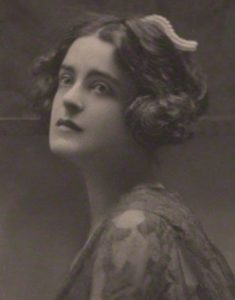 Harriet Pearl Alice Cohen (1901-1967) was born in London, England to a Jewish family with Russian heritage. She started playing piano in early childhood, and by age 13 won the Ada Lewis Scholarship and the Sterndale Bennett Prize from the Royal Academy of Music. A year later, she made her professional debut and soon became one of the most popular musicians in England. She was noted for resurrecting old English compositions that had been forgotten, as well as opening up Spanish and Russian music to the wider world. In fact, she was permitted to visit the Soviet Union (and perform there) in 1935, bringing back great compositions by contemporary Russians that she then performed around the world. While visiting Vienna in 1933, Cohen first recognized the plight of refugees fleeing Nazi Germany. She decided to devote herself to their cause. Cohen went on to raise large sums of money to support the refugees, and worked with several organizations to bring them to safety. In 1934, she performed a special benefit concert, with
 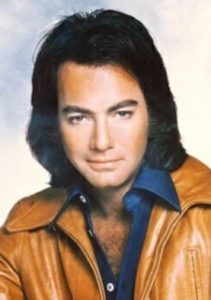 Neil Leslie Diamond (b. 1941) was born in Brooklyn to a Jewish family of Russian and Polish heritage. In high school, he sang in the school choir alongside classmate