Author Archives: Jew of the Week

Jew of the Week: Rabbi Yosef Karo

Code of Jewish Law

19th Century Illustration of Rabbi Yosef Karo

Yosef ben Ephraim Karo (1488-1575) was born in Toledo, then in the Spanish kingdom of Castile. The infamous 1492 Spanish Expulsion of the Jews took place when he was just four years old. The family first fled to Portugal, and were then expelled from there as well in 1497. They eventually settled in Nikopolis, in the Ottoman Empire, which had opened its doors to Sephardic Jewish refugees. (The Ottoman Sultan at the time, Bayezid II, reportedly said: “They tell me that Ferdinand of Spain is a wise man, but he is a fool, for he takes his treasure and sends it all to me.”) Karo was tutored by his rabbi father and soon became a rabbi himself. He also studied under the great Rabbi Yosef Taitazak in Salonica. For a couple of years, he served as a rabbi in Adrianople, and eventually resettled in Tzfat. At the time, Tzfat was experiencing a resurgence of Jewish life and a renaissance in Jewish scholarship, thanks mainly to an influx of Sephardic Jewish refugees. It soon became the “capital” of Jewish mysticism, and Rabbi Karo was one of its most famous mystics and scholars. It was in Tzfat that he composed the Shulchan Arukh, to this day the standard code of Jewish law worldwide. (Tzfat boasted one of the first printing presses in the Middle East, helping to spread the Shulchan Arukh far and wide and making it extremely popular and accessible.) The Shulchan Arukh was itself only a summary of the far broader and more complex Beit Yosef, which was Rabbi Karo’s true magnum opus that he worked on for over twenty years. Rabbi Karo opened his own yeshiva, with 200 students including the renowned “Ramak”, Rabbi Moshe Cordovero. Karo also served as the chief rabbi on the Tzfat beit din. In fact, he was one of the main leaders in a rabbinic attempt to re-establish the ancient Sanhedrin. Rabbi Karo was recognized as the preeminent authority for all Sephardic Jewry worldwide, and was deeply respected by Ashkenazi Jews as well who, on several occasions, asked him to intervene in local European disputes. Among his other noted publications are Kesef Mishneh, a commentary on the Mishneh Torah of Maimonides, along with a textbook for Talmudic study. One of his most intriguing works is Maggid Meisharim, a personal journal which records his prophetic experiences and the teachings he received from an angel over a period of fifty years. Rabbi Karo is often referred to simply as Maran, “Our Master”.

Words of the Week

Today, what is demanded of the Jewish people is mesirut nefesh, self-sacrifice, and this is particularly true with regard to chinuch, education. The resources for which we have labored must be dedicated to the education of children – both our own, and the children of others.
– Rabbi Menachem Mendel Schneerson, the Lubavitcher Rebbe

Jew of the Week: Simon Kremser

Inventor of Buses 

A modern-day Kremser carriage in Germany

Simon Kremser (1775-1851) was born in the German city of Breslau (now Wroclaw, Poland). He followed in the footsteps of his father, a wealthy merchant. During the Napoleonic Wars, Kremser helped to provide funds for the Silesian Army against Napoleon, and managed the Prussian royal family’s war chest. He was awarded the Iron Cross, and was eventually granted citizenship, becoming one of the first Jews to be a German citizen. In 1825, Kremser had an idea for a public carriage line that would quickly and cheaply transport people across Berlin. He got permission from King Friedrich William III, and designed a large horse-drawn carriage that could seat up to 20 people. Such carriages are still known as “kremsers” in Germany today. By 1835, Kremser ran three different “bus” lines in Berlin. The idea of public buses soon spread across Europe. As the king’s official hauler, Kremser was also the one commissioned to return the famous Brandenburg Gate Quadriga to Berlin in 1814 after it had been snatched by Napoleon. Little else is known of Kremser, and no picture of him has survived. It is believed that he lived out his last years in Russia, where he served the royal family and was given the honorary military rank of major.

Words of the Week

The only wealth that I truly own is that which I have given away to good causes. Everything else – all my holdings – are simply under my control for the moment, but they can be lost in the next moment due to a bad decision, war, an accident or other cause which I cannot control. However, the good institutions that my money has built are forever; they can never be taken or lost.
Sir Moses Montefiore 

Jew of the Week: Amedeo Modigliani

Greatest Painter of All Time?

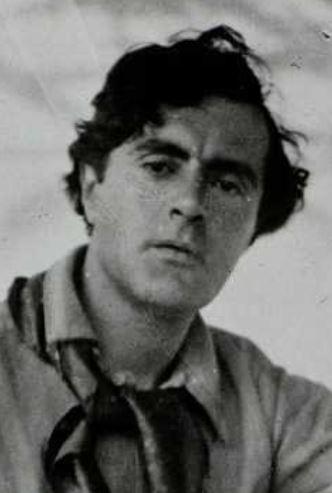
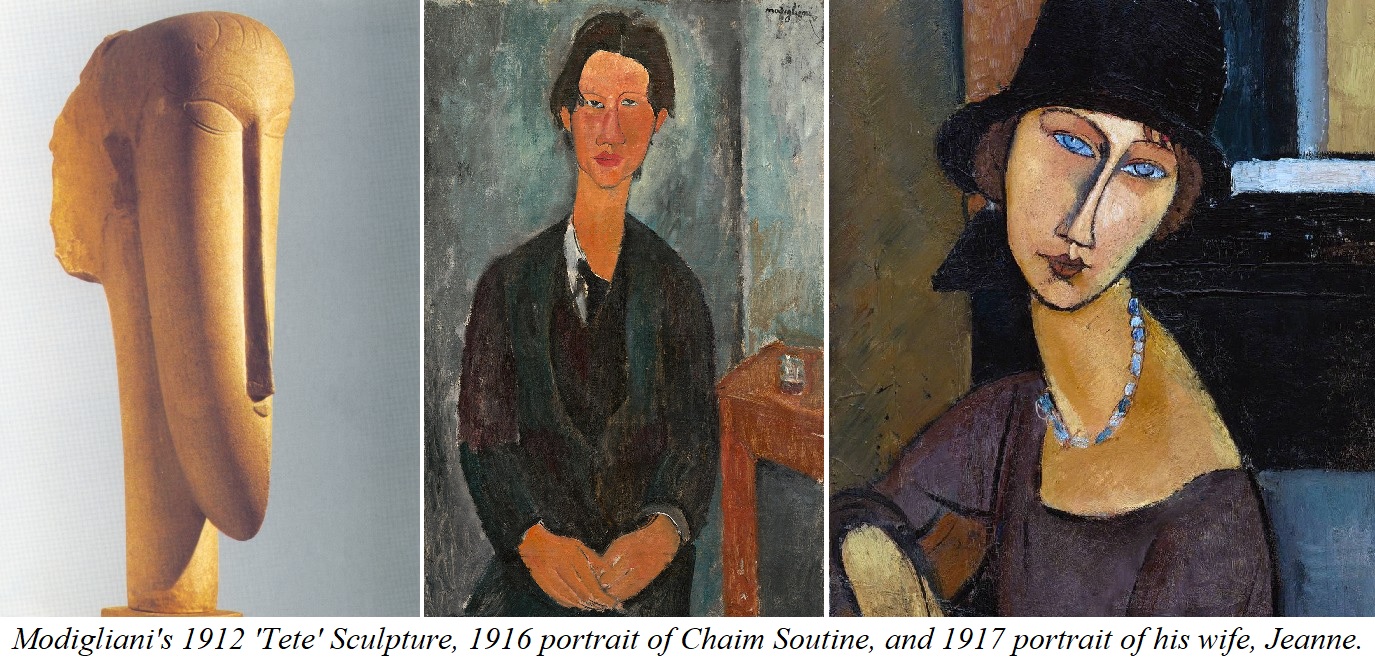
Amedeo Modigliani (1884-1920) was born to an influential Sephardic Jewish family in Livorno, Italy. As a child, he was often sick and was home-schooled by his mother, his favourite hobby being painting. After nearly dying of typhus, and then tuberculosis, his mother took him on a cross-Italy tour, with an important stop in Florence to see its great artworks. She then signed him up for lessons with master painter Guglielmo Micheli. Modigliani spent several years at Micheli’s school, and proved himself as a creative and original artist. Micheli nicknamed him “superman”, not only for his artistic ability but because Modigliani liked to study and quote the philosophical works of Nietzsche. After some time learning art in Venice, Modigliani settled in Paris in 1906 and lived in the Montmartre commune for poor artists. He was entirely devoted to his art, producing as much as one hundred works per day! Unfortunately, “Modi” (as he was now known) descended into heavy drug and alcohol use, partly to deal with his chronic pains and illnesses. In 1909, he took up sculpting. (In 2010, his Tete carving became the third most expensive sculpture ever sold, going for over $70 million at auction.) He returned to painting in 1914. When World War I broke out, Modi enlisted in the army but was soon kicked out due to poor health. That same year, he had a relationship with renowned British painter Nina Hamnett. He had met her at a café and famously introduced himself simply as “Modigliani, painter and Jew”. He had several other high-profile relationships, including with Russian poet Anna Akhmatova and English writer Beatrice Hastings. He eventually settled down and got married. Modi was famous for being unconventional and uncategorizable as an artist, and for his many rich portraits. His Nu couché nude painting sold for over $170 million in 2015, among the most expensive paintings ever sold, while Nu couché (sur le côté gauche) set a Sotheby’s record in 2018, selling for $157 million. As a result of his illnesses and addictions, Modi died at the young age of 35. The following day, his grieving wife, pregnant with their second child, jumped out a window and committed suicide. Many believe that had Modi lived longer, he would have become the undisputed greatest painter of all time. There are thought to be more fakes of Modigliani’s works today than of any other artist. Two movies have already been made about him, and currently Johnny Depp and Al Pacino are working on a new biopic about his life.

Words of the Week

I only look for the good qualities in every Jew. That way I come to love him.
Rabbi Menachem Mendel of Kotzk (1787-1859), the Kotzker Rebbe