A Yiddish Feminist Icon
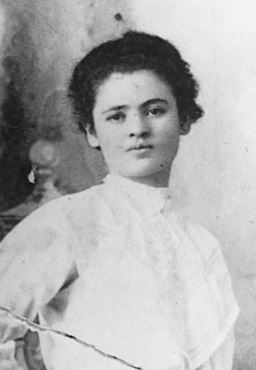 Clara Lemlich (1886-1982) was born to a religious Jewish-Russian family in what is now Horodok, Ukraine. She grew up speaking Yiddish, and learned Russian against the wishes of her parents. This actually allowed her to start a business in her youth, writing letters in Russian for her neighbours. She used the money to buy books, and soon took a deep interest in socialist literature. Following the horrors of the Kishinev Pogrom of 1903—in which 49 Jews were killed, over 500 injured, and 1500 Jewish home destroyed—the family fled to the US and settled in New York City. Lemlich got a job in the garment industry, working long hours in terrible conditions, with no breaks or benefits, and poor compensation. She joined the International Ladies’ Garment Worker’s Union and soon got elected to its executive board. Lemlich started to organize strikes and protests. During one protest, gangsters hired by her employers broke her ribs. Undeterred, in November of 1909 she gave a rousing speech (in Yiddish!) and got 20,000 workers to join her in a massive strike which came to be known as the “Uprising of the 20,000”. This then inspired male garment workers to stage a strike, too, resulting in the “Great Revolt” that brought 50,000 to protest. The result was that employers finally took notice and slowly began improving conditions for their employees. Lemlich, however, was blacklisted from working in the garment industry. Instead, she turned her attention to universal suffrage and wrote: “The manufacturer has a vote; the bosses have votes; the foremen have votes, the inspectors have votes. The working girl has no vote…” and until she gets to vote, “she will not get justice; she will not get fair conditions.” Lemlich founded the Wage Earner’s Suffrage League. Two years later, she married Joe Shavelson and started a family, switching gears to spend most of her time raising her children. Her activism continued, though, for example participating in a housewives’ boycott of kosher butcheries to protest price gouging. She would go on to join the Communist Party of America, and then to work for Progressive Women’s Councils. She campaigned against nuclear weapons, genocides, and the Vietnam War. At 81, she moved to California to be with her children and lived in a nursing home. Even then, her activism didn’t stop and she convinced the nursing home management to join in on boycotts protesting high prices on fruits and vegetables. Today, Lemlich is recognized as a major feminist icon and an inspiration for countless Jewish women.
Feminism in Judaism and the Curses of Eve
Words of the Week
The world suffers a lot not because of the violence of bad people, but because of the silence of good people.
– Napoleon Bonaparte