
Father of Israeli Espionage
 Gamliel Jamil Cohen (1922-2002) was born in Damascus to a religious Syrian-Jewish family, and grew up in the city’s Jewish Quarter. Yearning to live in the Holy Land and inspired by the Zionist vision, he left Damascus at the age of 21 and literally walked to Israel. He joined a kibbutz started by Ashkenazi immigrants. Despite being the odd one who was darker-skinned and spoke no Yiddish, Cohen quickly fell in love with the sense of unity and brotherhood, as well as the important pioneering work of developing the Jewish ancestral homeland. His uniqueness caught the attention of the Palmach, the commando unit of the pre-IDF defence force, the Haganah. The Palmach sought to launch an intelligence unit that could infiltrate Arab governments, and were looking for talented and dedicated Arab Jews. In 1944, Cohen became their first recruit. Together with Iraqi Jew Shimon Somech, they created the first unit of Mista’arvim (recently popularized by the show Fauda). The term itself came from the name of the ancient Mizrachi Jewish communities living in Arab lands that were distinct from, and pre-dated, the Sephardic Jews that joined them after the Spanish Expulsion of 1492. After several years of training, Cohen moved to Beirut in 1948 and set up Israel’s first official intelligence outpost, living undercover as Yussef el-Hamed, a textile shop owner. By this point, his operation was overseen by the newly-formed Mossad. Cohen’s trailblazing work and espionage innovations paved the way for more famous later spies like Shula Cohen and Eli Cohen. In 1954, Cohen married a fellow Syrian Jew who also worked for the Mossad. Together, they moved to Paris undercover as Arabic journalists. Cohen managed to get hired by the Syrian Embassy in Paris, from which he sent critical intelligence to the Israeli government. In 1958, the Cohens moved to Vienna to continue their work as “journalists”. In addition to infiltrating the embassies of Arab states, they also found information on neo-Nazi groups and exposed war criminals in hiding. Cohen retired from active duty in 1964 and went on to train the next generation of Israeli spies. In his last years, he wrote the book Undercover: The Untold Story of the Palmach’s Clandestine Arab Unit. Almost all of Cohen’s work remains classified. He has been called the “father of Israeli espionage”.
Happy Israel Independence Day!
Words of the Week
The U.N. did not create Israel. The Jewish state came into being because the Jewish community in what was Mandatory Palestine rebelled against foreign imperialist rule. We did not conquer a foreign land.
– Yitzhak Shamir

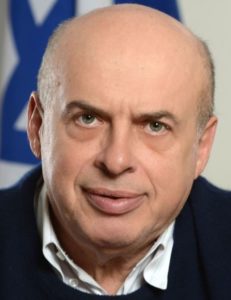 Anatoly Borisovich Sharansky (b. 1948) was born in Donetsk, Ukraine. He was a child chess prodigy, and won his city’s chess championship as a teenager. He went on to study math in Moscow and later worked in a secret Soviet research lab. In 1973, Sharansky applied for an exit visa to Israel and was refused. Henceforth, he became a vocal activist on behalf of Soviet Jewry, and became the world’s most famous refusenik. He soon expanded his scope to work for all human rights, and was the spokesperson for the Moscow Helsinki Group, today Russia’s primary human rights organization. In 1977, Sharansky was arrested on trumped-up charges of treason and espionage, and sentenced to 13 years of hard labour. He was tortured, and kept in solitary confinement for long periods of time. (He would later remark that one of the things that helped him through it was playing chess in his mind.) After ceaseless activism from his wife, mother, and countless international supporters, Sharansky was finally released in 1986. Shortly after, he received a Congressional Gold Medal from the US government. He moved to Israel and started going by his Hebrew name, Natan. A couple of years later, he published a bestselling memoir, Fear No Evil. (This book was passed on by