
Tag Archives: World War I

Jew of the Week: Israel Kristal

Israel Kristal, World's Oldest Living Man (Credit: Guinness World Records)

Israel Kristal, World’s Oldest Living Man (Credit: Guinness World Records)

Izrael Icek Krysztal (b. 1903) was born near Zarnow, Poland to an Orthodox Jewish family. At the young age of three he started his studies at a religious school, and by six was already well-versed in Biblical and Talmudic knowledge. He survived the First World War as a teenager, despite the fact that his father had been drafted into the army, and his mother had passed away. After the war, he and his father reunited, and settled in Lodz where they opened up a candy shop. Kristal married and had two children. It wasn’t long before another World War broke out, and Kristal’s family was sooned moved to the Lodz ghetto, where both of his children died. Some time later, he and his wife were sent to Auschwitz, then transferred to several other labour camps. When the camps were liberated, Kristal weighed just 37 kilograms. Tragically, his wife didn’t make it, and neither did anyone else in his extended family. Starting anew once more, Kristal remarried, and made aliyah to Israel in 1950, where he has lived ever since. He continued working in his profession as a confectioner, first at a candy factory, and then from his own home. Last week, Guinness World Records confirmed Kristal as the world’s oldest living man (in addition to his previous recognition of being the oldest living Holocaust survivor). He is now nearing his 113th birthday. Still devoutly observant, Kristal says he hasn’t missed a day of laying tefillin for over 70 years, since the end of the Holocaust. He has nine grandchildren, and many more great-grandchildren. When asked what one should eat for a long life, he said: “There wasn’t always food in the camps. I ate what I was given. I eat to live, and I don’t live to eat. I don’t need too much. Anything that’s too much is no good.”

UPDATE: Sadly, Israel Kristal passed away in August of 2017.

Words of the Week

I don’t know the secret for long life. I believe that everything is determined from above and we shall never know the reasons why…
– Israel Kristal
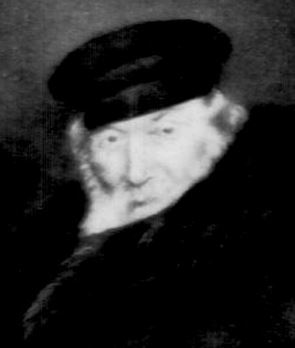
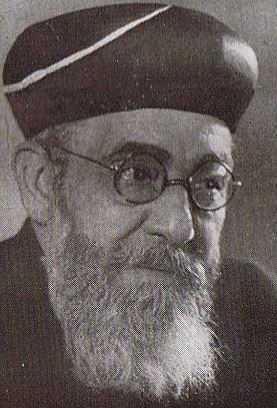
Jews of the Week: Rav Uziel and the Chofetz Chaim

The Chofetz Chaim

The Chofetz Chaim

Israel Meir Kagan (1839-1933) was born in what is today Belarus to an Orthodox Polish-Jewish family. After his father’s passing when he was just ten years old, the family moved to Vilnius where Kagan continued his Jewish studies. Quickly noted as a great scholar, at the age of 17 he was married and appointed rabbi of the town of Radin. Soon after, he founded the Radin Yeshiva, which would go on to become one of the greatest yeshivas in the Ashkenazi world. Meanwhile, Rabbi Kagan wrote many popular books of wisdom, most notably Chofetz Chaim, a book about the laws of proper speech, the title of which became Rabbi Kagan’s nickname. His Mishna Berura became a standard text of Jewish law, and still used extensively today. He wrote nearly two dozen other books on a wide array of topics. At the same time, the Chofetz Chaim traveled across Europe to inspire Jews to observe the Torah, and to counter the growing secular movement. He was also an important member of Agudath Israel. Click here to see rare footage of the Chofetz Chaim at the First Congress of Agudath Israel in 1923.

Rav Uziel

Rav Uziel

Ben-Zion Meir Chai Uziel (1880-1953) was born in Jerusalem, the son of the president of the city’s Sephardic community. Like the Chofetz Chaim, Uziel was also quickly noted as a great scholar, and by age 20 founded his own yeshiva. By 31, he was the Sephardic Chief Rabbi of Jaffa, where he worked alongside his Ashkenazi counterpart, Rabbi Kook, bridging the two communities together. During World War I, he worked tirelessly to stop the persecution of Jews, which earned him a sentence of exile in Damascus. In 1923 he returned to Israel as the Chief Rabbi of Tel-Aviv, and in 1939 became the Sephardic Chief Rabbi of Israel, a post he held until his passing in 1953. Rabbi Uziel was a founding member of the Jewish Agency, and played a key role in the founding of the State of Israel. Of course, he wrote a great deal of widely-read Torah thought and commentary as well. Rav Uziel and the Chofetz Chaim passed away on the same day, twenty years apart: the 24th of Elul.

Shana Tova! Rosh Hashanah Begins This Sunday

Words of the Week

In Jewish history there are no coincidences.
– Elie Wiesel

Jew of the Week: Ernst Gräfenberg

Ernst Grafenberg (courtesy of muvs.org)

Ernst Grafenberg

Ernst Gräfenberg (1881-1957) was born in Adelebsen, Germany, where his father was a successful businessman and head of the Jewish community. Gräfenberg studied medicine and earned a Ph.D by the time he was just 23. He first worked as an ophthalmologist, then shifted his focus to gynecology. At the same time, he did important research on cancer, presenting a theory on metastasis. Following his World War I service as a medical officer, for which he was decorated with an Iron Cross, Gräfenberg became the chief of gynecology at a Berlin hospital. He did simultaneously did research on reproduction at Berlin University. In 1929, he invented the first modern contraceptive intrauterine device (IUD), then called the “Gräfenberg ring”. Today, IUDs are the most widely used form of female contraception, with nearly 200 million users around the world. Unfortunately, the Nazis forced Gräfenberg to give up his posts in 1933. Despite pressure to leave Germany, he continued his gynecology practice, thinking that he would be safe since many of his patients were the wives of Nazi officials. Nonetheless, Gräfenberg was arrested and spent three years in prison. It wasn’t until 1940 that he was finally able to flee to the US (through Siberia and Japan). There, Gräfenberg continued his studies on female physiology. Among other things, he described a little-known erogenous zone that was later named after him: the “Gräfenberg spot”, better known as the “G-spot”. He also did important work on egg implantation and pathology. The effects of Parkinson’s Disease forced Gräfenberg to retire in 1953, and he passed away several years later in New York City.

Words of the Week

Humility is not a question of thinking less of yourself, it’s a question of thinking of yourself less.
– Larry Bossidy