America’s Top Political Pundit
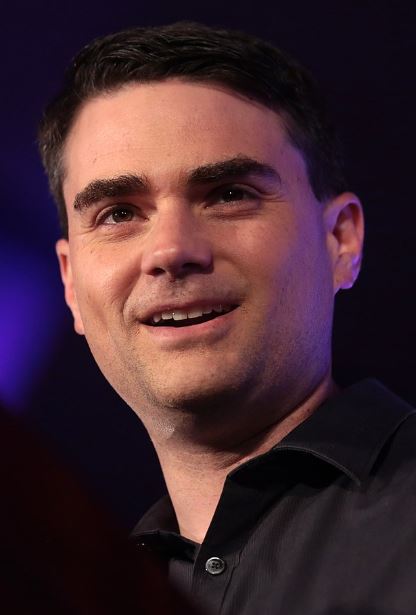
Ben Shapiro (Credit: Gage Skidmore)
Benjamin Aaron Shapiro (b. 1984) was born in Los Angeles to a Jewish family of Russian and Lithuanian heritage. His family became Orthodox when he was 9 years old, and Shapiro has been a Torah-observant Jew ever since. He skipped two grades and graduated from high school at 16, and from UCLA at 20 with a degree in political science. That same year, he published his first book, Brainwashed: How Universities Indoctrinate America’s Youth. By this point, his political column was nationally syndicated, and Shapiro still has the distinction of being the youngest person in American history to have a nationally syndicated column. Shapiro then went to law school at Harvard, after which he worked as a lawyer for several years. In 2012, he became the editor of Breitbart News, though he resigned in 2016 over disagreements over Breitbart’s direction. He subsequently became the number one target of anti-Semitism in America, according to the Anti-Defamation League. Since then, he has been the editor of The Daily Wire, which is currently the top news page on Facebook (and has more engagement than The New York Times, The Washington Post, NBC News and CNN combined!) He is also the host of The Ben Shapiro Show, now the second most popular podcast in the US (ninth-most in the whole world!) and carried by over 200 radio stations across the country. Shapiro is famous for his many stimulating speaking engagements on campuses, and for his quick wit and debate skills. Altogether, Shapiro has written 11 books thus far and is among today’s leading conservative commentators. He has sometimes been confused with the alt-right, who he actually strongly opposes, and has been a frequent target of. Shapiro is an avid violinist (see a 12-year-old Shapiro play “Schindler’s List” here). Last week, he was in Israel for a CPAC conference and several thousand people crammed into an auditorium to hear him speak. He also made sure to visit the Temple Mount and pray there.
7 Reasons Why Ben Shapiro is So Hard to Debate
Ben Shapiro: Why Kids Can’t Choose Their Own Gender
Investment Advice from the Lubavitcher Rebbe
Words of the Week
Before the thinkers of Athens came along, the Torah arrived at the notion of equality before the law. All public institutions in the Torah – the judiciary, the priesthood, the monarchy, the institution of prophecy – are subordinated to the law. Moreover, the law is a public text whose dictates are meant to be widely known, thus making abuse of power more obvious and safeguarding the common citizenry… the most important body of authority in the polity envisioned by the Torah is none other than the people themselves.
– Rabbi Dr. Joshua Berman (Ani Maamin, pg. 174)
 Moshe Kai Cavalin (b. 1998) was born in Los Angeles, the son of a Taiwanese mother and an Israeli-Brazilian father. He started speaking at 4 months of age, and was reading and doing math by 3. At 6, he was rejected from elementary school because he “knew more than the teacher”, and had to be home-schooled. At 8, he became the youngest person in American history to take college classes. He got his first degree three years later, with a perfect 4.0 GPA. He then enrolled at UCLA – with a full scholarship – and earned a BS in mathematics. Meanwhile, Kai wrote two bestselling books (an inspirational autobiography, and a manual to deal with bullying). For fun, he scuba dives, plays piano, and chess, and avoids video games which, he says, are “not helping humanity in any way.” He is also an avid martial artist – thanks to his father, a former IDF special forces commando – and has won 26 gold medals. Incredibly, Kai got a pilot’s license, too. This led to a phone call from NASA in 2015. NASA needed a pilot who also knew math, physics, and computer programming to develop surveillance and anti-collision technology for drones and airplanes. Kai has been at NASA ever since, working hard to keep the skies safe. He is concurrently doing his Master’s in cybersecurity, and intends to later get a Master’s in business from MIT before opening his own cybersecurity company. Kai describes himself as a religious person and often credits God with giving him the insight to solve problems. One of his professors once said: “I think most people just think he’s a genius, they believe it just comes naturally… He actually worked harder than, I think, any other student I’ve ever had.”