Tag Archives: Sephardic Jews

Jew of the Week: Joe Mimran

The Brand Master

Joe Mimran (Credit: The Globe and Mail)

Joe Mimran (Credit: The Globe and Mail)

Joseph Mimran (b. 1952) was born in Casablanca, Morocco to an observant Jewish family, and grew up in Toronto, Canada. As a young man, he worked a number of odd jobs before opening his own art gallery while a student at York University. He finished his studies at the University of Windsor and became an accountant. After a couple of years, Mimran’s fashion designer mother inspired him to enter her field. He joined his mother and brother to set up a family fashion business called Ms. Originals. In 1979, the brothers hired a young Chinese-Canadian, Alfred Sung, to design their clothes, and the line was an instant hit. (Alfred Sung would later be hailed as “The New King of Fashion”). In the mid-80s, Mimran was once shopping for a simple white shirt but could not find one. He resolved to make his own, and started a new brand, Club Monaco, focused on simple, minimalist designs. By 1999, Club Monaco had 125 stores around the world, including one on Fifth Avenue in New York, and was bought out by Ralph Lauren. In 2004, Mimran started working on a new line to be sold exclusively at Loblaw’s supermarkets, giving rise to the Joe Fresh brand. The brand became so popular that in 2010, independent Joe Fresh stores began popping up. Mimran also founded the “Pink Tartan” label with his wife, and designed lines for President’s Choice and Holt Renfrew. He is currently the chair of the Fashion Design Council of Canada. Aside from fashion, Mimran is a noted philanthropist, supporting the Reena Foundation (which assists people with autism and disabilities), and Toronto’s East General Hospital, among others. Recently, Mimran joined the panel of Canada’s version of Dragon’s Den, the popular TV show where entrepreneurs pitch their ideas to venture capitalists. Mimran is recognized as a pioneer in modern fashion, and has been called a “human calculator”, and a “brand master”.

Words of the Week

Most people do not really want freedom, because freedom involves responsibility, and most people are frightened of responsibility.
– Sigmund Freud
Jews of the Week: Isaac Leeser and Warder Cresson

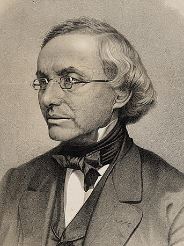
Isaac Leeser

Isaac Leeser

Isaac Leeser (1806-1868) was born in the Germanic kingdom of Westphalia. Growing up, he received both a religious Jewish education, as well as a secular German one, and was fluent in Latin, German, and Hebrew. He immigrated to the United States at the young age of 17 and lived with his wealthy uncle. While working in his uncle’s business, Leeser started to teach Judaism in his local synagogue, and vocally defended his religion when it was under attack in the public sphere. By age 22, he was quite well known, and was invited to take over Philadelphia’s Congregation Mikveh Israel, one of America’s oldest Sephardic synagogues. Leeser introduced American Jewry to the German custom of delivering a sermon between prayers (something now common in all synagogues). He wrote a book about Judaism in 1829 but found no publisher willing to print it. So, he started his own press, establishing the Jewish Publication Society. In 1845, he published his English translation of the Torah – the first by a Jew. Eight years later, he published a complete English Tanakh. This translation was the authoritative Jewish version for decades, and is still widely used today. Leeser helped found some of America’s first Jewish schools, seminaries, and magazines. He was also a civil rights activist and worked hard on behalf of all minorities. He is regarded as one of America’s most important Jewish pioneers.

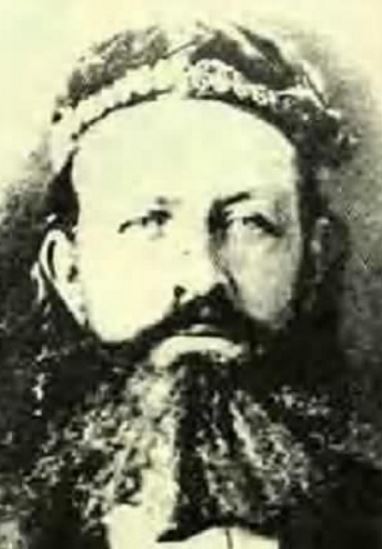
Michael Boaz Israel, aka. Warder Cresson

Michael Boaz Israel, aka. Warder Cresson

In 1840, Leeser met a wealthy farmer named Warder Cresson (1798-1860). Cresson was a very religious Quaker, a preacher and writer. After some discussions with Leeser, Cresson took a deep interest in Judaism. In 1844, he was appointed America’s first consul in Jerusalem. This brought him face-to-face with Judaism and he grew close to Jerusalem’s ancient Sephardic community. He started writing for Leeser’s magazine, The Occident, and even began doing counter-missionary work to stop Christian proselytizing of Jews. In 1848, Cresson converted to Judaism, was circumcised, and took on the Hebrew name Michael Boaz Israel ben Avraham. Upon his return to Philadelphia, his wife divorced him, sued him, and sought to have him declared insane. The case made headlines across the US. Cresson ultimately won the suit, proving his absolute sanity and wisdom. He returned to Jerusalem, married a Sephardic woman and had three kids. In 1852, he established a Jewish agricultural colony – predating the Zionist movement by several decades, and in fact, helping to inspire it. He continued writing on Jewish topics, and died as a respected and prominent leader in Israel’s Sephardic community. His original tomb and burial place on the Mount of Olives was recently rediscovered.

Words of the Week

Just as the olive yields oil for light only when it is pounded, so are man’s greatest potentials realized only under the pressure of adversity.
– The Talmud

Jew of the Week: Dalia Itzik

Dalia Itzik, Israel's First Female President (הצלם אלכס קולומויסקי וידיעות אחרונות)

Dalia Itzik, Israel’s First Female President (הצלם אלכס קולומויסקי וידיעות אחרונות)

Dalia Itzik (b. 1952) was born to an Iraqi-Jewish family in Jerusalem. She studied literature and history at the Hebrew University before becoming a teacher. At the young age of 21, Itzik was a co-founder of Jerusalem’s Katznelson School, where she taught for 17 years. In 1984, she became the chairwoman of Jerusalem’s Teachers Union. Due to her vast experience in education, Itzik was elected to the city council in 1989 and took over its education portfolio. From there, she rose to the position of Jerusalem’s deputy mayor. In 1992, she ran for the Knesset as a member of the Labor Party and won a seat. She would go on to serve in Israel’s parliament for nearly twelve years, and during that time filled the roles of Minister of Industry and Trade, Minister of the Environment, and Minister of Communications. She sat on the Finance Committee and the Education and Culture Committee, among others. In 2006, she became Israel’s first female Speaker of the Knesset, and shortly after, Israel’s deputy president. The following year, President Moshe Katzav took a leave of absence, making Itzik Israel’s first female president (though only in an interim position). Since leaving politics in 2013, Itzik has served on the board of Hadassah International – one of the largest women’s organizations in the world – and as the chairwoman of From the Depths, an organization which strives to preserve the memory of the Holocaust. She was also nominated for Israel’s presidency in 2014.

Words of the Week

Fundamental to our faith is the belief that every event in a person’s life is by Divine Providence. So expressions such as “If only I had…” or “If only I hadn’t…” smack of heresy.
Rabbi Sholom DovBer of Lubavitch (1860-1920)