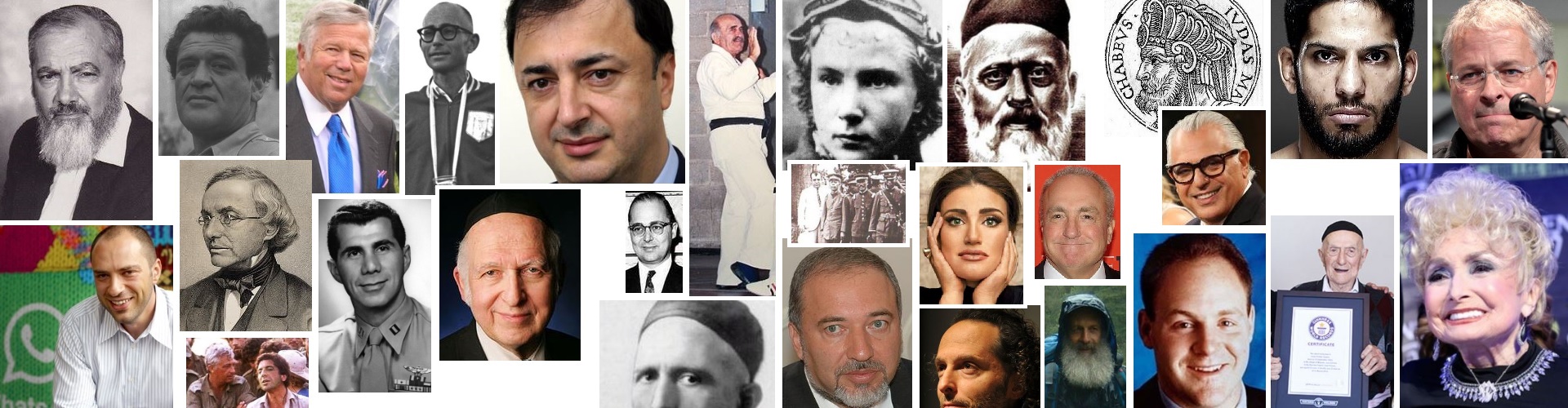
 Yuri Bentsionovich Milner (b. 1961) was born in Moscow. He studied theoretical physics at Moscow State University before working at the prestigious Lebedev Physical Institute. He found that his abilities in physics were not the best (especially because he was placed on a lower track due to his being Jewish), and decided to switch to business. He first tried selling computers, then went to do an MBA at the University of Pennsylvania, becoming the first person from the Soviet Union to officially study in the US. Upon graduation, he got a job at the World Bank, and in 1995 was made CEO of Russian oligarch Mikhail Khodorkovsky’s investment company. In 1999, Milner read an article and decided it was a good idea to start an online business. He began a series of ventures that brought American-style sites to Russia, including Molotok.ru (the Russian eBay), Boom.ru (free webhosting), and 24×7 (Russia’s Amazon). In 2005, Milner established his own investment fund, Digital Sky Technologies. Five years later, his Mail.ru went public on the London Stock Exchange with a valuation of $5.6 billion. That same year, Milner bought pioneering Israeli instant messaging company ICQ, and has since invested an additional $150 million in Israeli startups. Milner’s venture capital fund has become one of the world’s greatest. He was among the first to invest in Facebook, with an initial $200 million, and plenty more since. He also invested $800 million in Twitter, $125 million in WhatsApp, and $1.6 billion in Alibaba, in addition to Groupon, Snapchat, Airbnb, and Spotify. In 2012, Milner established the Breakthrough Prize, awarding $3 million to great achievements in Physics, Life Sciences, and Mathematics. This is now the largest scientific award in the world, trumping even the Nobel Prize. In 2015, Milner founded the Breakthrough Initiatives to investigate life on other planets. Its first project is a $100 million, 10-year endeavour called “Listen”, searching for radio and laser signals from distant stars with the most sensitive equipment in the world. The most recent Breakthrough Initiative is “Starshot”, investing $100 million to develop a spacecraft that will be accelerated to 20% of the speed of light and take a 20 year journey to our nearest star. Milner also awards (together with Mark Zuckerberg) a $250,000 scholarship to the winner of the Breakthrough Junior Challenge, in addition to $50,000 for that student’s science teacher, and $100,000 for the student’s school science lab. Milner has been on Fortune‘s list of 50 Greatest World Leaders, and TIME’s 100 Most Influential People. He was voted Russia’s Businessman of the Year in 2010, and Man of the Year in 2011, and has been described as “the most interesting man in the world”. Milner recently purchased a house in Los Altos for $100 million, the most ever paid for a single-family home in US history (which the modest Milner was quite embarrassed about). He regularly attends the local synagogue. Milner made the news once again a couple of weeks ago when his Breakthrough Listen project discovered mysterious radio bursts from a distant galaxy, sparking whispers of the possibility of life elsewhere in the universe.
Words of the Week
An atheist has to know a lot more than I know. An atheist is someone who knows there is no god. By some definitions, atheism is very stupid.
– Carl Sagan
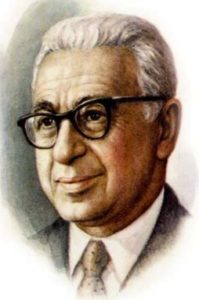 Matvei Isaakovich Blanter (1903-1990) was born in the Russian Empire in a small Ukrainian town. He studied music and became a master pianist and violinist. In the 1920s, Blanter became popular for his dance and jazz songs. After the rise of Stalin, he was “recruited” to write propaganda pieces and composed some of the Soviet Union’s greatest hits. In 1938, he wrote the music for the internationally-acclaimed song “Katyusha”, by far the most well-known Russian tune in the world. (Click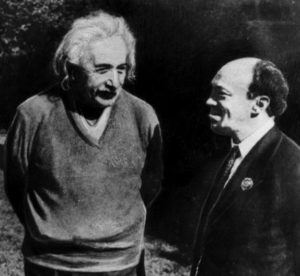
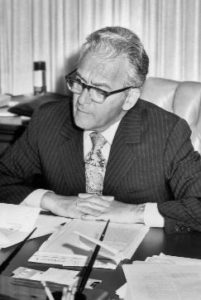 Sol Price (1916-2009) was born in New York City to Jewish-Russian immigrants from Belarus. He grew up in San Diego, where he earned a philosophy degree at San Diego State University before getting a law degree from the University of Southern California. Price was admitted to the bar in 1938. After over a dozen years as a business lawyer, Price had an idea to open a new kind of department store, offering wholesale prices on quality goods sold in bulk. Price opened his first store, called FedMart, in an old airport hangar in 1954. He charged a small membership fee ($2 per family) and kept prices even lower by avoiding advertising, major credit cards, and expensive real estate, and maintaining a small inventory. The model was a great success, and Price expanded rapidly. He pioneered many innovations in retail, including being the first to sell gasoline at wholesale prices, and being the first to have an in-store pharmacy and opticianry. By 1974, FedMart had 45 stores and over $300 million in sales. The following year, FedMart was bought out by a German retailer, and Price was soon kicked out of the company. He then started a new chain, Price Club, in an old factory once owned by Howard Hughes. Price Club expanded quickly, too, and went public in 1980. A few years later, one of Price Club’s employees teamed up with a wealthy lawyer (whose own Jewish family was successful in retail) to start a competing wholesaler, called Costco. In 1993. Price Club merged with Costco to form PriceCostco, together having 206 locations and $16 billion in sales. By 1997, Costco became the official company name, and today, Costco has over 700 locations around the world, with 85 million members, and 174,000 employees. It is the second largest retailer, and the 18th richest company in the world, with $120 billion in revenue. Costco is second only to Wal-Mart. Ironically, Sam Walton wrote in his book that he “borrowed” most of his ideas from Sol Price, and called his store “Wal-Mart” because he liked Sol Price’s FedMart! Not surprisingly, Price is often called the “father of the wholesale retail industry”. He was also a generous philanthropist, having donated tens of millions to various causes, especially in his hometown of San Diego.