Rabbi Dr. Immanuel Schochet
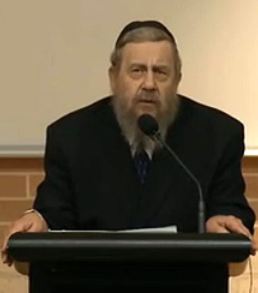
Jacob Immanuel Schochet (1935-2013) was born in Switzerland to Jewish-Lithuanian parents. In 1951, the family moved to Toronto, and shortly after Schochet went to study at the Chabad Yeshiva in New York. There he became close with the Lubavitcher Rebbe, who encouraged him to pursue academic subjects. Schochet went on to earn a Master’s in religious studies and a Ph.D in philosophy, studying at the Universities of Toronto, Waterloo, Windsor and McMaster. He became an internationally renowned scholar of philosophy, mysticism and Hasidism, writing 35 books, translating many others, and penning countless articles (click here to read a selection of these). While serving as a community rabbi for over 45 years, he was also professor of philosophy at Humber College and professor of bioethics at the University of Toronto Medical School. Schochet lectured around the world, including at Yale and Oxford. He was a champion of the Jewish cause, successfully combating Christian missionaries, particularly ‘Jews for Jesus’, and openly challenged any missionary to debate him in public. A staunch defender of traditional Jewish beliefs, he was also critical of the Kabbalah Centre, as well as messianic movements within Chabad. His piety, wisdom, and love for Israel were recognized by all who met him. Sadly, Rabbi Schochet passed away on July 27th.
Words of the Week
Do not scorn any man, and do not discount any thing, for there is no man who does not have his hour, and no thing that does not have its place.
– Pirkei Avot 4:3
 Gerhard Scholem (1897-1982) was born to a secular Jewish family in Berlin. At a young age he showed a great interest in religion, but his father was staunchly anti-Orthodox and opposed it. After his mother intervened, Scholem was allowed to study Judaism with an Orthodox rabbi. In university, he studied mathematics, philosophy, and Hebrew, and met other greats like Martin Buber and Hayim Bialik. He later received an additional degree in Semitic languages. During his studies, he discovered Kabbalah and the infinite depths of Jewish mysticism. He ended up writing his doctoral thesis on the oldest known Kabbalistic text, Sefer ha-Bahir. In 1923 Scholem moved to Israel and changed his name to Gershom. He worked as a librarian and spent his time in study. In 1933 he became the first Professor of Mysticism at the Hebrew University of Jerusalem, teaching a unique view of Kabbalah from a scientific and historical perspective. He stayed at this post for over 30 years, while writing over 40 world-famous texts (in addition to over 700 articles) and winning a handful of prestigious awards, including the Israel Prize. He is credited with being a major force in opening the study of Kabbalah to the masses, both Jews and Gentiles. Despite studying Judaism through a scholarly approach, he maintained that Hebrew is a divine language, alone capable of revealing hidden truths.