Tag Archives: Physics

Jew of the Week: Theodore Maiman

Lasers!

Theodore Maiman

Theodore Maiman

Theodore Harold Maiman (1927-2007) was born in Los Angeles and grew up in Denver. The son of an electrical engineer, Maiman earned money as a teenager by repairing people’s radios and appliances. After a year in the navy, he focused on his studies and eventually earned a Ph.D in physics from Stanford in 1955. He then joined a company under contract to the US Army and led a team working on masers (these are like lasers, but using microwaves). His team was able to improve the maser from a 2.5-ton machine to a small 4 pound device. Building on this success, Maiman convinced his bosses to fund his work on lasers. In 1960, he succeeded in creating the first working laser. Maiman went on to invent a number of other important innovations in the field of optics. He also founded several successful technology and venture capital firms. His paper on lasers was described as “probably more important per word than any of the papers published by Nature over the past century.” Maiman won a handful of prestigious awards for his work, and has been inducted into the National Inventors Hall of Fame.

Words of the Week

If GM had kept up with technology like the computer industry has, we would all be driving $25 cars that got 1000 miles per gallon.

– Theodore Maiman

Jew of the Week: Edward Teller

Father of the Hydrogen Bomb

Edward Teller

Edward Teller

Edward Teller (1908-2003) was born in Budapest to a Hungarian-Jewish father and German-Jewish mother. He did not speak until age three, and was thought to be mentally retarded. However, he soon showed his true genius, and went on to get a degree in chemistry, followed by a Ph.D in quantum physics. Fleeing the Nazis, Teller made his way to England, then Denmark, and finally the United States, along the way working with some of the greatest scientists of the time, including Heisenberg, Fermi, and Bohr. With World War II in full swing, Teller wanted to contribute to the war effort. Together with Hans Bethe, he developed a shock-wave theory that was instrumental for missile technology. In 1942, he was invited to join the Manhattan Project and contributed greatly to the development of the first atom bomb, despite the fact that he already came up with a stronger “fusion” bomb, and insisted on developing the latter instead. In July of 1945, Teller was among the few who witnessed history’s first atomic blast. After the Soviets tested their first nuke, President Truman pushed for the development of Teller’s more powerful fusion bomb (aka the hydrogen bomb). By 1952, Teller was already known as “the father of the hydrogen bomb”. At the same time, Teller worked to develop nuclear safety standards, and researched meltdown-proof reactors. He would go on to serve as head of some of the finest laboratories in America, and founded the Department of Applied Sciences at UC Davis. Perhaps most significantly, Teller was instrumental in helping Israel develop its nuclear technology, visiting the nascent state 6 times in the span of 4 years, advising both military chiefs and prime ministers. He convinced the Israeli government not to sign the nuclear non-proliferation treaty, and was the one who later informed the CIA that Israel was in possession of nuclear weapons. Teller continued his research until his last days; his final paper (on thorium reactors) was published posthumously. His work led to breakthroughs in chemistry, physics, nuclear, and military technology. He passed away with a long list of awards appended to his name, including the Presidential Medal of Freedom.

Purim Begins This Saturday Night!

Words of the Week

In any moment of decision, the best thing you can do is the right thing, the next best thing is the wrong thing, and the worst thing you can do is nothing.
– Theodore Roosevelt

Jew of the Week: Tikvah Alper

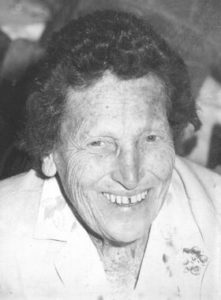
Born in South Africa to poor immigrants from Russia, Tikvah Alper (1909-1995) showed a talent for maths and sciences at an early age. At age 20, she traveled to Berlin to work on her doctorate with former Jew of the Week Lise Meitner, where she published an award-winning paper on delta rays. Alper had a son who was born deaf, so she moved to the U.S. to study diligently from the best experts in the field, herself becoming a teacher for the deaf. Returning to South Africa, Alper was a professor at Witwatersrand University, where she became famous for championing black people’s rights, causing her to draw the ire of the government. For opposing apartheid, she lost her position at the National Physics Laboratory, and nearly lost her passport, too. Alper fled to Britain, where she worked for the remainder of her life in a radiobiology lab. It was there that she researched various brain-eating disorders and proposed a new mechanism of disease: an infectious protein. At the time, the idea was laughable, but it has since been proven and confirmed (now called a “prion”), especially after the mad cow disease scare. Alper’s book Cellular Radiobiology became the bible for radiobiologists. All of these things, as well as her iconic feminism, made her a heroic figure for many around the world, and her London home became a meeting place for the best and brightest in the field of radiobiology. Alper enjoyed sailing, and continued to travel the world well into her 80s.

This Friday Night is Tu B’Shvat! Click to Learn More About This Little-Known Holiday


Words of the Week

A person’s main vitality lies in his intellect. One who is not using his intellect to its full potential is considered asleep. Many people who seem to be alive are in fact sleeping their lives away…
– Rebbe Nachman of Breslov