
Tag Archives: Paris

Jew of the Week: Rabbi Aharon Lichtenstein

In Memory of an Outstanding Rabbi
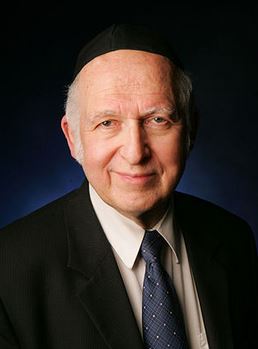
Rabbi Lichtenstein

Rabbi Lichtenstein

Aharon Lichtenstein (1933-2015) was born in Paris, France. His family fled the War in 1941, settling in the U.S., where Lichtenstein grew up. He went on to study at Yeshiva University, earning both a B.A. and rabbinic ordination, and continued his studies at Harvard, graduating with a Ph.D in Literature. He returned to Yeshiva University as a Talmud teacher, and then served as its dean (Rosh Yeshiva). After several years in that post, he made aliyah to Israel in 1971, and headed another Yeshiva, while quickly becoming a famed scholar and the central leader for Modern Orthodox and Religious Zionist Jews. He soon became one of the world’s top authorities in Halakha (Jewish law), too. Working with the ‘Takana’ organization, Rabbi Lichtenstein helped to combat harassment within the religious world, while also supporting the cause of women and encouraging women’s Torah studies. His support and outreach efforts spread beyond the religious world, encompassing secular communities, and even non-Jewish communities. Rabbi Lichtenstein also wrote a number of highly-acclaimed texts and commentaries. A noted scholar, he could easily quote both Jewish wisdom and secular philosophy. Last year he was awarded Israel’s highest honour – the Israel Prize. Sadly, Rabbi Lichtenstein passed away last week. Upon news of his passing, religious and political leaders from across the spectrum united to eulogize and honour him, including both Ultra-Orthodox and Reform rabbis, as well as conservative and liberal politicians. Israeli Prime Minister Benjamin Netanyahu described him as a “Zionist leader and Torah scholar of unparalleled stature… He loved the Land of Israel, the people of Israel, and the Torah of Israel.”

Words of the Week

God transcends all definitions, including the definition of “existence”.
Maimonides (Rabbi Moshe ben Maimon)

Jew of the Week: Moe Berg

Baseball Player, Lawyer… and Secret Agent 

Moe Berg

Moe Berg

Morris Berg (1902-1972) was born in New York to Russian-Jewish immigrants. He began playing baseball at age 7, and by 16 was on Newark’s baseball “dream team”. He studied first at New York University, then Princeton, and graduated with a degree in languages, learning to speak seven of them. By his senior year, he was captain of Princeton’s baseball team. A day after his last game with Princeton, Berg signed a contract with the Brooklyn Robins. In the off-season, he headed to Paris and continued his studies at the world-famous Sorbonne (University of Paris). There, he began a personal routine of reading as many as 10 newspapers every single day. Berg was never very good at baseball, and was often traded and loaned between many different teams. Always a scholar first, in 1926 he told the Chicago White Sox that he is skipping spring training because he was enrolled in law school at Columbia University. He earned his law degree in 1930, and then split his time between baseball in the summer and working at a prestigious Wall Street law firm in the winter.

In 1932, Berg toured Asia, visiting Japan, China, Siam, India, and Egypt. A couple of years later, he returned to Japan with a video camera, later traveling to the Philippines, Korea, and Russia, before returning to play with the Red Sox for 5 seasons, then coaching the team for 2 more. After the attack on Pearl Harbor, Berg joined the war effort and eventually became a spy. He shared his video footage of Japan, which was instrumental in planning American raids during the war. After serving in South America and the Caribbean, Berg was parachuted into Yugoslavia to assist resistance groups fighting the Nazis. His next mission was to travel across Europe and convince scientists working for the Nazis (particularly on their nuclear bomb project), to come work for the U.S. instead. In 1951, he requested that the CIA station him in Israel. Instead, they sent him to Europe to spy on Soviet nuclear work. In 1954, the CIA let him go and for the rest of his life Berg lived with his siblings, having never married. His wishes were to be cremated, and his ashes were scattered in Jerusalem. Berg was inducted into the Jewish Sports Hall of Fame, and Baseball’s Shrine of the Eternals. He was awarded the Medal of Freedom, and his baseball card is on display at CIA headquarters. Berg was described as “the most scholarly professional athlete”, and the “strangest man ever to play baseball.”

Words of the Week

If you begin a good deed, finish it, for a mitzvah is credited to the one who concludes the task.
– Talmud, Sotah 13b

Jew of the Week: Sigmund Freud

The Father of Psychoanalysis

Sigmund Freud

Sigmund Freud

Sigismund Schlomo Freud (1856-1939) was born in what is today the Czech Republic to Galician-Jewish parents. His father, a once-Hasidic wool merchant, brought the family to Vienna where Freud grew up. A natural academic, he absorbed his studies effortlessly and became proficient in 8 languages. His favourite were the works of Shakespeare, which he read his entire life and are said to have greatly influenced his theories. He became a doctor and worked for several years in hospitals, asylums, and clinics before starting his own practice specializing in nervous disorders. At the same time, he married the daughter of Hamburg’s chief rabbi and they would go on to have 6 kids. After learning hypnosis in Paris, Freud found that a certain patient was able to open up to him while hypnotized and in the process of talking out her problems, brought about her own relief. Freud realized that patients need only be guided to speak freely, with no need for hypnosis. He also found that much of their issues were reflected in their dreams. By 1896, he abandoned hypnosis entirely and created “psychoanalysis”. From his own experiences and that of his patients, he put together a series of new theories about the mind, emotions, consciousness, religion, dreams, and sexuality. He published a range of books and papers, and delivered lectures each Saturday night. On Wednesdays, he led a small discussion group with 5 other physicians, all Jews. The Wednesday Psychological Society would evolve into the Vienna Psychoanalytic Society, and spawn many other such groups across Europe and the world. Freud would go down in history as the founding father of psychoanalysis. His ideas inspired a proliferation of new literature in psychology, philosophy, science, and sociology. Despite the rise of the Nazis and the burning of his books, Freud was determined to stay in Austria until he was finally convinced by colleagues that his life was in danger. After much difficulty, he escaped to London (though 4 of his older sisters could not, and perished in the Holocaust). He continued his work, analyzing patients and writing more of his ground-breaking ideas. After battling an oral cancer for nearly two decades – a direct result of his smoking addiction – he reached a critical state of illness and a decision was made together with doctors and Freud’s daughter to end his life. After several days of high-morphine doses, Freud passed away on Yom Kippur.

Words of the Week

Someone else’s material needs are my spiritual responsibility.
– Rabbi Israel Salanter